Since the introduction of the AS-i (actuator sensor interface) protocol in the early 1990s, the standard has been used in many industrial applications as a bus system for the lowest automation level and as a supplement to other existing bus systems.
Based on the master/slave principle, fieldbusses using the AS-i protocol became highly efficient networking alternatives to the traditional hard wiring of field devices. This success was due to its tremendous user friendliness, its tailor made alignment geared towards the simplest actuators in the plant engineering and construction environment and a significant number of application advantages.
The unshielded 2-conductor cable, which allows data and power transmission at the same time, does away with costly parallel wiring between sensors and control units. Other advantages include simple assembly using polarity reversal protected AS-i cables, high serviceability with excellent diagnosis options and ease of maintenance.
The AS-i master, whether as a plug-in unit card for PLC or PC, or as an independent gateway to higher bus systems, controls the bus and interrogates the bus subscribers with cyclic polling. The single 2-conductor cable allows connection of up to 62 devices.
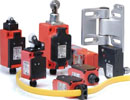
Leading switch manufacturer, Bernstein, recognised early on that when connecting simple field I/O devices where sensory data is transmitted, the low-effort AS-i technology is hard to beat. Therefore, all Bernstein switches are now AS-i enabled, with more products to follow including AS-i professional bus gateways, interfaces and power supplies as well as safety monitors. The additional safety protocol, AS-Interface Safety at Work, allowing safety components to be easily integrated into an As-Interface network, has also been introduced.
Isolated Modbus gateways with built-in Wi-Fi for industrial IoT applications Vepac Electronics
Fieldbus & Industrial Networking
Vepac Electronics offers the Sielco Sistemi SS10680 series of isolated Modbus gateways with built-in Wi-Fi, providing three configurations for industrial data acquisition: cloud publishing via MQTT, local USB and FTP logging, and straightforward Modbus TCP to Modbus RTU conversion.
Read more...XPlanar aids innovation in laser processing Beckhoff Automation
Fieldbus & Industrial Networking
Aalborg University is among the first in the world to test Beckhoff’s XPlanar intelligent transport system in advanced laser processes, opening the door to faster, tool-free production of metal parts.
Read more...Belden expands edge computing portfolio with ProLinx Edge Gateway
Fieldbus & Industrial Networking
Belden has released the ProSoft Technology ELX3 ProLinx Edge Gateway, combining operational technology protocol conversion with Docker-based edge application hosting on a single ruggedised hardware platform for deployment in harsh industrial environments.
Read more...Anybus Communicators are CRA-ready Industrial Data Xchange (IDX)
Fieldbus & Industrial Networking
HMS Networks has upgraded its Anybus Communicator range to meet new EU cybersecurity rules, giving industrial manufacturers and integrators an easier path to compliance.
Read more...Remote I/O modules provide flexible options for distributed applications
Fieldbus & Industrial Networking
Dinkle International is now stocking the iO-GRID NEMO industrial-grade remote input/output modules, offering support for five leading industrial Ethernet protocols and a range of discrete channel configurations for distributed automation applications.
Read more...Daudin expands fieldbus modular remote I/O series
Fieldbus & Industrial Networking
: The Dinkle iO-GRID X modular remote I/O family is now available, offering fieldbus coupler modules for major industrial Ethernet protocols, and over 20 types of I/O modules to help integrators and equipment builders create flexible, efficient control systems.
Read more...Siemens and HighByte partner to scale industrial AI Siemens South Africa
IT in Manufacturing Fieldbus & Industrial Networking
Siemens is expanding its Industrial Edge ecosystem through a partnership with HighByte, enabling customers to connect, contextualise and transform data from operational technology and information technology sources to build AI models and applications at scale.
Read more...Automotive Ethernet media converter
Fieldbus & Industrial Networking
HMS Networks has introduced its first automotive ethernet product under the PEAK brand. The PAE-Media Converter is a compact device designed to connect automotive Ethernet (100BASE-T1 or 1000BASE-T1) with standard Ethernet (100BASE-TX or 1000BASE-T) networks.
Read more...3D electrical systems design workflow for electromechanical innovation Siemens South Africa
Fieldbus & Industrial Networking IT in Manufacturing
Siemens has announced new 3D electrical design capabilities within its Capital software, enabling electrical and mechanical engineers to work concurrently in a shared 3D environment to reduce late-stage design changes and accelerate time to market for complex electromechanical products.
While every effort has been made to ensure the accuracy of the information contained herein, the publisher and its agents cannot be held responsible for any errors contained, or any loss incurred as a result. Articles published do not necessarily reflect the views of the publishers. The editor reserves the right to alter or cut copy. Articles submitted are deemed to have been cleared for publication. Advertisements and company contact details are published as provided by the advertiser. Technews Publishing (Pty) Ltd cannot be held responsible for the accuracy or veracity of supplied material.










 printer friendly version