


IT in Manufacturing


Micromine assists mining operations in the Industry 4.0 era

January 2020 IT in Manufacturing

Global trends such as Industry 4.0 are transforming the traditional methods deployed to extract ore from rock. Mining operations are instead looking at innovations such as automated drilling in high risk areas underground to enhance safety. This is where software solutions like Pitram from Micromine can assist mining operations to automate, and thereby boost efficiency dramatically.

As a leading software solutions provider for the mining industry, Micromine strives to stay ahead of the curve in terms of trends such as Industry 4.0, commonly referred to as the Fourth Industrial Revolution. Industry 4.0 refers to the current trend in automation and data exchange in manufacturing technologies, including cyber-physical systems, IoT, cloud computing and cognitive computing.

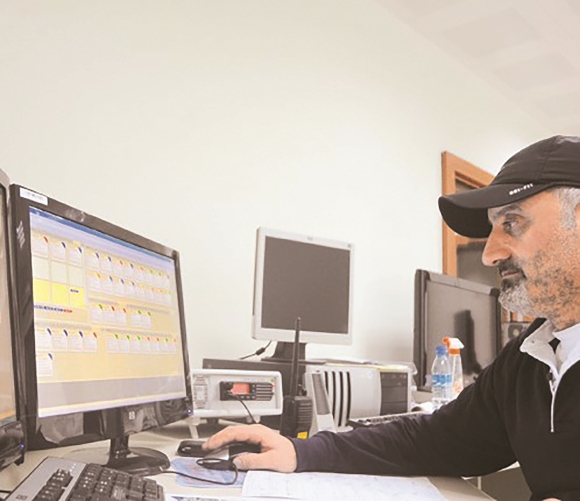
“Currently Pitram is being developed with AI and machine learning functionalities in the software in order to take the product to the next level,” says Africa marketing coordinator, Craig Sternslow. “Pitram is a fully-configurable solution that captures, monitors and reports on operational and production data.”

According to global marketing manager Kate Gilbey, there is an ongoing trend towards increasing automation and even AI to assist mining operations in terms of smart optimisation. In an industry such as mining, where improving productivity is crucial to profitability, even small improvements in yields, speed and efficiency can make an extraordinary impact. AI and machine learning can assist mining companies to find minerals to extract, a critical component of any smart mining operation. Although AI and machine learning are still relatively new in the mining industry, many companies are excited about the prospect of being able to reduce personnel risks, obtain real-time data and make processes more efficient through these types of advances.

“As a client’s operation evolves and needs change, our solutions can be adapted to evolve with the mine. This represents a capital saving to clients, as they can continue using elements of their original, familiar application. Our solutions span the entire mining process, from exploration through to mine production, and cater for all mining operation needs through the provision of our suite of products, friendly and customer-driven staff, services and post-implementation support,” she explains.

Micromine’s research and development teams work around the clock to forecast what its clients and future clients will need in their software toolkit. “This means we have to think about where the industry is going. Our products are evolving constantly. Every major update comes with multiple service packs to fine tune that product,” Sternslow adds.

In this regard, Micromine is developing new underground mining precision performance software that uses machine learning to refine and enhance loading and haulage processes.

Using the processes of computer vision and deep machine learning, onboard cameras are placed on loaders to track variables such as loading, hauling, dumping and travelling empty time. The video feed is processed on the Pitram vehicle computer edge device, following which the extracted information is then transferred to Pitram servers for processing and analysis.

In environments where network connectivity is intermittent or does not exist, field computers become critical for computations and integration. Geobank Mobile is designed to operate in this edge computing environment. It has the ability to integrate directly with field measurement devices to deliver a practical and efficient solution to the user. “An exciting new development in terms of Geobank Mobile is its integration with DSLR cameras to capture imagery of the drill hole core,” Gilbey continues. For example, AngloGold Ashanti Australia is using this technology with a camera mounted to a mechanised track that sits above the chip tray. It automatically takes photographs of drill hole geological chip samples. Through seamless integration, these photographs are fed from the camera to the Geobank Mobile solution, which has been configured to rename the file based on the hole identifier.

“As an industry leader in mining software, with offices located strategically all over the world, we are trusted advisors to our clients and can offer sound advice as well as solutions for every need throughout the mining cycle. Our main aim as a software provider is simply to ‘Make Mining Easier’. Mining operations must not be afraid to change and to adapt to the changing mining environment,” Sternslow concludes.




Share this article:
Share via emailShare via LinkedInPrint this page

Further reading:

Overcoming the bottling industry’s fragmented visibility
Schneider Electric South Africa IT in Manufacturing Electrical Power & Protection
Beverage bottling facilities are among manufacturing’s most energy-intensive environments, yet many still operate without granular insight into where that energy goes. Rezolia Muller-Potluri of Schneider Electric explains how tiered metering architecture and advanced

Read more...
Advancing intelligent apparel manufacturing with industrial AI and humanoid robotics
IT in Manufacturing
Jack Technology, a global maker of industrial sewing equipment, has chosen Siemens software and engineering tools to bring artificial intelligence and humanoid robots into apparel production, aiming to shorten development cycles and lift manufacturing efficiency.

Read more...
New chiller line for high-density AI data centres
Schneider Electric South Africa IT in Manufacturing
Schneider Electric has launched the Uniflair XCA, a new series of air-cooled and free-cooling chillers designed for artificial intelligence-driven, high-density liquid-cooled data centres.

Read more...
Turning system integrators into trusted technology partners
Schneider Electric South Africa IT in Manufacturing System Integration & Control Systems Design
Schneider Electric’s Alliance Partner Programme is repositioning system integrators from hardware suppliers into lifecycle-value partners. Oriel Soupen explains the competency framework, certification model and real-world results that are already helping African system integrators win higher-value, longer-term engagements.

Read more...
Why renewable projects need integrated protection and control
IT in Manufacturing
Fragmented secondary plant integration in renewable energy projects causes costly delays during commissioning. ACTOM Protection and Control’s Secondary Plant Integration solution consolidates all secondary systems under a single engineering framework, reducing risk and accelerating grid

Read more...
When digital twins move from concept to critical tool
IT in Manufacturing System Integration & Control Systems Design Maintenance, Test & Measurement, Calibration
Digital twins are moving out of the lab and onto the mine, the factory floor and the transport network where they predict failures before they happen. Amritesh Anand looks at where they earn their keep, the data and integration work behind them, and the security questions every organisation should ask before switching one on.

Read more...
How a digital foundation can overcome the LNG trilemma
Schneider Electric South Africa IT in Manufacturing SCADA/HMI
The LNG sector is racing to add capacity, but without a digital backbone, growth creates complexity rather than capability. Christophe Begat of Schneider Electric explains how connecting data, systems and analytics across the LNG value chain can resolve the trilemma of secure supply, lower emissions and tighter costs.

Read more...
Decarbonisation is reshaping mining strategy in Africa
Schneider Electric South Africa IT in Manufacturing Electrical Power & Protection
Mining companies across Africa are embedding decarbonisation into operational strategy, driven by investor, regulatory and customer pressure to reduce emissions while improving resilience.

Read more...
Siemens and HighByte partner to scale industrial AI
Siemens South Africa IT in Manufacturing Fieldbus & Industrial Networking
Siemens is expanding its Industrial Edge ecosystem through a partnership with HighByte, enabling customers to connect, contextualise and transform data from operational technology and information technology sources to build AI models and applications at scale.

Read more...
Africa on the edge of a digital future
Schneider Electric South Africa IT in Manufacturing
Edge computing promises lower latency, stronger reliability and real-time responsiveness across Africa, yet its rollout keeps colliding with one stubborn obstacle, power. Steven Santini explores how renewable microgrids, smart energy management and the right partnerships could turn the continent’s energy gap into its biggest edge opportunity.

Read more...


While every effort has been made to ensure the accuracy of the information contained herein, the publisher and its agents cannot be held responsible for any errors contained, or any loss incurred as a result. Articles published do not necessarily reflect the views of the publishers. The editor reserves the right to alter or cut copy. Articles submitted are deemed to have been cleared for publication. Advertisements and company contact details are published as provided by the advertiser. Technews Publishing (Pty) Ltd cannot be held responsible for the accuracy or veracity of supplied material.


© Technews Publishing (Pty) Ltd | All Rights Reserved