



Across South African industries from mining and manufacturing to agriculture and energy, acetylene is the default fuel choice for cutting, brazing, soldering and heating. Yet the case for switching to alternative fuels, such as liquefied petroleum gas (LPG), propane and methylacetylene-propadiene propane (MAPP) gas, is growing stronger. Bolt and Engineering Distributors Group (B.E.D.), through its appointment as an authorised distributor for the international Harris Products Group, is helping South African industry make this transition with confidence.
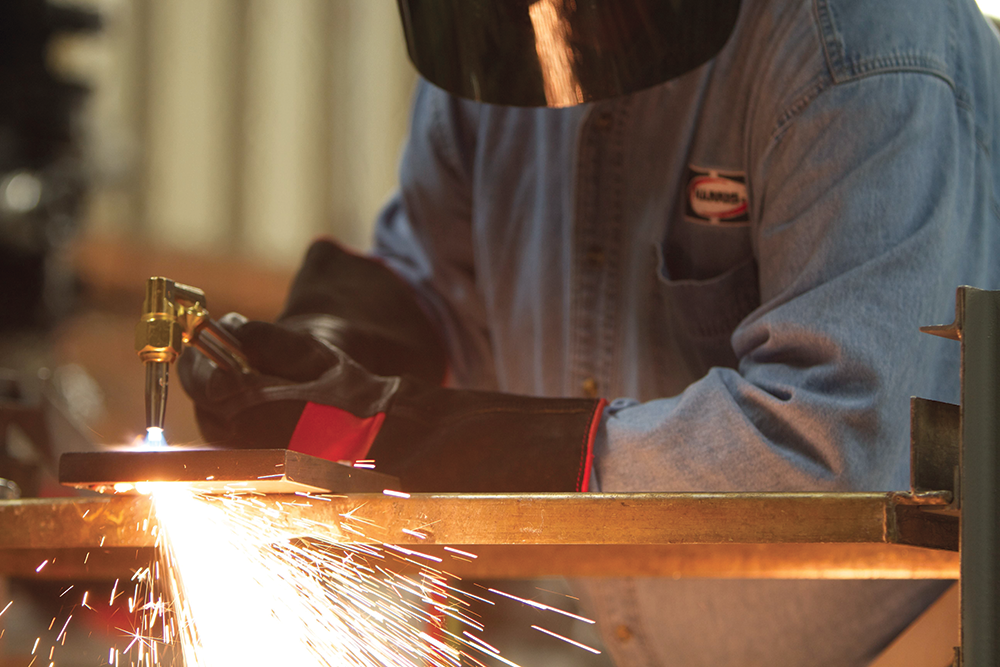
“It is surprising that acetylene is as widely used as it is in South Africa, given the clear safety, cost and performance advantages of alternative fuels. The transition is simpler than may be assumed, and the benefits are compelling,” says Shaun Geyer, B.E.D.’s Harris Products brand ambassador and technical specialist.
A complete, optimised system
Central to the switch is the Harris injector mixer which addresses a fundamental challenge: oxygen and LPG do not blend naturally.
“The injector mixer increases oxygen velocity through the torch, creating turbulence which produces a far more homogeneous mixture, resulting in better flame and cut quality,” explains Geyer. “What drives cutting performance is not flame temperature alone, but how effectively heat transfers into the material being cut, measured in British thermal units.”
Harris’s high-preheat and high-speed alternative fuel nozzles maximise this effect. The injector also draws fuel gas through the system at very low pressure, under 0,2 bar, reducing fuel consumption while almost completely eliminating flashback risk, delivering both a safety and a cost benefit.
Anthony McGuiness, sales manager for the Harris Products Group in sub-Saharan Africa, points to the company’s long history of innovation in this space: “Harris pioneered alternative fuel cutting in the late 1930s and early 1940s with the Model 62-5F injector torch, which is still in use today, a testimony to its quality and longevity. The transition from acetylene requires changing just three components: the gas-specific regulator, the hose and the nozzle, with the flashback arrestor remaining the same.”
For manual cutting, McGuiness notes that alternative fuels are superior from 15 mm steel plate thickness upwards, producing a clean, carbon-free cutting edge that eliminates the costly grinding step required after acetylene cutting and before welding. “Cutting with alternative fuels also requires less operator skill, as the material is very close to the torch, with a nozzle-to-plate distance of only 10 to 15 mm, compared to just 2 to 3 mm for acetylene.”
Geyer advises that for oxyfuel cutting, LPG covers approximately 90 to 95% of applications and is the standard recommendation, being both widely available and cost-effective. For brazing at 650 to 900°C, and soldering at around 350°C, customers may use MAPP gas or propane with a trigger torch which draws in atmospheric oxygen. For industrial heating, LPG is again the appropriate choice.
It is important to note that welding cannot be done with alternative fuels, as they lack the carbon content which acetylene has, which is essential for weld pool development.
A significant safety advantage
“On a relative combustibility index of 1 to 10, acetylene rates at 8 and LPG at 2,” says Geyer. “This difference is significant in practice. Acetylene cylinders must be stored upright, as acetone migrates into the regulator if lying down, which has caused explosions on mines. These cylinders are also not very shock-resistant, presenting serious handling risks on South Africa’s often potholed roads.”
McGuiness confirms that Harris addresses these risks through product design. “The injector torch almost completely eliminates flashback, the encapsulated valves prevent particles entering the high-pressure regulator section and all products meet international safety standards, including the emerging EN 17931 standard.” Locally, B.E.D. ensures customers receive the correct gas-specific equipment, together with hands-on technical guidance on safe use.
Supporting the transition
“B.E.D. and our supplier Harris Products Group are committed to more than just product supply. We are focused on supporting our customers through every step of the process to using alternative fuels for cutting, brazing, soldering and heating,” says Geyer. “I would encourage any cutting professional who has not yet made the switch to alternative fuels to speak to B.E.D. about a practical demonstration.”
McGuiness agrees that the opportunity for South African industry is significant. “We are delighted to be working with our distributor B.E.D. to bring these benefits to a wide range of South African industrial customers, from fabrication to agriculture, mining, HVAC and other sectors. This will be achieved through B.E.D.’s extensive national branch network and distribution centre, as well as their substantial regional sales team, logistics infrastructure and their excellent longstanding customer relationships and technical credibility.”
For more information contact Bolt and Engineering Distributors,






© Technews Publishing (Pty) Ltd | All Rights Reserved
 printer friendly version