



Implementing proximity detection systems, or PDS, in underground mines is far more complex than placing sensors on machines. Confined spaces, mixed fleets, communication constraints and human behaviour all shape how effective a system can be. Booyco Electronics is addressing these realities with a focus on integration, data acquisition and the intelligent use of AI.
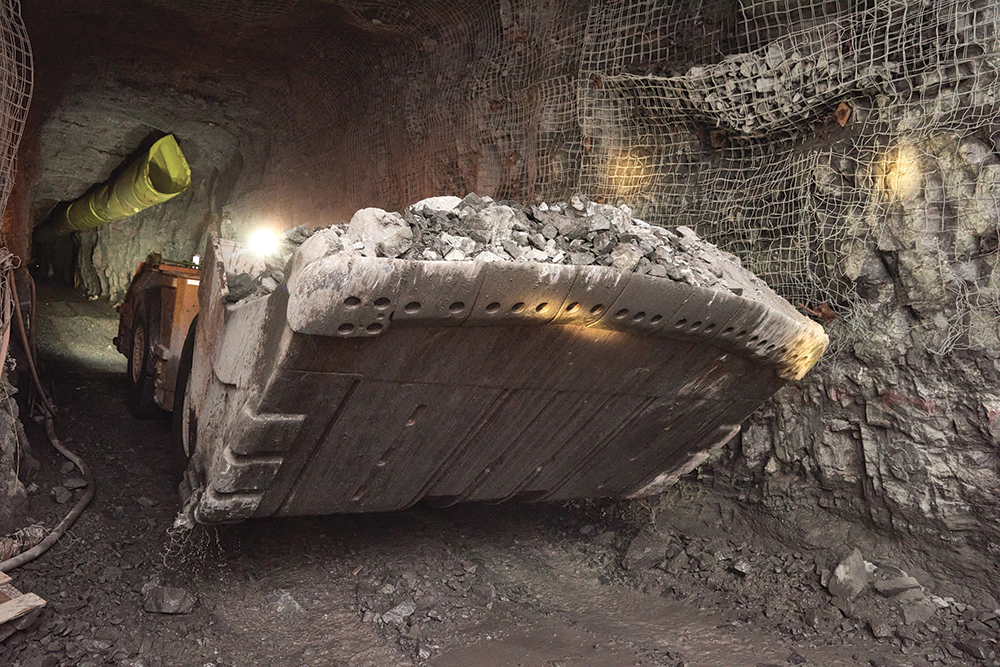
One of the most persistent challenges underground is integrating PDS with multiple OEMs and third-party interface suppliers. While the ISO 21815 standard sets out how systems should interact, practice often differs from theory.
“Some of the challenges we see are integration with OEMs as well as third-party interface suppliers. Even though there is a standard which guides how we need to interact, there still seems to be a difference of interpretation of the standard,” says Anton Lourens, chief executive officer of Booyco Electronics.
As a result, every new vehicle type or OEM variant can effectively become a first-time integration. “Every time a customer buys a new machine type or opts for a different OEM, this first-time integration of PDS can be challenging,” Lourens says.
Compounding this, customers often notify Booyco Electronics very late in the procurement process of a new machine being bought and requiring PDS immediately. Booyco Electronics is overcoming this through an expanding library of OEM and other integrations and by actively pushing for earlier engagement with clients.
Turning events into intelligence
For Booyco Electronics, PDS is as much a data platform as it is a safety device. Each interaction, near-miss and activation becomes a data point that can inform future behaviour, training and risk management. The same approach is applied to equipment and locations. “From data analysis, you can see which vehicles have been involved in more interactions versus people, so you can identify higher potential risk assets,” Lourens says. Furthermore, by expanding location infrastructure and then mapping specific underground positions, Booyco Electronics helps mines identify hotspots where additional engineering or procedural controls are needed.
AI is not a silver bullet
With AI being a major part of technology discussions and development, Lourens says that Booyco Electronics is careful to deploy and position it correctly within the PDS environment.
“There are misinterpretations or misperceptions about AI and what it can or can’t do. Probably best known for deployment around AI cameras, the technology has evolved significantly, with far more powerful capabilities in running algorithms, simulations and predicting behaviour through machine learning, and the ability to process a high volume of data in a very short space of time, while still requiring human review and oversight. In addition, specific AI models are being developed or implemented for a specific problem statement, rather than a general AI assistant,” Lourens says.
He stresses that AI cannot replace core engineering effort or safety fundamentals in the PDS environment. “AI is evolving rapidly and becoming more important as it helps and assists in development and improvement, but I do not believe that today AI models can replace human responsibility in technology development. It is another tool to improve the product,” Lourens says.
According to Lourens, AI enhances the processing engine behind PDS, including accelerating pattern recognition, improving behaviour prediction and turning raw data into faster, more meaningful insights. Booyco Electronics situates PDS and AI-enabled analytics within a layered control strategy where engineering interventions complement risk assessments, optimisation and training.
By combining robust integration, meaningful data acquisition and a realistic use of AI, Booyco Electronics is steadily overcoming the challenges of implementing PDS in underground mining and helping the industry move closer to its goal of Zero Harm.
For more information contact Booyco Electronics,






© Technews Publishing (Pty) Ltd | All Rights Reserved
 printer friendly version