



The hydrogen economy is shifting from concept to industrial reality, driven by decarbonisation targets, energy security concerns and the need to reduce fossil-fuel dependence. Produced through low-carbon methods, hydrogen can support hard-to-abate sectors such as heavy industry, long-haul transport and chemical processing.
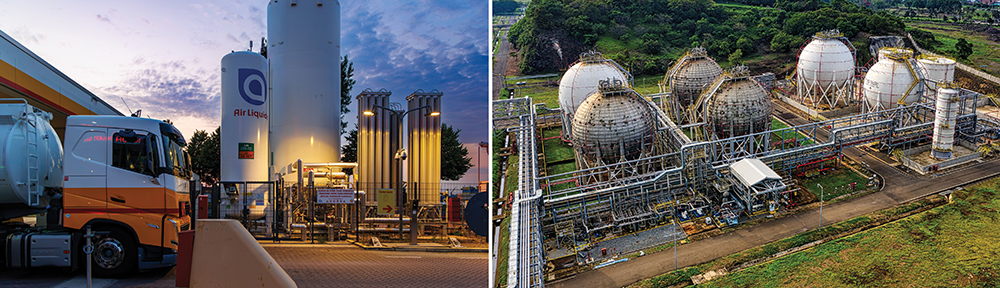
Scaling this economy requires more than production capacity. It depends on safe, efficient and tightly controlled processes across generation, storage, distribution and end use.
Hydrogen production pathways
Hydrogen production is commonly grouped into three pathways:
• Grey hydrogen: Produced from natural gas through steam methane reforming, with significant CO2 emissions.
• Blue hydrogen: Produced through the same process, with carbon capture and storage to reduce emissions.
• Green hydrogen: Produced by renewable-powered electrolysis, offering a near-zero-emissions route.
As renewable energy costs fall, green hydrogen is gaining momentum as a future energy cornerstone.
Technical and safety challenges
Hydrogen presents distinct technical challenges. As the smallest and lightest molecule, it is prone to leakage and diffusion. Its wide flammability range also makes strict safety controls essential.
These properties place high demands on instrumentation and automation. Accurate pressure, temperature, level and flow measurement are critical for safety, efficiency and compliance.
Storage and transport requirements
Storage and transport are among hydrogen infrastructure’s most demanding areas. Hydrogen can be stored as compressed gas, cryogenic liquid, or in carriers such as ammonia or liquid organic hydrogen carriers, each with specific measurement and safety needs.
• Cryogenic storage: Requires sensors that remain accurate at extremely low temperatures.
• High-pressure gaseous storage: Needs robust pressure monitoring to prevent overpressure and failure.
• Chemical carriers: Require measurement systems suited to the carrier medium.
VEGABAR 83 measures pressure in gaseous hydrogen storage tanks. Its hydrogen-compatible stainless-steel measuring cell supports long-term stability, while the oil-free thin-film cell enables reliable measurement. An optional gold-coated diaphragm helps reduce diffusion.
Instrumentation as a foundation for safe operations
Advanced instrumentation is essential to the hydrogen economy. Reliable level, flow and pressure measurement are fundamental safety and performance requirements in tanks, electrolysis systems and pipelines.
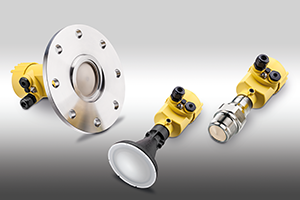
Radar level sensors, differential pressure transmitters and mass flow meters are being adapted for hydrogen applications, providing early warnings of leaks, overpressure and process instability.
Measurement accuracy in green hydrogen production
Electrolysis, the core process for green hydrogen production, depends on accurate measurement. Proton exchange membrane (PEM) and alkaline electrolysers require precise control of water purity, temperature and current density.
Small deviations can reduce efficiency and shorten stack life. Integrated instrumentation and real-time diagnostics help maintain optimal conditions and minimise energy losses.
In a PEM electrolyser, renewable energy splits water into hydrogen and oxygen. Protons move through a membrane flushed with ultrapure water, forming hydrogen at the cathode and oxygen at the anode. Level measurement regulates water, while pressure sensors monitor feed and discharge lines.
Solution 1 combines VEGABAR 28 and VEGAPULS 6X. VEGABAR 28 measures pressure at the PEM electrolyser inlet and outlet for hydrogen and oxygen, with Bluetooth setup and BAM-assessed resistance to internal ignition in oxygen applications. VEGAPULS 6X provides non-contact radar level measurement for water regulation, supporting high availability through wear- and maintenance-free operation.
Solution 2 pairs VEGAFLEX 81 with VEGABAR 28. VEGAFLEX 81 provides guided-radar level measurement for water volume control in small measuring ranges or vessels with internal installations; and VEGABAR 28 adds reliable inlet and outlet pressure measurement with Bluetooth commissioning.
Distribution networks and pipeline integrity
Hydrogen distribution networks add complexity. As natural gas infrastructure is assessed for blending or conversion, hydrogen’s properties demand close attention to pipeline integrity, leakage risk, metering accuracy, variable gas composition and low-density flows.
VEGABAR 82 provides long-term stable pressure monitoring in hydrogen pipelines up to 100 bar. Its oil-free ceramic measuring cell supports reliable measurement in pipeline applications.
Digitalisation and automation at scale
As hydrogen infrastructure expands, digitalisation and automation will support scalability. Smart sensors, predictive maintenance and cloud-based monitoring are increasingly used to manage distributed hydrogen assets. These systems depend on reliable field data, reinforcing the need for accurate measurement across the hydrogen value chain.
The role of technology providers
For technology providers such as VEGA, hydrogen presents both challenge and opportunity. Measurement solutions must withstand extreme conditions, support intrinsic safety and deliver consistent performance across electrolysis plants, storage sites and distribution networks.
The hydrogen economy’s success will depend not only on production advances, but also on reliable supporting infrastructure. Precision measurement and control systems form the backbone of this emerging energy landscape, helping hydrogen become a clean, flexible and scalable energy carrier.
| Tel: | +27 11 795 3249 |
| Email: | [email protected] |
| www: | www.vega.com/en/home_za |
| Articles: | More information and articles about VEGA Controls SA |






© Technews Publishing (Pty) Ltd | All Rights Reserved
 printer friendly version