



Sub-Saharan Africa’s wastewater operators face mounting pressure to keep ageing plants running smoothly and meet tougher environmental standards, all while lacking visibility into the health of their medium-voltage (MV) drives and other critical rotating assets.
Without real-time visibility into the equipment that keeps treatment works functioning, small issues can snowball into costly downtime, compliance breaches and reputational damage. This is a gap the sector can no longer afford to ignore.
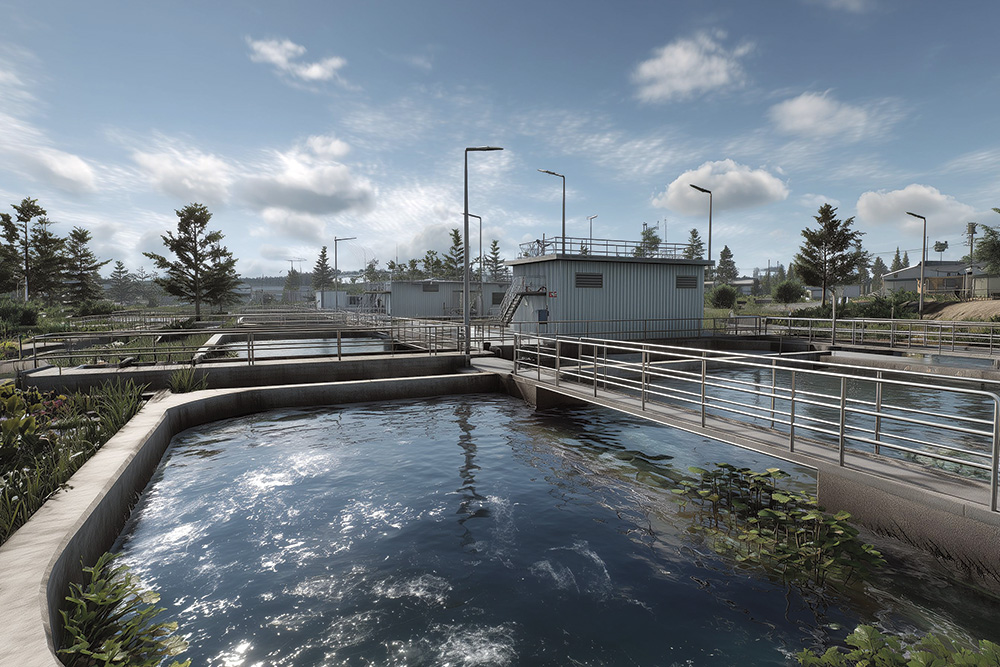
Typically, three blind spots consistently undermine the reliability of MV drives and rotating equipment in wastewater operations across sub-Saharan Africa:
• Limited real time condition monitoring: Many plants still rely on periodic manual inspections, which means early warning signs such as rising temperatures, abnormal vibration, load fluctuations and insulation decline are often missed. Without continuous data, subtle issues are not detected until they become failures.
• Fragmented, siloed asset data: SCADA data, maintenance logs, OEM reports and field notes typically sit in separate systems. With no unified view, teams struggle to link equipment behaviour to process performance, making root cause diagnosis and risk identification far more difficult.
• Ageing equipment with no diagnostics: A large share of MV drives, pumps and motors were never built for digital monitoring. Lacking sensors and connectivity, they offer little insight into efficiency losses, wear trends or impending failures. Without retrofit solutions, operators are forced into reactive, firefighting maintenance instead of proactive optimisation.

The importance of real-time visibility
Without real-time visibility into MV drives and pump performance, wastewater utilities face three primary practical risks that quickly compound on the ground. Hidden inefficiencies, from declining pump performance to cavitation or load imbalances, quietly drive up non-revenue water because leaks and flow inconsistencies go undetected for far too long.
At the same time, operators lose the ability to spot equipment drifting outside safe operating limits, increasing the likelihood of aeration failures, overflows or under-treated effluent that trigger environmental breaches and erode public trust.
Because unmonitored equipment almost always runs inefficiently, plants absorb higher energy and maintenance costs, especially across motors, pumps and blowers that dominate operational expenditure.
From reactive to predictive maintenance
Adding connected sensors and remote monitoring transforms maintenance from reactive to predictive. Once installed, sensors track parameters like vibration and temperature, converting data into insights. Analytics compare this data against baselines to identify early deviations, highlighting potential issues like bearing wear or overheating before manual inspections can.
With these early warnings, maintenance teams can plan interventions during low-demand periods instead of scrambling during breakdowns. Over time, every alert, trend and event feeds into a growing historical record of equipment behaviour, sharpening the accuracy of predictions and making the entire plant progressively smarter.
Beyond maintenance
Improved asset-level visibility not only prevents failures, but also enhances energy use, process control and cost management in wastewater plants. By monitoring the performance of pumps, blowers and MV drives, operators can optimise set points, prevent overloads and maintain peak efficiency, reducing operating costs.
The same real-time insight stabilises treatment processes by allowing teams to intervene early when a critical asset starts drifting out of its normal range. Because issues are caught before they escalate, plants spend less on emergency repairs, overtime and premature equipment replacements. The result is a more efficient, predictable and cost-effective operation from end to end.
Blending expertise with connected tools
Digital field services blend onsite expertise with connected tools that give wastewater operators real-time visibility into their assets. Pumps, motors and MV drives are retrofitted with sensors that track temperature, vibration and power quality without replacing existing equipment.
These feed into remote monitoring centres, where specialists watch asset health continuously and flag anomalies early. Operators receive clear alerts and trend insights that guide smarter maintenance, while technicians arrive on site with data-driven instructions rather than generic checklists, speeding up troubleshooting and improving overall reliability.
Scaling towards full connectivity
Utilities should not digitise their entire network at once, but start small by connecting high-risk, high-value assets like MV drives and main pumps with simple retrofit sensors. This allows for remote monitoring and analytics to identify early warning signs and reduce reactive maintenance.
From there, plants can broaden visibility by integrating SCADA, power metering and equipment data into a single view. This becomes the foundation for a fully connected, resilient wastewater network.
Over time, adding predictive analytics, digital twins and enterprise dashboards enables optimisation across multiple sites, ensuring every drop moves safely and efficiently through the water cycle.
| Tel: | +27 11 254 6400 |
| Email: | [email protected] |
| www: | www.se.com/za/en/ |
| Articles: | More information and articles about Schneider Electric South Africa |






© Technews Publishing (Pty) Ltd | All Rights Reserved
 printer friendly version