



The Konecranes Design Life Analysis has been specifically designed to calculate the remaining design life of structures and machineries of cranes and associated lifting components. It determines the amount of work it can safely perform before its useful life is over.
“Each piece of lifting equipment or component has been designed with an intended design life, making it crucial that such equipment should be regularly checked for its lifespan condition as early detection of signs of deterioration can prevent failures and extend service life. It is also an essential part of making sure operations continue safely and that regulatory compliance is met,” noted Ian Grobler, sales manager for Konecranes South Africa.
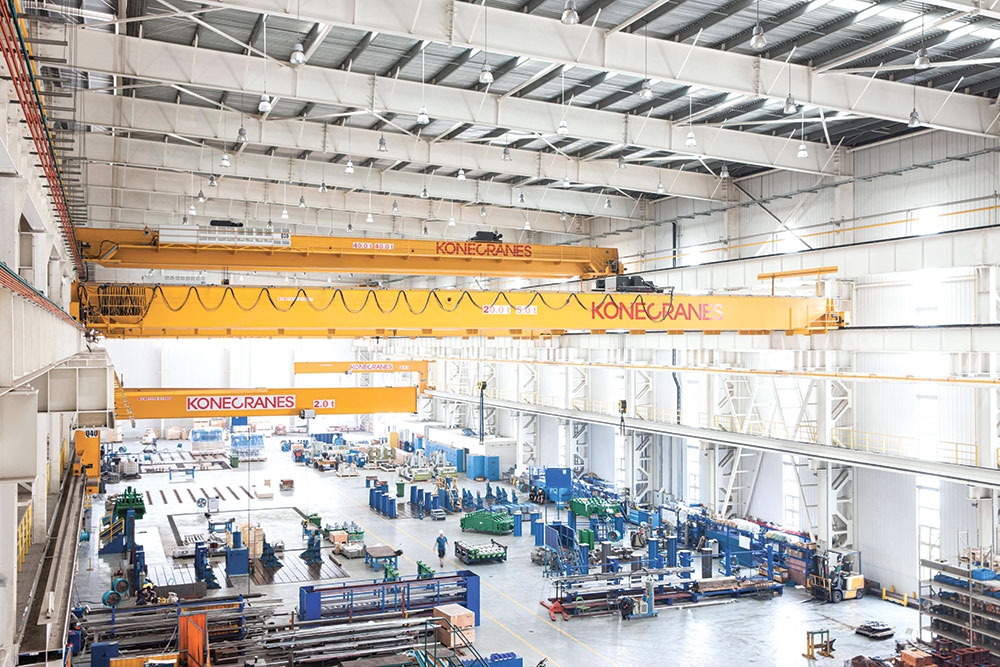
“Whilst frequent inspections are necessary, they cannot always catch machinery failure that may be caused, for example, by extremely fast crack propagation. Operator behaviour and misuse of lifting equipment can also play a major role in the shortening of the lifespan of hoists, slings, and cranes. Even well-designed equipment can fail early if it’s not used correctly.”
He added that ascertaining lifting equipment lifespan is not only about cranes, it is equally important to inspect the lifespan of hoists, slings and other smaller components as their performance is just as critical in any lifting operation. These components do not have a fixed expiry date, and their lifespan depends heavily on usage, environment and maintenance.
Cranes are designed from a fatigue point of view and the first thought is the class of utilisation which will determine the frequency a load will be lifted, and how many hours the machinery will be in service during the lifetime of the crane. It is then determined what kinds of loads the crane will handle and at what capacities.
As these were only estimations during the design phase, this is where the detective work occurs in the Design Life Analysis. Through production and service records, process observations and operator interviews, a qualified and trained inspector researches how many actual cycles the crane has performed, how many loads it has handled and at what capacity, in order to form a calculation of its current remaining design life.
A calculation of design life can supply the information and data needed to help assess safe working limits. The analysis will include design life calculations, conclusions and recommendations for any actions required to continue the safe use of the crane or component.
Crane structures and their various accessories fatigue differently and at different rates. Structures consume their design life in work cycles, while other elements may consume their design life in running hours. A girder is stressed only once per stress cycle and therefore the propagation of fatigue is relatively slow. Even if a fatigue crack does appear, the rate of failure is usually measured in years.
Rotating machineries are different. Working constantly under loaded conditions, their components may be stressed tens of thousands of times during one movement. When a crack forms in these components, it can become critical within hours or days.
Konecranes Design Life Analysis fulfils the requirements of a yearly design life calculation as required by ISO-12482-2014 and AS 2550.1:2011. It also forms part of the South African regulatory yearly key inspection guidelines, typically performed alongside the 12-month inspection, to assess the design working period for both structural and machinery components.
“Simply conducting an annual load test is not enough for compliance. The Konecranes Design Life Analysis enables the customer to plan timely modernisations, component repairs or replacements, and general overhauls. This can reduce operational costs and safely extend the life of the lifting equipment, as well as help eliminate any potential onsite failures and injuries to operators” concluded Grobler.
For more information contact Konecranes and Demag South Africa,






© Technews Publishing (Pty) Ltd | All Rights Reserved
 printer friendly version