


Analytical Instrumentation & Environmental Monitoring


Reliability restored through systemic vibration analysis

June 2026 Analytical Instrumentation & Environmental Monitoring


Condition monitoring specialist, WearCheck uses a variety of testing techniques to enhance reliability in machinery components and prevent failures.

In addition to its core service, the scientific analysis of samples of used oil and other fluids, the company offers Asset Reliability Care, or ARC services such as vibration analysis, thermography, balancing, operational shape deflection, motion video amplification and other condition monitoring services.

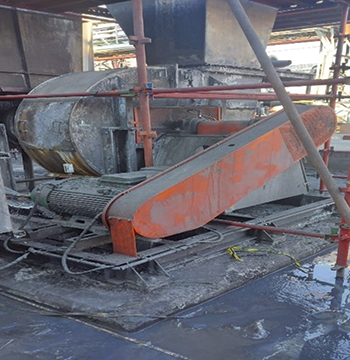
This case study highlights how a structured vibration analysis approach was used to diagnose and resolve persistent vibration on a critical boiler induced draft (ID) fan at a heavy industrial site.

WearCheck vibration analyst, Renier Kalp explains that during routine condition monitoring, elevated vibration levels were detected on the ID fan. Initial inspection revealed severe structural looseness, with multiple base bolts either loose or missing. Vibration data supported this finding, showing a dominant 1X running-speed peak, a typical indicator of looseness due to insufficient structural rigidity.

Structural looseness allows excessive movement in the direction of least resistance, amplifying vibration levels and placing additional stress on machine components. If left uncorrected, this can lead to secondary damage.

After the base was repaired and all bolts secured, follow-up vibration analysis confirmed an improvement. However, the data now revealed multiple harmonics of the 1X peak, indicating the development of rotating looseness associated with bearing wear. The instability caused by the looseness had already initiated secondary damage within the fan bearings.

The affected drive-end and non-drive-end bearings were replaced, and a pulley alignment was performed to ensure correct installation and prevent further mechanical stress. Post-maintenance measurements confirmed that the bearing-related vibration had been eliminated.

“Despite these corrections, a high 1X vibration component remained. With structural looseness, bearing defects and misalignment addressed, the remaining cause was identified as impeller unbalance through a process of elimination supported by vibration analysis.

An in-situ balancing procedure was conducted using phase and amplitude measurements. The initial vibration level was recorded at

11 mm/s. A trial weight was applied to determine the system response, allowing accurate calculation of the required correction. A final correction weight of 104 g was installed at the calculated position on the impeller. Following balancing, vibration levels were reduced to 1,8 mm/s, confirming that the fan was operating within acceptable limits.

Reliability through accurate diagnosis

Kalp cites this case to demonstrate the importance of addressing primary faults before attempting corrective actions such as balancing. “Multiple defects can present similar vibration signatures, particularly at 1X running speed, making accurate diagnosis essential,” he says.

By systematically identifying and eliminating each contributing factor, WearCheck’s ARC team was able to resolve the root cause of the problem and restore the fan to reliable operation. The study highlights how detailed vibration analysis, combined with practical mechanical understanding enables effective fault diagnosis, prevents unnecessary maintenance and improves overall plant reliability.

As WearCheck celebrates 50 years, the company remains finely tuned to the signals that keep industry running reliably.


Credit(s)


Share this article:
Share via emailShare via LinkedInPrint this page

Further reading:

Electrostatic spark discharge – when static strikes back
Wearcheck Maintenance, Test & Measurement, Calibration
WearCheck technical manager, Steven Lumley explains how static electricity accumulates in modern low-conductivity lubricants, why compact system designs and fine filtration make ESD more likely, and how to recognise the degradation it leaves behind.

Read more...
How SCE approaches sensor selection for critical environments
Specialised Climate Engineering Analytical Instrumentation & Environmental Monitoring
Specifying the right sensor for a critical climate involves far more than matching a datasheet accuracy figure. As an authorised Vaisala HVAC partner, SCE explains how understanding the environment, the measurement purpose and sensor placement determines effective climate control.

Read more...
When maintenance-system compliance starts replacing plant reliability
Wearcheck Maintenance, Test & Measurement, Calibration
WearCheck ARC division manager, Annemie Willer argues that the greatest threat to effective maintenance is no longer a lack of technology, but the gradual replacement of technical judgement by CMMS compliance, leaving no one owning the machine.

Read more...
Changing gas quality calls for smarter combustion control
Analytical Instrumentation & Environmental Monitoring
As South Africa prepares for a transition from declining Mozambican natural gas to a proposed methane-rich bridge, LNG, industrial users can no longer assume a constant Wobbe Index and calorific value. The compact RMG RGQ 5 provides fast, plant-level gas-quality data to support approved burner and engine settings.

Read more...
Nitration: the acid you didn’t see coming
Wearcheck Maintenance, Test & Measurement, Calibration
Nitration is as destructive as oxidation in many engines but far less understood. WearCheck technical manager, Steven Lumley explains how nitrogen oxide gases degrade lubricants, why the process is difficult to detect, and what oil analysis can reveal before damage occurs.

Read more...
Getting the chemistry right
Analytical Instrumentation & Environmental Monitoring
Grace’s European production site has relied on analogue compression load cells from Minebea Intec for decades, with the long-proven measurement concept now serving as the reference for new silo projects as the company expands its capacity.

Read more...
Why measurement matters in smelting
Endress+Hauser South Africa Analytical Instrumentation & Environmental Monitoring
South African smelters returning to operation after energy constraints face new demands for tighter control, better visibility and environmental compliance. Endress+Hauser explains how modern measurement technology supports safer, more efficient furnace operation and local beneficiation.

Read more...
Sun tracking with pinpoint precision
Senseca Analytical Instrumentation & Environmental Monitoring
Senseca has introduced the SEMS-2000 solar energy measurement system, a 2-axis solar tracker with pinpoint sun-pointing accuracy that automatically monitors direct, global and diffuse irradiance for unattended outdoor solar installations.

Read more...
When oil can’t take the heat
Wearcheck Maintenance, Test & Measurement, Calibration
Unlike the slow ageing of oxidation, thermal breakdown is the sudden chemical collapse of a lubricant under excessive heat. Steven Lumley of WearCheck explains how it happens, where it strikes, and how oil analysis detects it.

Read more...
When oil gets old
Wearcheck Maintenance, Test & Measurement, Calibration
WearCheck explains how oxidation breaks down lubricating oils over time, and how routine oil analysis can catch the warning signs before equipment failure.

Read more...


While every effort has been made to ensure the accuracy of the information contained herein, the publisher and its agents cannot be held responsible for any errors contained, or any loss incurred as a result. Articles published do not necessarily reflect the views of the publishers. The editor reserves the right to alter or cut copy. Articles submitted are deemed to have been cleared for publication. Advertisements and company contact details are published as provided by the advertiser. Technews Publishing (Pty) Ltd cannot be held responsible for the accuracy or veracity of supplied material.


© Technews Publishing (Pty) Ltd | All Rights Reserved

