


Electrical Power & Protection


Unpacking the technoeconomic case for cleaner power in wastewater plants

May 2026 Electrical Power & Protection

Behind every reliable wastewater plant is an electrical system exposed to the effects of harmonics, voltage distortion and overloaded networks caused by fleets of variable speed drives on pumps and aerators.
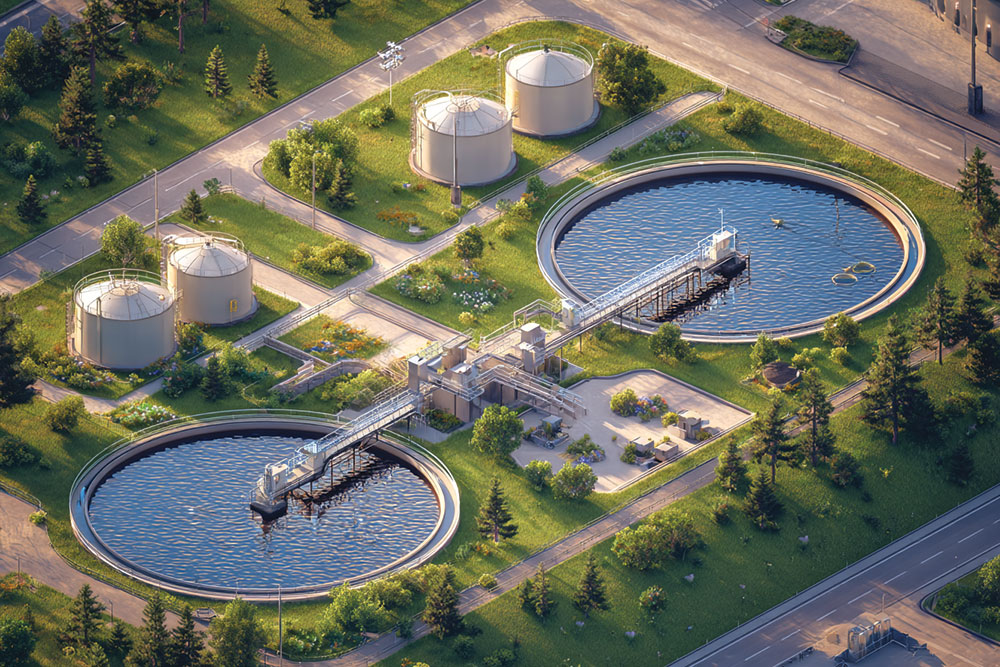
At plant level, harmonics are a very real reliability risk, causing transformers to run hotter, motors and equipment to age faster, and cables to experience unnecessary stress. Protection systems start tripping more often, increasing the need for maintenance and the likelihood of unexpected failures and service interruptions.

While none of these issues will trigger dramatic alarms, together, they steadily drive up maintenance demands and elevate the risk of failure. In large facilities, such failures can have a ripple effect, disrupting production lines and amplifying losses over time. Without proper mitigation, the cumulative impact becomes significant.

More than just compliance

When we talk about power quality, we are really talking about plant stability, uptime and life cycle cost, not just compliance. The most common symptoms of poor power quality are those that quietly undermine reliability by causing equipment stress that makes plant performance unpredictable.

For municipal plants already operating on tight budgets, these unseen electrical stressors lead directly to higher life cycle costs and increased reliability risk. They erode stability long before anyone notices, and by the time the symptoms are obvious, the damage is already done.

By bringing real customer data into scenario modelling, the emphasis shifts from cost of mitigation to return on investment for power quality solutions. Once we move from theoretical assumptions to real facility data, we can model actual operating conditions and quantify far more than energy savings. We can measure avoided failures, longer equipment life and reduced maintenance.


Suvern Moodley, EcoConsult business development, field services for Anglophone Africa at Schneider Electric.

Adding reliability to the equation

When reliability is added to the equation, energy mitigation stops looking like an engineering cost and starts looking like an infrastructure investment. That is when decision makers see the financial case as well as the technical one. Some solutions that seem expensive upfront actually deliver the strongest life cycle value, especially when rolled out as part of a phased infrastructure plan. Therefore, a true techno-economic assessment reveals value that energy-only analyses miss, and often shortens the return on investment.

In terms of available power quality solutions, many technology options have been evaluated as real implementation scenarios rather than standalone devices. Using the plant’s data as the benchmark, we modelled options such as reactors, passive filters, active harmonic filters, low harmonic drives and hybrid combinations to understand their true techno-economic impact.

What stood out is that higher performing solutions improve compliance and also restore thermal margins, reduce stress on transformers and motors and stabilise maintenance cycles. It is the difference between running a car gently versus redlining it every day.

Real benefits for municipalities

For municipalities, these solutions translate directly into tangible benefits such as fewer failures, longer asset life and more predictable operating costs.

Schneider Electric’s work starts with understanding the plant, not pushing products before diagnosing the problem. We combine audits, digital modelling and life cycle analysis to pinpoint where the biggest reliability and financial gains lie. This gives utilities a clear roadmap for phased upgrades that align with budgets and asset replacement cycles. Instead of a once-off fix, it is a long-term strategy that strengthens reliability and improves financial performance.

Power quality is fundamentally a reliability issue, and this is why audits help customers see the real operational risk. Cleaner power strengthens equipment, stabilises operations and supports more reliable water and wastewater services, which is the outcome that matters most.


Credit(s)


Share this article:
Share via emailShare via LinkedInPrint this page

Further reading:

Africa’s net-zero ambition must become operational
Schneider Electric South Africa Electrical Power & Protection
Schneider Electric’s Rohit Chashta argues that the biggest gap in Africa’s green transition is not ambition but execution, and outlines how advisory services, bankable project roadmaps, digital visibility and SF6-free switchgear can turn sustainability commitments into measurable progress.

Read more...
High-efficiency half-brick DC-DC converters
Vepac Electronics Electrical Power & Protection
The Supreme series half-brick DC-DC converters from Vepac Electronics use synchronous rectification for high conversion efficiency, in a six-sided metal case built to withstand harsh industrial and transportation environments.

Read more...
Even in autonomous systems, human insight is important
Schneider Electric South Africa IT in Manufacturing
As AI, IIoT and digital twins reshape industrial operations, Schneider Electric’s Kobus Vermeulen and Bafana Msibi argue that the operator’s role is shifting from controlling equipment to interpreting intelligence, validating AI recommendations and making decisions that improve

Read more...
Designing the modern AI cooling stack
Schneider Electric South Africa Industrial Computer Hardware
As average rack densities in data centres climb from 16 to 27 kW in a single year, Schneider Electric’s Canninah Dladla outlines the six liquid cooling architectures available to operators, seven design factors, and three operational practices that determine energy and water efficiency.

Read more...
Software-defined automation is overcoming hardware interoperability limits
Schneider Electric South Africa SCADA/HMI
Schneider Electric’s Kobus Vermeulen and Sydney Higgo explain how open communication standards and software-defined architectures are enabling industrial operators to integrate legacy equipment, new control systems, and cloud platforms without disrupting operations.

Read more...
Zinc-based batteries power a more sustainable energy future
Electrical Power & Protection
Zinc-based batteries are gaining ground as a safe, recyclable and cost-effective energy storage option, from consumer electronics to grid-scale systems. The International Zinc Association’s Simon Norton explains why zinc is well placed to support the clean energy transition.

Read more...
Calcamite partners with Schneider Electric and 4Sight for smart water management
Schneider Electric South Africa Editor's Choice
Schneider Electric, AVEVA and 4Sight OT Automation are helping South African wastewater specialist, Calcamite, digitalise its modular treatment plants through a scalable edge-to-cloud automation platform, with the award-winning Gourikwa pilot now scaling to hundreds of remote sites.

Read more...
AI in industry is an early warning system, not a guarantee
Schneider Electric South Africa IT in Manufacturing
Schneider Electric’s Paul Steyn argues that AI in industrial maintenance is only as good as the infrastructure and people behind it, and explains the three layers a facility needs before predictive maintenance can deliver on its promise.

Read more...
Energas introduces lower-cost German gas genset for South African market
Electrical Power & Protection
Energas Technologies will supply R Schmitt Enertec’s new Energy Line genset to the South African market, offering German-engineered gas-to-power generation of 400 to 500 kW at a lower entry cost through focused standardisation and a simpler standalone architecture.

Read more...
ACTOM plays key role in large transmission substation project in Swellendam
ACTOM Electrical Machines Electrical Power & Protection
ACTOM has been appointed to engineer, procure, construct and commission the 1000 MVA main transmission substation for the Overberg Wind Farm in Swellendam, one of the largest substations of its kind in South Africa.

Read more...


While every effort has been made to ensure the accuracy of the information contained herein, the publisher and its agents cannot be held responsible for any errors contained, or any loss incurred as a result. Articles published do not necessarily reflect the views of the publishers. The editor reserves the right to alter or cut copy. Articles submitted are deemed to have been cleared for publication. Advertisements and company contact details are published as provided by the advertiser. Technews Publishing (Pty) Ltd cannot be held responsible for the accuracy or veracity of supplied material.


© Technews Publishing (Pty) Ltd | All Rights Reserved

