



Process industries today are walking a tightrope, modernising ageing distributed control systems (DCS) while also embracing edge analytics and cloud connectivity, all without compromising the deterministic, always-on control that keeps plants safe and productive. It’s a challenge shaped as much by operational reality as by technology ambition.
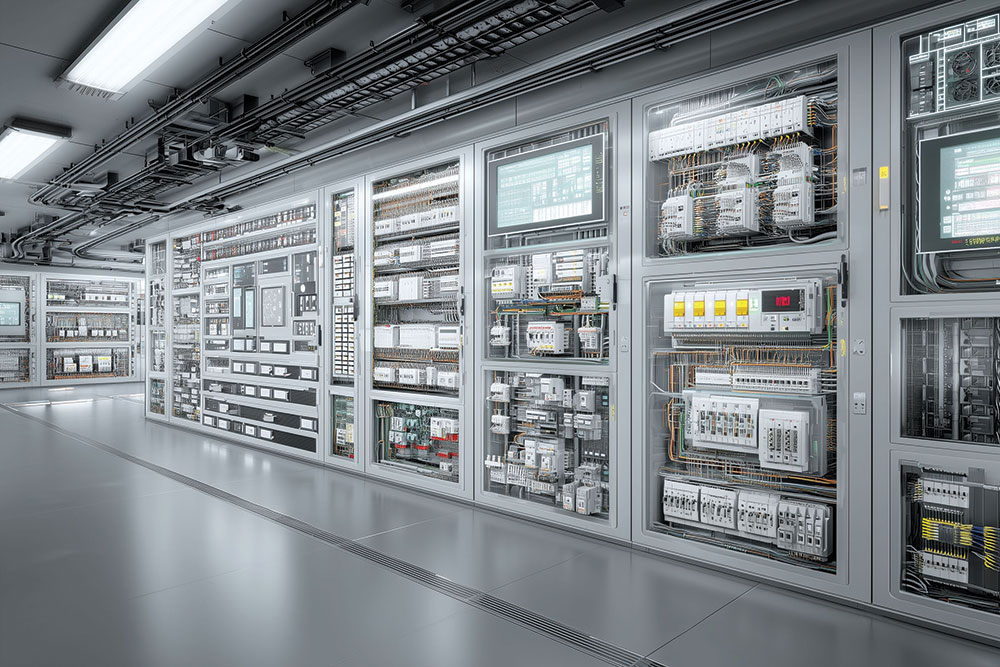
Across brownfield sites, constraints are both physical and practical, for example, legacy I/O and proprietary hardware create compatibility headaches; control logic often embeds decades of undocumented behaviours, and outdated networks resist integration with modern, secure architectures.
In addition to the above, already-complex challenges is the need for continuous production, shrinking pools of legacy expertise and growing cybersecurity pressure. This explains why operators hesitate to take the next step.
The non-negotiables of control
At the heart of modernised DCSs like Foxboro is a simple principle: software-defined automation cannot come at the expense of deterministic control.
In high-hazard, continuous-process environments, timing is everything. Here, for example, Foxboro’s scan-based execution model is predictable, bounded, fail-safe and remains ever-present as control moves into virtualised and distributed environments. Determinism is what keeps loops stable, even in the face of computing or network variability.
Equally critical is true fault tolerance. Advanced DCS offerings draw on a heritage of parallel, state synchronised control where primary and shadow processors continuously validate each other, setting a higher standard than conventional redundancy.
In a software defined world, this philosophy endures and resilience is engineered into execution, not added as an afterthought.
These principles extend to network design, modular control logic and secure-by-design architectures. The result is a system that embraces openness through standards, such as OPC UA and IEC-aligned models, without compromising control integrity.
Re-engineering I/O
Traditional DCS designs lock engineers into early signal types, cabinet layouts, and wiring decision making which can be costly to recover when plant realities change. However, Foxboro’s universal, software-configurable I/O fundamentally breaks this constraint; and allows each channel to be defined in software, analogue, discrete, HART or otherwise, which in turn enables engineering teams to standardise cabinet designs early without committing to final configurations. This dramatically reduces complexity, enabling pre-built, repeatable intelligent enclosures with fewer cabinets, less marshalling and significantly reduced wiring.
The impact on project execution is fundamental and profound. Late-stage changes which are historically a source of cost overruns and delays become software adjustments rather than physical rework. Furthermore, instrument changes, vendor substitutions or scope shifts no longer trigger redesign cycles or procurement bottlenecks.
In practice, risk moves out of the physical domain and into the software, where it is faster, safer and less expensive to manage.
Building the software-defined stack
Foxboro’s evolution into an edge-ready, software-defined architecture was not one single leap, but a layered metamorphosis:
• Virtualised backbone: Servers decouple DCS apps from hardware, running HMI, historian, engineering and alarms as resilient, scalable virtual machines.
• Lifecycle friction reduced: Updates are now image based, not hardware bound, streamlining maintenance and upgrades.
• Thin and zero clients at the front line: Operator access has been simplified, tools run centrally, and they are delivered securely to lightweight end-points.
• Cybersecurity strengthened and overhead is cut: There is no more complex workstation upkeep, centralisation now reduces risk and cost.
• Edge I/O brings intelligence closer: Software-defined modules shrink cabling, add diagnostics and enable local processing.
A pragmatic path forward
Brownfield site transformation should be incremental, using strategic, actionable phases instead of a complete overhaul. It begins with stabilisation, refreshing infrastructure, aligning lifecycle dependencies and ensuring systems remain current and continuous. From there, edge I/O and universal I/O can be introduced alongside existing systems, reducing complexity without disrupting operations.
The next step is coexistence; this involves piloting software-defined automation and edge applications in low-risk areas, while integrating with the existing DCS through secure, non-intrusive interfaces.
Ultimately, modern DCS preserves the non-negotiables of deterministic control, fault tolerance and high availability, while introducing flexibility through software, virtualisation and edge technologies. Only then does the control layer itself evolve gradually and in line with natural lifecycle events towards fully software-defined execution.
| Tel: | +27 11 254 6400 |
| Email: | [email protected] |
| www: | www.se.com/za/en/ |
| Articles: | More information and articles about Schneider Electric South Africa |






© Technews Publishing (Pty) Ltd | All Rights Reserved
 printer friendly version