



South Africa’s energy market is changing fast. With grid connection queues stretching up to five years in some areas and demand for reliable, affordable power rising, commercial and industrial businesses must decide whether it is time to take control of their energy and go fully off-grid. For many companies, off-grid is no longer just a backup option or a safety net, it is the strategic choice for energy security, sustainability and predictable costs.
Technology and economics are finally aligning
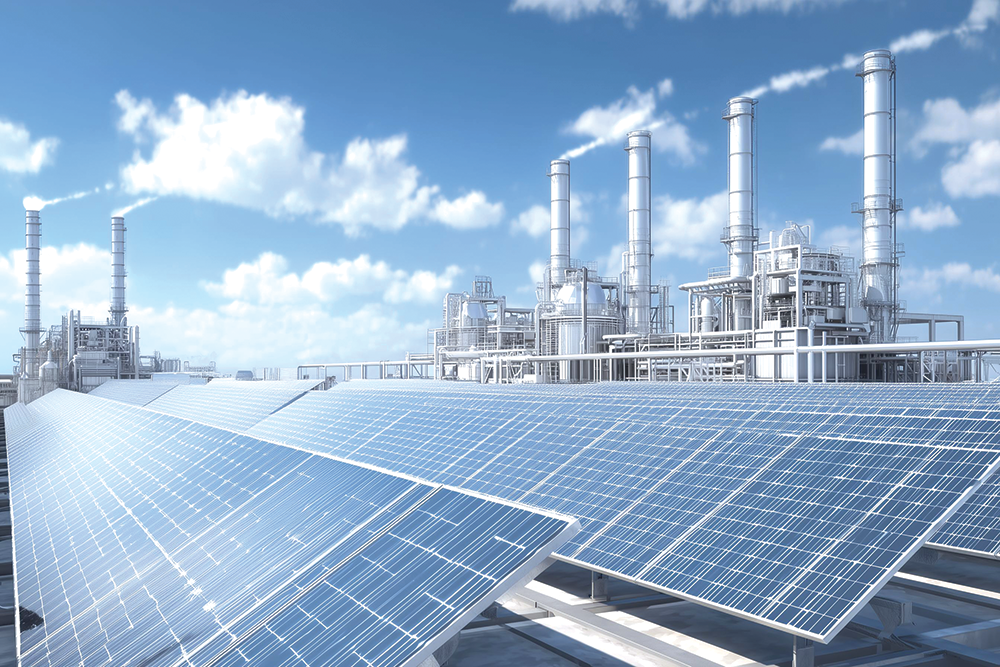
For years, complete energy independence seemed out of reach. Technology was expensive, storage options were limited, and generating enough power to run a business off-grid felt impractical. This is changing rapidly. Modern solar panels capture sunlight far more efficiently, while battery storage allows businesses to use that energy at night or when clouds block the sun.
South Africa is particularly well positioned to benefit, with abundant sunlight across much of the country. Nature has shown us the way each tree is in essence a small factory. A tree’s leaves capture sunlight and converts it into energy to grow and produce fruit. The tree’s trunk can be thought of as a battery which stores energy, for when it is needed. Off-grid systems operate on a similar principle at an industrial scale, turning sunlight into reliable, usable power for businesses.
Costs have dropped dramatically. Solar panels are now more than 80% cheaper than a decade ago, while batteries, the key to energy storage, have fallen nearly 90% in price over a similar period. Combined with better efficiency and large-scale production, self-generation is becoming increasingly competitive with traditional grid electricity, turning a possibility into a practical reality.

What off-grid really means in practice
Going off-grid requires a deliberate decision to disconnect from the utility grid. All energy needs must be generated on site through a combination of solar panels and battery storage, with a diesel generator for periods of prolonged cloudy days. Today, well-designed off-grid systems can supply 95% or more of an operation’s energy from clean sources, with diesel used only during extended periods of heavy cloud or rain.
This approach provides three key benefits: predictable costs, reliable supply and a lower carbon footprint. Businesses are no longer subject to volatile electricity tariffs, punitive regulations or intermittent grid supply. Operations can run smoothly, while sustainability performance increasingly meets global expectations for export-focused companies.
Increased financing and accessibility options
Historically, the upfront cost of going off-grid was a major barrier. That barrier is now changing thanks to innovative financing solutions. Models such as power purchase agreements and Energy-as-a-Service allow businesses to adopt off-grid systems without a heavy initial investment. Providers take responsibility for design, installation, monitoring and maintenance, including component replacement for the duration of the contract. Performance guarantees ensure that clients are compensated if energy targets are not met.
These arrangements allow businesses to focus on running their operations while enjoying the benefits of reliable, sustainable and cost-effective power. For many, off-grid energy is now not only feasible, but financially sensible.
Strategic considerations and opportunities
Off-grid solutions are not a ‘one size fits all’. Space constraints limit feasibility for high-demand facilities such as data centres or dense urban buildings, which may instead rely on wheeling or embedded energy solutions. For businesses with sufficient rooftops, land or even the ability to create additional space through carports and storage areas, going off-grid makes strategic sense. Electric vehicles with vehicle to load capabilities that are now readily available in South Africa at competitive prices provide additional options for creative load management.
The projects which Sustainable Power Solutions has implemented in the Seychelles, Kenya and Botswana demonstrate that fully off-grid operations are both technically possible and economically viable. However, new developments should incorporate off-grid planning from the start, as buildings designed to maximise solar exposure and utilise unshaded areas can be used to avoid the high costs of grid connection, reduce operational risk and create more attractive, sustainable properties for tenants or buyers.
Off-grid energy as a strategic advantage
Off-grid energy has matured from a niche experiment into a strategic business solution. Falling technology costs, innovative financing models, and the urgent need for reliable power are providing companies with a clear reason to take control of their energy. Off-grid energy is cheaper, cleaner and more predictable than remaining tied to the grid. It is set to become mainstream in South Africa within the next five years. Businesses that embrace it now gain resilience, operational certainty and sustainability advantages that will give them a competitive edge for the future.
For more information contact Sustainable Power Solutions, [email protected], www.sps.africa






© Technews Publishing (Pty) Ltd | All Rights Reserved
 printer friendly version