



According to Associated Energy Services (AES), a specialist steam and boiler operations maintenance and service provider, solid fuels (coal) and biomass (such as wood chips) are both cost-effective and readily-available fuel source options. However, both come with unique benefits and challenges.
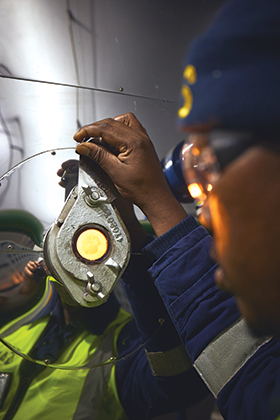
Once fed into a furnace, solid fuel takes time to ignite. Conversely, liquid or gaseous fuel allows for almost immediate ignition: “The response of liquid- or gas-fuelled boilers to any changes in steam demand is rapid. With solid fuels, there is a delay in the response of the boiler to ramp up adequately and meet the new demand,” explains AES operations director, Ray Lund. “With biomass, where moisture content can fluctuate between 20% and 55%, the response is even slower than coal as it takes time to drive off extra moisture before ignition.”
When solid fuels are best
Solid fuels are ideally suited to processes with stable steam demand profiles where there are few fluctuations. However, a good operator can improve response time. “We run coal-fired boilers where the load changes quite significantly. Good boiler control systems should automatically adjust boiler settings to respond to a sudden steam increase or decrease. However, operator intervention is required if the shift in load is large, especially since solid fuel quality is typically variable,” he says.
If the amount of steam required reduces significantly, the thermal heat being generated in the boiler must then be reduced very quickly. The control system will respond, slowing down or even turning off the fans as required, and the operator will also manually reduce fuel feed or remove fuel if needed. The boiler will, however, remain safe when steam draws are rapidly reduced. If too much heat is generated in relation to the amount of steam being removed, the safety valves lift to release the excess pressure to protect the boiler.
Should water levels in boilers drop below ‘extra-low’ levels (an emergency event), operators should immediately remove the heat source to prevent boiler damage. “Hence the need to have operators on site. With gaseous and liquid fuel systems, automatic cut outs ensure no further fuel is added. In a solid fuel system, the furnace fuel continues burning and must be physically removed from the furnace by an operator,” he notes.
Managing sites with steam supplied to many different production lines adds complexity since each line has an independent steam draw profile.
Startups of such plants need to be carefully managed by ensuring that numerous production lines do not start simultaneously, preventing steam demand peaks as the heavy startup steam draws of the various lines overlap. Such a large steam draw increase could be catastrophic in terms of maintaining steam pressure.
AES commercial director, Dennis Williams cautions that solid fuels are not recommended when using thermal oil. Localised cracking of thermal oil might occur due to overheating, resulting in carbon buildup on the inner heat transfer surface. This can create a hot spot that can ultimately rupture. Hot oil added into the combustion space of the boiler presents a major fire risk.
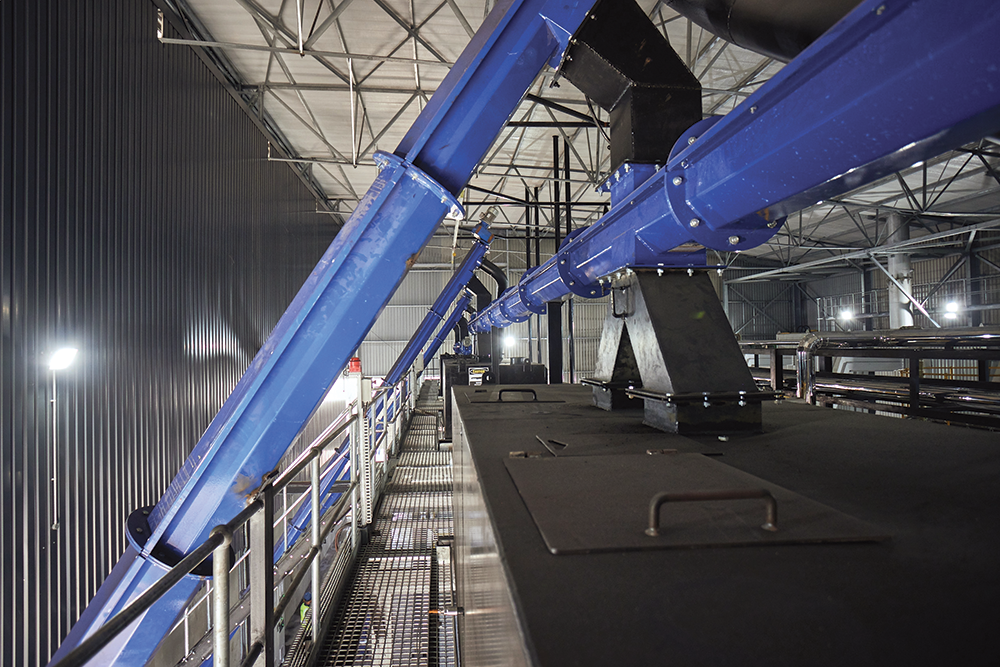
Switching and managing solid fuels
Changing from solid fuels to biomass, as well as managing the use of each optimally, also presents challenges. Williams and Lund recommend firstly identifying the fuel of choice, secondly ensuring it is consistently available and thirdly that the correct technology is implemented to optimise combustion. Composition, sizing, combustion characteristics and moisture content are different for each solid fuel type and should be considered in selecting the technology to be used to generate steam.
Typically, coal-fired boilers in industrial applications require coal to be 6 to 25 mm in size with a gross calorific value of 27,5 MJ/kg. Variations within coal seams at the mine (as well as process variations in the crushing, screening and washing of the coal) can result in sub-standard fuel quality from coal suppliers, and must be monitored by the user. AES ensures that the coal supplied to the sites they operate meets specifications: “We sample every single load and test it in our internal laboratory in Cape Town. That way, we can hold our suppliers accountable,” says Lund.
There are also important safety protocols which staff need to follow when storing solid fuel. “There is a small risk of engulfment, where a large coal stockpile could collapse onto someone. There is also the admittedly rare risk of spontaneous combustion,” Lund explains.
Williams and Lund say that biomass fuels can potentially be consistent in size and moisture content: “This is however contingent upon them being prepared specifically to be used as fuel. When purchasing material such as offcuts and production residue, the outcome varies,” Lund concludes.
For more information contact AES,






© Technews Publishing (Pty) Ltd | All Rights Reserved
 printer friendly version