



Steel can be regalvanised three to four times, effectively doubling the lifespan of key infrastructure for 30% of the replacement cost. That is why the Hot Dip Galvanisers Association of South Africa (HDGASA) sees regalvanising as a cornerstone of the circular economy.
HDGASA marketing manager, Anthony Botha, notes that the circular economy challenges the linear ‘take, make and dispose’ manufacturing model, and goes beyond traditional recycling. “This involves melting and reprocessing, which consumes significant energy. However, regalvanisation is just cleaning and recoating the existing steel with zinc to restore corrosion resistance, without the energy intensive rebuilding of an entirely new structure,” he explains.
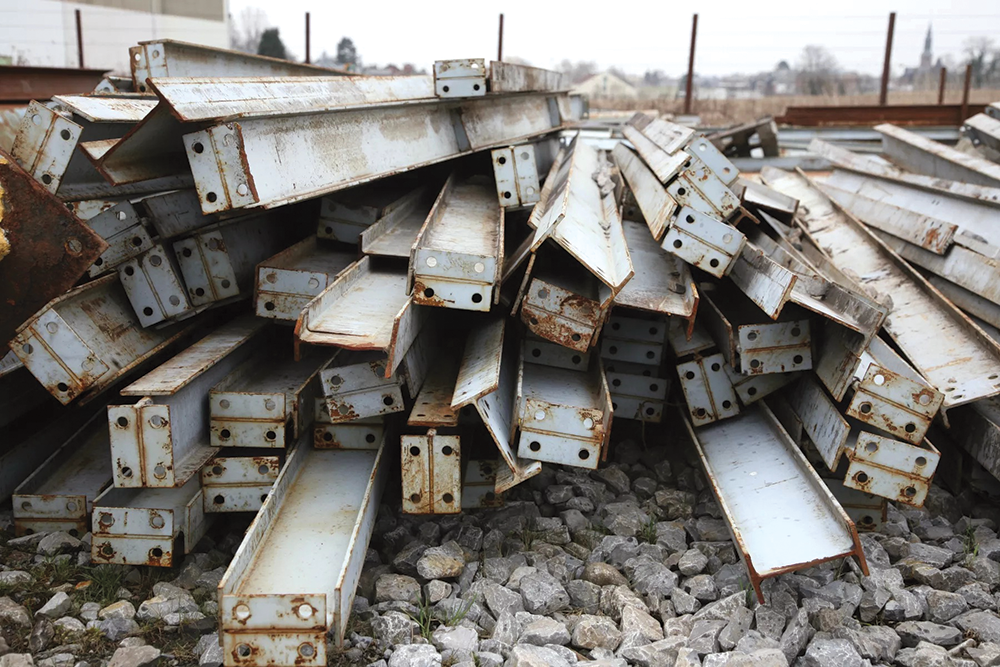
“Regalvanising is no longer optional. With the challenges facing the industrial sector, it is a powerful strategy for extending the lifespan of steel. Materials of construction are running out, and industries must start reusing and regalvanising. Rather than discarding ageing steel components or articles, we need to ensure these have a longer service life. That way, we preserve embodied energy and minimise waste,” he advises.
Stripping and cleaning
According to Botha, the process begins with a thorough inspection by the galvaniser to ensure that an article can be regalvanised, either for continued use or for reuse elsewhere. Regalvanised components must retain their inherent structural tolerances, especially if these are used in load-bearing applications. This will ensure durability congruent with the environment in which the regalvanised material is to be employed.
Key considerations include the steel chemistry. This includes the silicon content when first fabricated as this will reduce during preparation for regalvanising, as well as the overall surface condition and dimensional integrity. Components are then stripped of old coatings. The galvaniser will have to remove any coating of existing zinc, rust, any other oxides, contaminants or paint by abrasive blasting and/or chemical cleaning.
Botha emphasises that the steel surface plays an important role in achieving a quality coating. Cleanliness is paramount when it comes to the final step, which is fluxing. “After coating acceptance, the regalvanised article will be inspected as per any other galvanising in accordance with SANS 121:2024 (ISO 1461:2022). This is exactly the same process and methodology used for brand new articles.
Infrastructure renewal
Botha explains that regalvanising is gaining traction in the refurbishment of utility structures and modular infrastructure by South African and neighbouring countries’ state-owned enterprises. Many do not have hot dip galvanisers in their countries. They disassemble and then send it to South Africa for regalvanising. This is typically reusing existing steel elements for everything from road furniture to signs, gantries and lattice towers. This reduces the procurement cost of steel and shortens the lead time because there is no fabrication requirement.
Overall, hot dip galvanising provides a much lower cost over the entire lifespan of the structure. Duplex coating, when a galvanised article is painted with a zinc compatible coating to provide extra protection, can also be repeated after steel is stripped, cleaned and then regalvanised.
Economic and environmental spinoffs
“From an economic standpoint, regalvanising can cut costs by up to a third. This is important, especially when logistics and lead times are factored into overall infrastructure costs. “When extending the service life of a structure, regalvanising can completely change the way that the industrial sector looks at maintenance,” Botha adds. He reiterates that a structure can be successfully regalvanised several times over a 20 year period, as long as the properties of the steel are preserved. The first maintenance is due when 5% of the entire surface area shows red rust, as galvanising, whilst still providing corrosion control through cathodic protection, experiences increased rates of depletion.
“As infrastructure owners and engineers embrace circularity, galvanising stands out as a practical, standards-compliant and economically sound solution. It bridges the gap between sustainability and operational realities to deliver corrosion control, protection, cost savings and environmental stewardship, all in one elegant process. In short, this is not just a technical fix, but a strategic pivot towards a more resilient and resource-efficient future,” Botha concludes.
For more information contact Hot Dip Galvanisers Association of South Africa,






© Technews Publishing (Pty) Ltd | All Rights Reserved
 printer friendly version