



Specialist high-pressure equipment engineering firm, Steinmüller Africa showcased practical engineering solutions for one of South Africa’s future power generation challenges: how to keep existing coal-fired power stations performing reliably as renewable energy feeds increasing volumes of unpredictable power into the national grid.
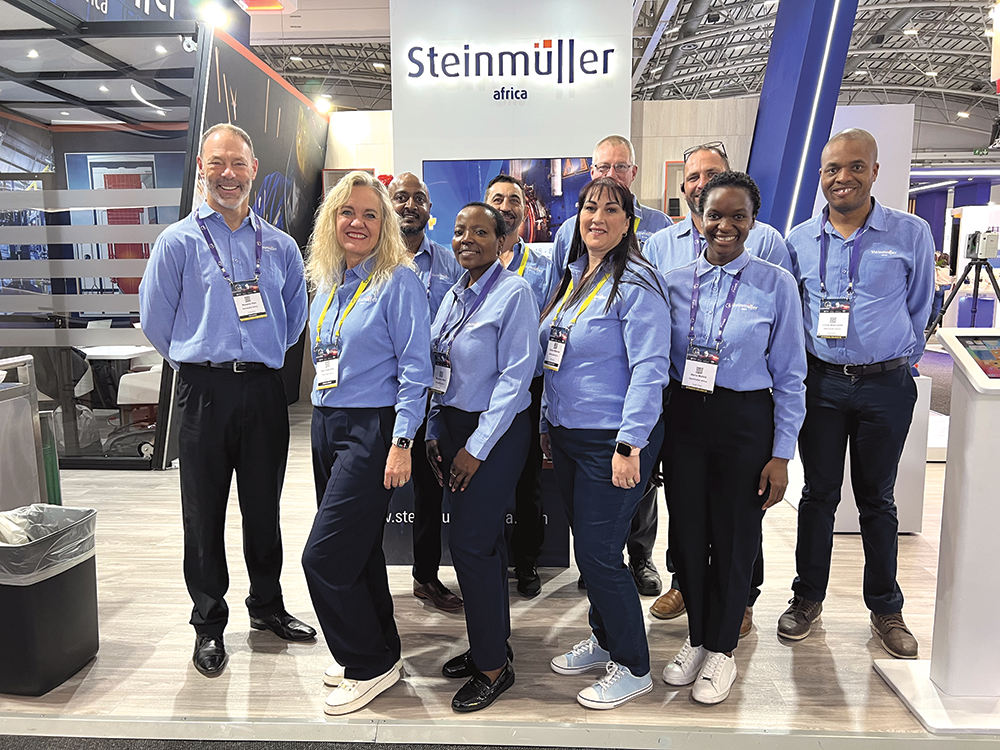
The company presented its solutions at Enlit Africa 2026, demonstrating that conventional power plants can be adapted to more rapidly increase or decrease output, can operate efficiently at significantly lower generation loads than originally designed, without requiring significant plant replacement. These capabilities are increasingly important in a power system where conventional plants must operate more dynamically to complement variable renewable generation.
Their technical presentation, ‘Improving the Flexibility of Steam Generators in Low Load Operation’ set out how existing steam generators can be modified to operate safely at minimum loads as low as 20 to 30% of rated capacity. Where power stations were originally designed to run at or near full capacity around the clock, they will in future be called on to increase load rapidly when renewables cannot meet demand and then suddenly decrease load when renewables start generating again. Without sufficient grid-scale energy storage, conventional plants carry this balancing burden directly, placing new demands on ageing steam generator equipment. In this context, improving low-load performance is a practical way of helping existing coal-fired assets provide the required grid support as the proportion of highly variable renewable energy increases.
Steinmüller Africa, which designs, fabricates, commissions, installs and maintains customised high-pressure equipment across a range of industries, drew on three real-world case studies to demonstrate that solutions are both technically achievable and practically deliverable. In one example, engineers reduced a plant’s minimum operating load from 40% to 22% of maximum continuous rating through changes to operating procedures alone with no physical plant modifications required.
In a second case, a targeted two-step modification incorporating an economiser bypass and a feedwater recirculation system restored a plant’s original design minimum load of 30% after significant emission reduction systems had been retrofitted to the plant.
A third case demonstrated how detailed thermal and hydraulic stability modelling can establish the true low-load limits of a plant and identify the specific measures needed to reduce these limits further, without damage to the plant or any safety concerns.
“Increased plant flexibility by reducing the present minimum technical load is a possible option for every power plant,” says Warwick Ham, group leader of Process Engineering. “As renewable energy penetration increases, this kind of flexibility will become increasingly important to maintaining grid stability and protecting the integrity of conventional generation assets. The engineering investigation is just the first step, followed by optimisation of operating parameters, and where necessary, plant modification measures.”
For South Africa’s power generation sector, the pressure to integrate renewables while maintaining grid stability is growing. Steinmüller Africa’s approach offers a credible, cost-efficient path forward for plant operators looking to extend both the capability and the working life of their existing assets. It also improves the flexibility needed to operate in a grid which is having to incorporate an increasing quantity of variable renewable energy.
For more information contact Mpho Mafela, Steinmüller Africa,






© Technews Publishing (Pty) Ltd | All Rights Reserved
 printer friendly version