



The evolving landscape of boilers means that companies aiming to enhance their thermal energy efficiency while managing costs and minimising environmental impact must make careful and informed decisions. In South Africa, the industry primarily relies on two types of boilers: fire tube boilers, which are suitable for lower steam pressures of 20 bar or less, and water tube boilers, which handle larger steam capacities, higher operating pressures, or utilise unconventional fuel sources and advanced combustion methods. Water tube boilers are commonly employed by large utility companies, as well as in the sugar and paper industries.
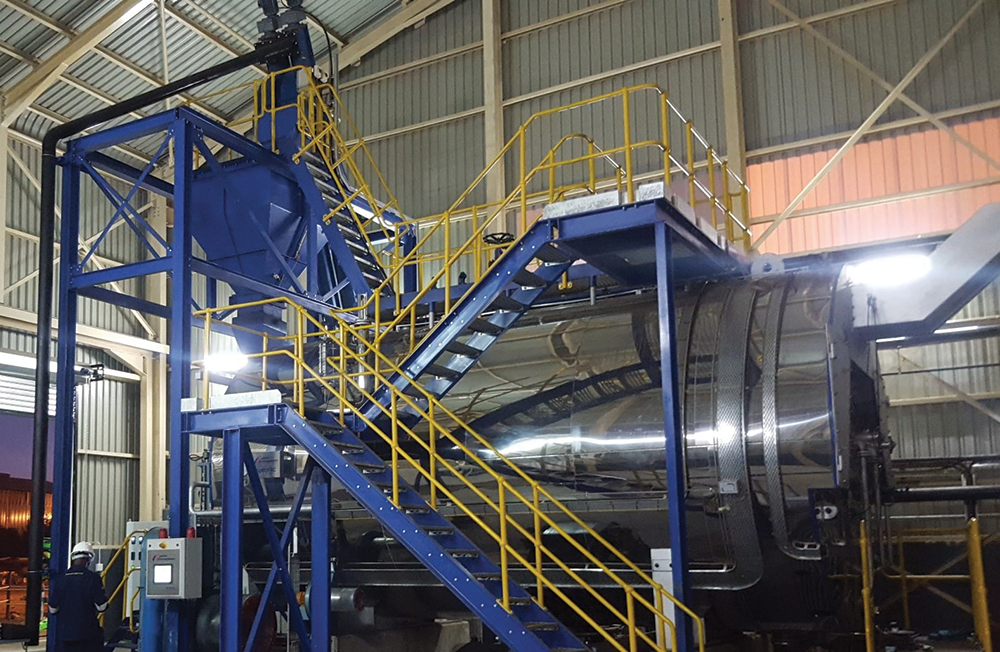
Fuelling boiler choices
Key considerations are the amount of steam required per hour and the steam pressure, followed by specific onsite requirements. Challenges could include everything from configurations and space to environmental issues: “For example, companies in the Durban South Basin would not get permission for a 50 ton per hour coal-fired boiler installation due to stringent cutbacks on sulphur dioxide. The sulphur content needs to be less than 1%, even in coal. Here, a gas-fired unit would be preferable,” advises Dennis Williams, commercial director of steam and boiler operations and maintenance service provider, Associated Energy Services (AES).
“Boilers can be catalogue or quite specialised,” he continues. In the industrial steam space there is a wide selection. Large utility boilers facilitate more specialised design. For those processing unique fuels or waste streams there are craft boilers to provide bespoke solutions which reduce waste while saving costs and boosting efficiencies. A food manufacturer in KwaZulu-Natal, for example, added a boiler to process chicory grounds from coffee-making, avoiding the cost of treating and dumping the wet slurry.
Up until now, most boilers have been coal-fired as this fuel was abundant and affordable. Now, there are also gas- and liquid- fuel-fired boilers which are perfect for companies operating them intermittently or for short periods: “These allow the fire tube design to operate at a slightly higher steam pressure because the combustion flue is smaller,” Williams explains.
In the past, electrical steam generation was popular with breweries and textile and tyre manufacturers installing electrode boilers. “Due to loadshedding, companies no longer had a reliable power source and began operating with costly heavy furnace oil. They had to decide what they were going to do in the long term. Many of our clients are former electrode boiler users who converted to coal or biomass, moving away from heavy furnace oil as a backup,” he says.
Replace or retrofit: the burning question
The choice between a complete upgrade or a retrofit depends on a client’s individual steam requirements. Williams notes that an original 20 bar boiler cannot be transformed into a 45 bar boiler as the metallurgy and steel thickness are unsuitable for this level of pressure: “Improvements should rather come from the application of the latest control system and combustion technology, as well as waste heat recovery on the back end,” he advises.
A coal-fired fire tube boiler equipped with a large chain grate stoker can be retrofitted by removing the stoker and installing a burner that uses either liquid fuel or gas at the front end. To convert a liquid- or gas-fired boiler to biomass, a Dutch oven can be placed at the front. This setup consists of a refractory-lined furnace that combusts wood biomass externally and then transfers heat through the flue into the boiler. However, it’s important to note that altering the flue gas characteristics may impact the boiler’s output capacity. For instance, when converting to biomass with a high moisture content of up to 40%, a boiler originally designed to produce 20 tons of steam per hour might only achieve a maximum output of 12 to 14 tons.
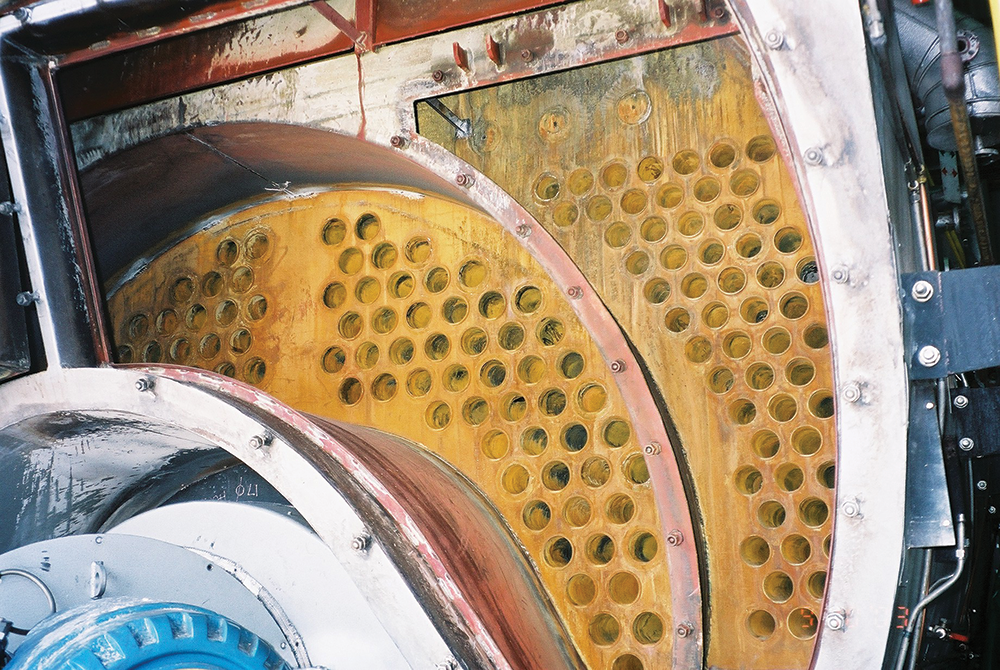
Boilers and beyond
Certain fuel types also allow the use of additional equipment to optimise performance on existing and new boilers, according to Williams. This could include an economiser, a heat exchanger that recovers some of the lower grade heat from the flue gas exiting the stack to return it to reheat boiler feed water to reduce fuel usage. Otherwise, air pre-heaters can raise the temperature of combustion air into the boiler.
Fitting an economiser is possible with biomass but is not advisable with coal as the flue gas will contain sulphur dioxide which leads to acid dew point corrosion.
Williams says AES’s rich pool of experience, ability to keep up with new trends and technologies, and their understanding of production processes all assist clients to weigh up different options in a careful and informed manner. “This is where thermodynamic modelling and project design come in, as well as understanding what different boiler manufacturers offer. The last thing clients want is a cutting-edge plant which becomes problematic to operate or maintain three or four years down the line. We can provide a viable and optimal boiler solution, not just from a capital cost, but also from an operational perspective,” Williams concludes.






© Technews Publishing (Pty) Ltd | All Rights Reserved
 printer friendly version