Sequence of event recorders (SER) or sequence of event monitors (SOE) play a significant role in monitoring and maintaining critical infrastructure. By logging alarms and events in real time and in chronological order, they provide visibility to users and help identify the root cause of problems that may occur. Gary Bradshaw, director at remote monitoring equipment specialist, Omniflex, outlines the applicable industries and reasons for use.
The early SER products would provide 1 millisecond time stamps of the alarm and events they were monitoring, and the results would have been printed via an inbuilt printer so that the alarm or events list could be printed on paper for analysis. The logging of alarms and events has since progressed with SOE monitoring being done to sub-millisecond time stamps and the results being logged to a local or remote scada or distributed control system (DCS). These systems are applicable to all critical infrastructure industries, including oil and gas, nuclear, energy and utilities, manufacturing, data centres and healthcare.
All of these critical industries could have situations where one alarm or event could trigger a series of others extremely quickly afterwards. This technology allows users to identify the possible cause of the problem very quickly. This would usually be at the first alarm and not the subsequent ones, helping to diagnose any issues in a timely manner.
SOE provides better forensics to users and the ability to audit data properly afterwards. By addressing the main cause, this not only prevents catastrophic failures associated with hazardous industries, but also provides the ability to pinpoint a problem at the earliest stage. This allows repairs and preventative maintenance to be conducted before any major damage occurs, and also reduces troubleshooting and downtime, improving safety and providing major savings. This is especially useful for any operation that requires power distribution management – such as national infrastructure projects or data centres.
Omniflex has been a world leader is supplying SER and SOE systems
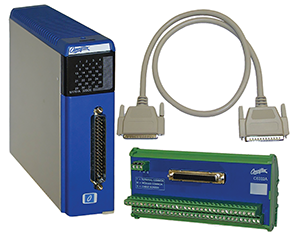
The Maxiflex 32SOE Digital Input Module provides a timestamp within 200 microseconds of the alarm event happening, which is far quicker than older SER systems. This allows for much better accuracy in locating the first alarm if multiple alarm events occur in quick succession.
The Maxiflex 32SOE is an intelligent module equipped with a spike filter to prevent noise from generating false alarm events on the input, and a debounce filter for inputs that have contact bounce problems. Using multiple 32SOE modules can allow SOE systems to be constructed with up to 480 time-stamped inputs per node with no limit on the number of nodes, providing very large distributed systems. Multiple nodes can be GPS time synchronised, such as the larger distributed systems like the ones Omniflex has provided on offshore gas platforms in the North Sea. Over 3500 distributed alarms and events associated with the generators and compressors were all individually monitored in the local scada system and all timestamped to 200 microseconds resolution.
Omniflex delivers ICCP systems in London Omniflex Remote Monitoring Specialists
Maintenance, Test & Measurement, Calibration
Omniflex has supplied impressed current cathodic protection systems for landmark London buildings, protecting reinforced concrete from corrosion and extending the service life of commercial, retail and heritage sites.
Read more...Modernising acid cooler protection without disrupting production Omniflex Remote Monitoring Specialists
Maintenance, Test & Measurement, Calibration
Omniflex has supplied an advanced anodic protection control system to phosphate producer Foskor, replacing a legacy transformer rectifier system while maintaining uninterrupted production. The distributed PowerView CP solution provides remote monitoring and DCS integration.
Read more...Isolated Modbus gateways with built-in Wi-Fi for industrial IoT applications Vepac Electronics
Fieldbus & Industrial Networking
Vepac Electronics offers the Sielco Sistemi SS10680 series of isolated Modbus gateways with built-in Wi-Fi, providing three configurations for industrial data acquisition: cloud publishing via MQTT, local USB and FTP logging, and straightforward Modbus TCP to Modbus RTU conversion.
Read more...Upgrading alarm systems for critical industries Omniflex Remote Monitoring Specialists
PLCs, DCSs & Controllers
Omniflex’s OMNI16R alarm annunciator platform provides a direct replacement for legacy CSA systems such as MPAS 90 and SA9100, enabling operators in oil and gas, nuclear and power generation to modernise alarm infrastructure without sacrificing the clarity required for safe operations.
Read more...XPlanar aids innovation in laser processing Beckhoff Automation
Fieldbus & Industrial Networking
Aalborg University is among the first in the world to test Beckhoff’s XPlanar intelligent transport system in advanced laser processes, opening the door to faster, tool-free production of metal parts.
Read more...Rethinking corrosion protection in process plants Omniflex Remote Monitoring Specialists
Maintenance, Test & Measurement, Calibration
Remote monitoring is changing how cathodic and anodic protection systems are managed in process plants, giving operators continuous visibility of corrosion protection performance and enabling more proactive maintenance decisions.
Read more...Belden expands edge computing portfolio with ProLinx Edge Gateway
Fieldbus & Industrial Networking
Belden has released the ProSoft Technology ELX3 ProLinx Edge Gateway, combining operational technology protocol conversion with Docker-based edge application hosting on a single ruggedised hardware platform for deployment in harsh industrial environments.
Read more...Anybus Communicators are CRA-ready Industrial Data Xchange (IDX)
Fieldbus & Industrial Networking
HMS Networks has upgraded its Anybus Communicator range to meet new EU cybersecurity rules, giving industrial manufacturers and integrators an easier path to compliance.
Read more...Rethinking corrosion protection in process plants Omniflex Remote Monitoring Specialists
Maintenance, Test & Measurement, Calibration
Omniflex explains how integrating remote monitoring and cloud-based platforms into cathodic and anodic protection systems is helping process plant operators stay ahead of corrosion and make smarter maintenance decisions.
Read more...Remote I/O modules provide flexible options for distributed applications
Fieldbus & Industrial Networking
Dinkle International is now stocking the iO-GRID NEMO industrial-grade remote input/output modules, offering support for five leading industrial Ethernet protocols and a range of discrete channel configurations for distributed automation applications.
While every effort has been made to ensure the accuracy of the information contained herein, the publisher and its agents cannot be held responsible for any errors contained, or any loss incurred as a result. Articles published do not necessarily reflect the views of the publishers. The editor reserves the right to alter or cut copy. Articles submitted are deemed to have been cleared for publication. Advertisements and company contact details are published as provided by the advertiser. Technews Publishing (Pty) Ltd cannot be held responsible for the accuracy or veracity of supplied material.










 printer friendly version