



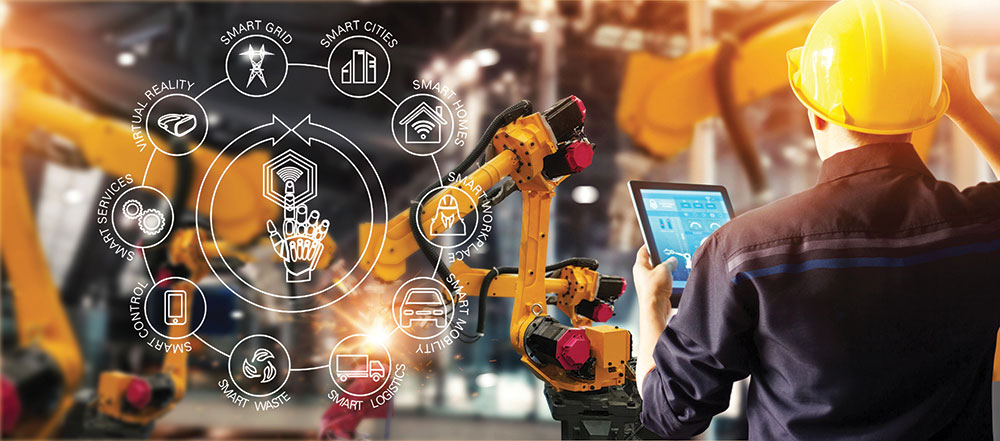
The electromechanical industry is fundamentally being transformed by Industry 4.0, which is ushering in an era of more efficient and innovative practices. Increasingly, companies are integrating automation and Artificial Intelligence (AI) to optimise manufacturing processes, enhance productivity, and deliver better solutions to clients.
This technological evolution is not optional, but essential for companies to remain competitive in a rapidly evolving marketplace. Industry 4.0 is a paradigm shift that is driving industry players into a digital future where they can thrive in an increasingly digitised environment.
By introducing advanced technologies such as the Internet of Things (IoT), automation, data analytics and AI, Industry 4.0 is reshaping the electromechanical industry, as these technologies create an intelligent digital connection to historically analogue equipment. This assists companies to increase efficiencies, sustainability, and the safety of their equipment.
Automation and AI also play a critical role in creating continuously improving overall equipment effectiveness (OEE) metrics that in turn optimise manufacturing processes and enhance productivity. Constantly evaluating these metrics through the utilisation of AI algorithms can improve many aspects of the manufacturing process. For example, it can reduce downtime, optimise performance, and enhance quality control and efficient changeovers, all through data-driven decision making.
Increasing profitability
Data-driven decision making from real-time data analytics enables organisations to analyse market trends, customer behaviour, and operational performance to identify opportunities to optimise resource allocation and increase profitability.
Ultimately, digital transformation enables companies to gather more data about their equipment and processes, while AI is key to learning how to improve, progress and evolve into the next industrial revolution. This is a key requirement for traditional electromechanical companies to remain relevant in a market that demands increasingly innovative solutions.
Generally, South African businesses and companies in other parts of the continent are making steady progress in terms of adopting Industry 4.0. It is an exciting era that is underscored by large-scale research and development to find solutions to our unique environmental challenges. Organisations are beginning to see the potential benefits and value that these solutions could bring to them and their customers.
However, the uptake of digital transformation is to some extent being hindered by the prevailing skills gap within the electromechanical sector, and also a fear of change, infrastructure challenges, and a lack of access to capital for many smaller companies. Large organisations, along with government initiatives, are at the forefront of Industry 4.0 adoption, as they endeavour to stay competitive on the international stage.
Overcoming resistance
The biggest challenge for organisations adopting these new technologies is getting buy-in from their internal stakeholders. To overcome resistance to change, they must ensure that every stakeholder understands the value of these solutions. Resistance can manifest in various forms, from a lack of capital commitment to perceived job uncertainty. It is up to the leadership team to explain how these technologies enable the organisation to reach its goals.
Companies can harness the full potential of digital technologies to drive sustainable growth in the electromechanical sector by utilising experts within their organisations. Additionally, they should engage the services of a capable consultant to develop smart technologies that complement existing processes, products and services in a way that adds real value for stakeholders.
Companies such as ACTOM Smart Technologies, a leader in Industry 4.0 solutions, can help organisations adapt, innovate and thrive in the digital age, while optimising efficiency, sustainability and safety. The company is a trusted partner for businesses seeking to embrace digital transformation, automation and a culture of innovation, offering tailored solutions that add real value and ensure long-term success.
| Tel: | +27 11 899 1111 |
| Email: | [email protected] |
| www: | www.actom.co.za |
| Articles: | More information and articles about ACTOM Electrical Machines |






© Technews Publishing (Pty) Ltd | All Rights Reserved
 printer friendly version