World’s most powerful pneumatic knocker for heavy-duty industries
January 2024Editor's Choice
Pneumatics & Hydraulics
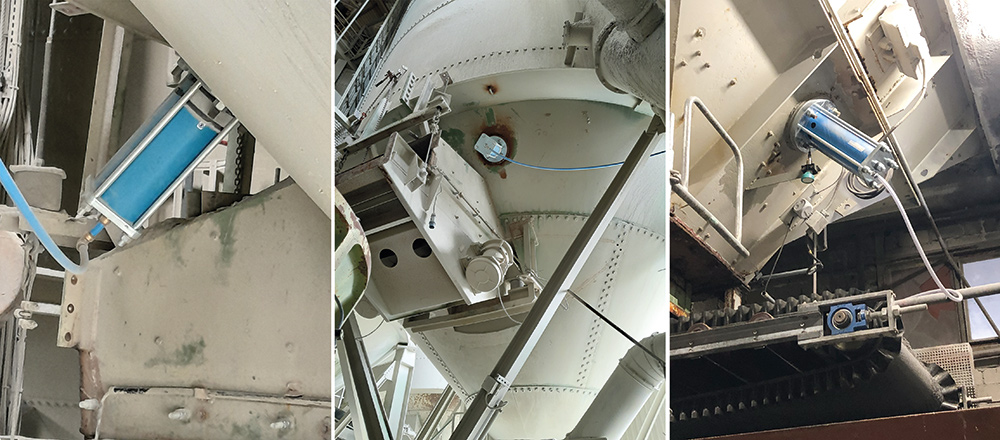
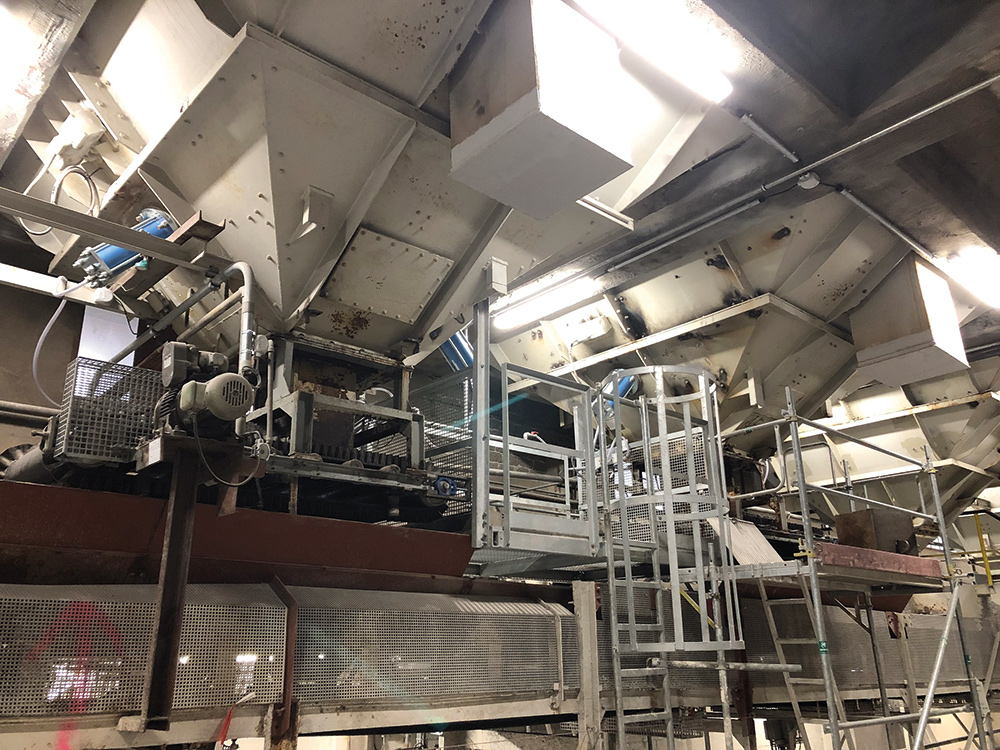
Pneumatic knockers are a valuable tool in minimising buildup of materials and preventing disruptions in material flow in silos, rotary dryers, coolers, granulators and coating drums. This helps plant managers improve production efficiency and product quality. A pneumatic knocker achieves its high rate of impact power through spontaneously released energy stored in the form of compressed air.
singold produces and sells the world’s most powerful pneumatic knocker. While competing models can at best cover a wall thickness of up to 12 mm, singold’s K160 can knock walls with a thickness of up to 25 mm. This makes it suitable for massive, heavy-duty containers. For example, it is used in the mining industry for large silos and discharge chutes, in the building materials industry for gravel bunker outlets, in the chemical industry for mixing plants, in the lime industry for silos with a capacity of over 200 tons, and in the fertiliser industry.
Supernatural strength
The powerful K160 from singold has an impact energy of 423 Nm. This corresponds to the energy generated when a weight of 42 kg is dropped from a height of 1 metre. This high-impact energy cannot be achieved with human forces, even if a 20 kg sledgehammer were to be used. The reason? The acceleration and final velocity of the impact weight in the knocker are far higher than the final velocity that a human being can generate. The piston in the K160 is designed as a magnet. When it is pulled off the anchor plate, the acceleration is 250 m/s2. When the magnet hits the striker at a speed of 7m/s, accelerations of up to 30 000 m/s2 occur. A human being would need two to three times as much hammer weight as the knocker impact weight to generate the same impact energy as the K160 knocker. To put it into perspective, the knock of a K160 is as strong as if you let a 42-kilogram weight drop from a height of one metre onto your foot!
Knocking at the limits of technology
The pneumatic knockers from singold are true masterpieces of engineering. They create the greatest possible impact with the lowest possible dead weight, testing the limits of technology. The K160 model weighs 62 kg and has compact external dimensions, meaning it can easily be retrofitted into existing plants.
The right knocker for every system
In addition to the K160, singold offers a variety of other knockers. Depending on the operating temperature, application area and wall thickness, models can be adapted to every need. Whether you have very large silos, high temperatures or special hygiene requirements, you will have no problem finding a knocker perfectly suited to your specific needs.
SEW-EURODRIVE’s expanded local engineering capability SEW-EURODRIVE
Editor's Choice Motion Control & Drives
At Electra Mining Africa, SEW-EURODRIVE demonstrated how its expanded local engineering capability, digital technologies and lifecycle support strategy help customers improve reliability, energy efficiency and total cost of ownership across the full life of their drive assets.
Read more...Calcamite partners with Schneider Electric and 4Sight for smart water management Schneider Electric South Africa
Editor's Choice
Schneider Electric, AVEVA and 4Sight OT Automation are helping South African wastewater specialist, Calcamite, digitalise its modular treatment plants through a scalable edge-to-cloud automation platform, with the award-winning Gourikwa pilot now scaling to hundreds of remote sites.
Read more...Paper might carry the message but pressure carries the process VEGA Controls SA
Editor's Choice
Accurate pressure measurement is critical throughout pulp and paper production, from chemical pulping to steam drying and wastewater treatment. VEGA’s VEGABAR transmitter range offers South African mills robust, precise monitoring for these demanding conditions.
Read more...BMG integrates conveyor drive technology to improve mining reliability and availability Bearing Man Group t/a BMG
Editor's Choice
BMG supplies engineered turnkey drive packages for belt conveyors and feeders in mining and bulk materials handling, bringing the motor, drive, couplings, gearbox, lubrication and condition monitoring together as one integrated system to protect conveyor availability.
Read more...Economy drive system closes the drive gap in the entry-level segment Beckhoff Automation
Editor's Choice Motion Control & Drives
Beckhoff has launched an economy drive system pairing its new AX1000 servo drive and AM1000 servomotor with the AF1000 dual-axis variable frequency drive on a shared EtherCAT platform, targeting series machines and price-sensitive markets without sacrificing TwinCAT integration or functional safety.
Read more...South Africa’s space balls
Editor's Choice News
South African engineers are preparing to take low-frequency radio astronomy to the Moon with three locally developed B.A.L.L.S. spheres aboard China’s Chang’e-8 mission. This could pave the way for a 55-antenna lunar array and marks another step in the country’s growing space engineering capability.
Read more...Practical tips to build a successful engineering career
Editor's Choice
Award-winning civil engineer, Tinashe Mukalela of AvenirHoldings shares ten practical tips for young engineers navigating a competitive job market, from professional registration and mentorship to emotional intelligence and leadership development.
Read more...Why mining operations need local lightning early warning Senseca
Editor's Choice Electrical Power & Protection
Lightning can develop into a serious mining hazard before the first local strike, leaving crews little time to stop work and reach safety. Local early-warning technology can provide valuable lead time, allowing mines to connect developing storm conditions to defined trigger actions that protect people, explosives and equipment.
Read more...XPlanar aids innovation in laser processing Beckhoff Automation
Editor's Choice Motion Control & Drives
Aalborg University is among the first in the world to test Beckhoff’s XPlanar intelligent transport system in advanced laser processes, achieving micrometer-precise workpiece positioning and dramatically shorter lead times compared with traditional tool-based manufacturing.
Read more...The wireless route to safer, more efficient mining operations Emerson Automation Solutions
Editor's Choice Sensors & Transducers
Modern wireless level measurement technologies are helping mining operations improve process control, increase safety and reduce installation costs. Emerson’s Rosemount 3408 wireless non-contacting radar level transmitter uses 80 GHz frequency-modulated continuous wave radar with HART communication to reach remote assets where cabling is impractical.
While every effort has been made to ensure the accuracy of the information contained herein, the publisher and its agents cannot be held responsible for any errors contained, or any loss incurred as a result. Articles published do not necessarily reflect the views of the publishers. The editor reserves the right to alter or cut copy. Articles submitted are deemed to have been cleared for publication. Advertisements and company contact details are published as provided by the advertiser. Technews Publishing (Pty) Ltd cannot be held responsible for the accuracy or veracity of supplied material.










 printer friendly version