



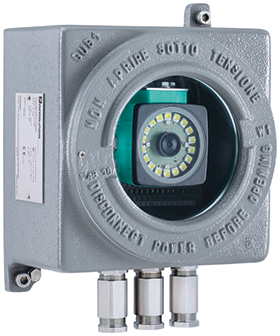
The highly dynamic world of factory automation relies on sensors with a large variety of available technologies. If these sensors also meet the requirements for hazardous areas, several of them could prove valuable in process automation as well. Pepperl+Fuchs has developed a whole range of high-tech sensors that have proven themselves in discrete applications. With explosion protection, they are also suitable for process engineering in zones 1/21 and 2/22.
The digitalisation of process information forms the basis for modern automation and Industry 4.0 solutions. It enables remote access to data and device parameters, predictive maintenance and data-based process optimisation. The basic data is largely supplied by sensors. The sheer variety of these devices in the world of factory automation is almost unmanageable. They are adapted to the highly differentiated technology of discrete manufacturing processes and their development mirrors the short-term cycles and high dynamics in this field. The process industry may be focused on considerably longer cycles, but it can benefit from the rapid technological progress in sensor technology for factory automation.
It is important to ensure mechanical integration of the sensors is as simple and standardised as possible. Reliable explosion protection for devices is an essential prerequisite for their broad and flexible use in process technology. The acquisition and servicing costs for sensors usually only play a minor role in large plants in the process industries, compared to the outlay for permits and certifications needed in explosion protection. The sensors are often required in especially exposed areas, which creates additional challenges. The potential of devices that were originally developed for factory automation can best be illustrated by means of case studies.
Collision protection
When filling tankers with chemical fluids or oil products, personnel must be present on a moving platform above the vehicles. This workspace naturally needs to be protected against collision risks to ensure that any wrong decisions are of no impact. Working with a manufacturer of these appliances, the experts from Pepperl+Fuchs helped to transfer a proven process from the non-hazardous area to the hazardous area. The R2000 2D laser scanner is mounted under the platform railing and its scanning field is directed toward the vehicle area.
If the lifting platform is lowered too close to the tanker prior to the filling process, the sensor triggers a dual warning signal – a flashing light and audible signal. At the same time, the platform is automatically stopped. This protective circuit reliably prevents damage to the material (platform and tanker) and avoids hazardous situations for operating personnel. For use in hazardous areas, the laser scanner has been placed in a pressure-resistant aluminium enclosure with integrated viewing window. It is approved for explosion protection zones 1/21 and 2/22. To prevent scattering and distortion of the signals by refraction, the sensor is mounted in the enclosure at a 15-degree angle.
Object detection
Sensors that use the time-of-flight recording method (pulse ranging technology – PRT) are ideal for quick and reliable object detection. Pepperl+Fuchs offers sensors with Ex-d enclosures. A powerful light source in the sensor emits short pulses that are reflected by the target object and then captured by a highly precise, light-sensitive receiver element. The internal sensor electronics use the runtime of the light pulse to calculate the distance to the target object. This technology is used in the manufacturing of hoses and flexible pipes for oil production. The sensors from the VDM28 series have a detection range of up to 50 metres. They monitor locations in the hazardous area and record the amount of material in stock. If a defined marker is undershot at a location, the sensor signal triggers automatic processes for refilling stock or ordering materials.
The list of examples is endless. Pepperl+Fuchs offers both application-specific solutions and ready-to-use standard products. Equipped with a pressure-tight encapsulated (flameproof) enclosure, the sensors can capture many different process-related variables and provide the information basis for their automation. A wide range of standardised and certified sensors are approved for zones 1/21 and 2/22. Explosion-protected IQH and IUH read/write heads and VLM350 laser light sectional sensors are also available in addition to those sensors already mentioned.
| Tel: | +27 10 430 0250 |
| Email: | [email protected] |
| www: | www.pepperl-fuchs.com/en-za |
| Articles: | More information and articles about Pepperl+Fuchs |






© Technews Publishing (Pty) Ltd | All Rights Reserved
 printer friendly version