



AI, cloud computing and advanced analytics are accelerating demand for data centre capacity at an extraordinary pace. The shift creates tremendous opportunities for innovation and economic growth while drawing growing scrutiny around environmental footprint, particularly the consumption of energy and water.
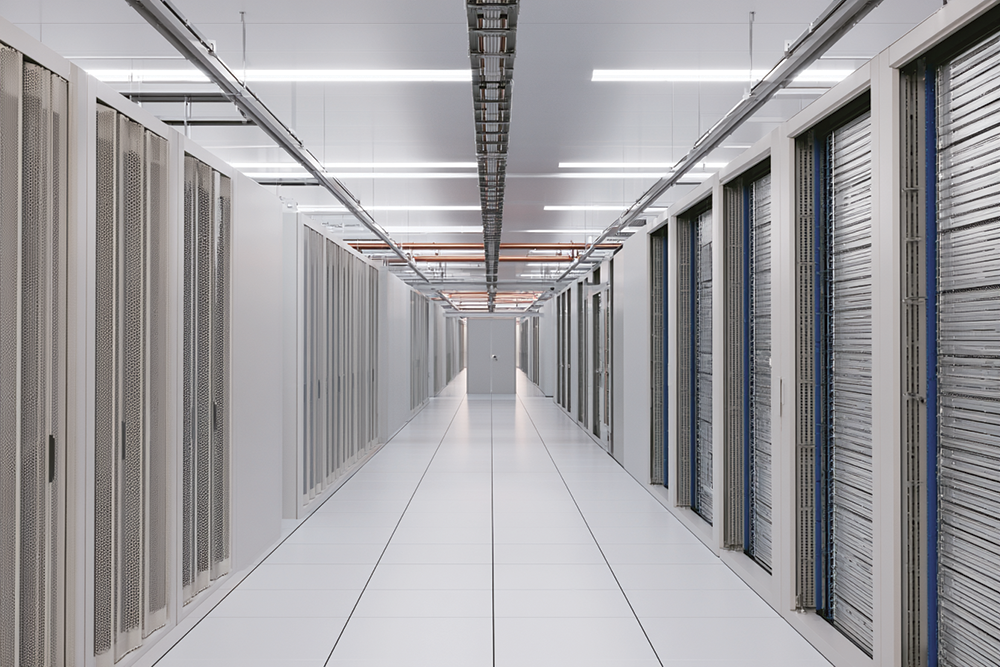
According to the World Economic Forum’s Nature Positive: Role of the Technology Sector report, the technology sector has a critical role to play in reducing pressure on natural systems while enabling digital transformation. The opportunity here extends beyond building more infrastructure to encompass how that infrastructure is built, creating data centres that contribute to a resilient and sustainable future.
The changing data centre
Liquid cooling has become a major talking point in this era of AI data centres. Often viewed as a new technology, its foundations stretch back decades. Early IBM mainframes in the 1960s and Cray supercomputers used liquid cooling successfully to manage increasing computational demands.
The difference today is scale. Generative AI has fundamentally changed how data centres are designed and operated. Modern accelerated compute servers combine multiple graphics processing units (GPUs), central processing units (CPUs), and data processing units (DPUs) to process increasingly complex workloads. These systems deliver exceptional performance, but also generate significantly more heat than traditional cloud servers.
AI-optimised servers with large GPU clusters consume 3000 to 5000 W per server, with specialised training clusters exceeding 10 000 W. Conventional CPU-based cloud servers generally consume 150 to 500 W. As rack densities continue to rise, traditional air cooling is reaching its physical limits.

Why liquid cooling is becoming essential
Air cooling has supported the data centre industry for decades, but AI and high-performance computing workloads are creating a new thermal challenge. Liquid cooling has emerged as a viable alternative due to its superior heat dissipation capabilities and lower energy consumption compared with air-based methods. It offers three key benefits.
• Closer to the heat source: Liquid cooling tackles thermal load at its origin, circulating coolant through cold plates attached directly to high-performance chips.
• Density unlocked: It enables higher compute density while reducing reliance on energy-hungry fans, ensuring consistent performance for demanding AI workloads.
• Single-phase reliability: Direct-to-chip cooling with liquid-only circulation delivers predictable thermal performance, simpler maintenance and improved reliability for mission-critical environments.
Turning sustainability ambition into measurable impact
A recent life-cycle assessment conducted by Schneider Electric and Microsoft found that moving from air cooling to advanced liquid cooling technologies, such as direct-to-chip and immersion cooling, can significantly reduce environmental impact. The study showed reductions in greenhouse gas emissions of up to 21%, energy demand reductions of up to 20%, and blue water consumption reductions of up to 82% when transitioning to liquid cooling solutions, depending on the energy scenario.
In regions, such as sub-Saharan Africa, where energy resilience and resource efficiency remain key priorities, technologies that enable greater output from existing infrastructure will be increasingly important.
Building the nature-positive data centre
The next generation of data centres will be designed as intelligent, adaptive systems that work more harmoniously with the environments around them. This requires a holistic approach combining efficient electrical infrastructure, renewable energy integration, intelligent energy management, advanced cooling architectures and digital monitoring.
Through its EcoStruxure open architecture, Schneider Electric helps data centre operators and hyperscalers design, build and operate infrastructure that balances performance with sustainability. AI-enabled energy management, grid-interactive uninterruptible power supply systems, storage solutions and advanced cooling technologies provide operators with the visibility and control needed to optimise resources. The data centre of the future must support the digital ambitions of society while respecting the natural systems that sustain it.
| Tel: | +27 11 254 6400 |
| Email: | [email protected] |
| www: | www.se.com/za/en/ |
| Articles: | More information and articles about Schneider Electric South Africa |






© Technews Publishing (Pty) Ltd | All Rights Reserved
 printer friendly version