



When designing machines, ingress protection is often treated as a simple hierarchy. Higher numbers seem to mean better protection, and better protection seems to mean better engineering. In practice, the issue is rarely that straightforward.
The truth is that most automated systems do not need the highest possible level of sealing. A standard industrial motor with an IP54 or IP65 rating is sufficient for a large share of factory applications. Problems begin when engineers assume that all harsh environments are the same, or that one protection class can cover every case. In reality, different applications expose motors and drives to very different threats, from conductive dust and cutting fluid to high-pressure washdown and aggressive cleaning chemicals.
Choosing the right level of protection is therefore less about specifying the highest available rating, and more about understanding what the machine will actually face in operation. Motion systems are now expected to perform not only in conventional production spaces, but also in hygienic processing areas, wet machining environments, and decentralised machine architectures where electronics sit much closer to the process itself. In these cases, ingress protection affects reliability, maintenance, machine layout and cost just as much as it affects environmental resistance.
Different ratings for different conditions
A useful starting point is to clarify what the ratings mean. In the IP code, the first digit refers to protection against solid ingress, while the second refers to liquid ingress. IP67 and IP69K are often grouped together, but they are not interchangeable. IP67 is intended to verify resistance to dust and temporary immersion in water. IP69K, by contrast, addresses resistance to high-pressure washdown from multiple angles.
It is easy to assume that IP69K is simply a superior version of IP67, but that is not the case. The two ratings reflect different exposure conditions rather than a single scale of toughness. A product designed for IP69K washdown may not be intended for immersion, while a product designed for IP67 immersion may not be suitable for repeated high-pressure cleaning.
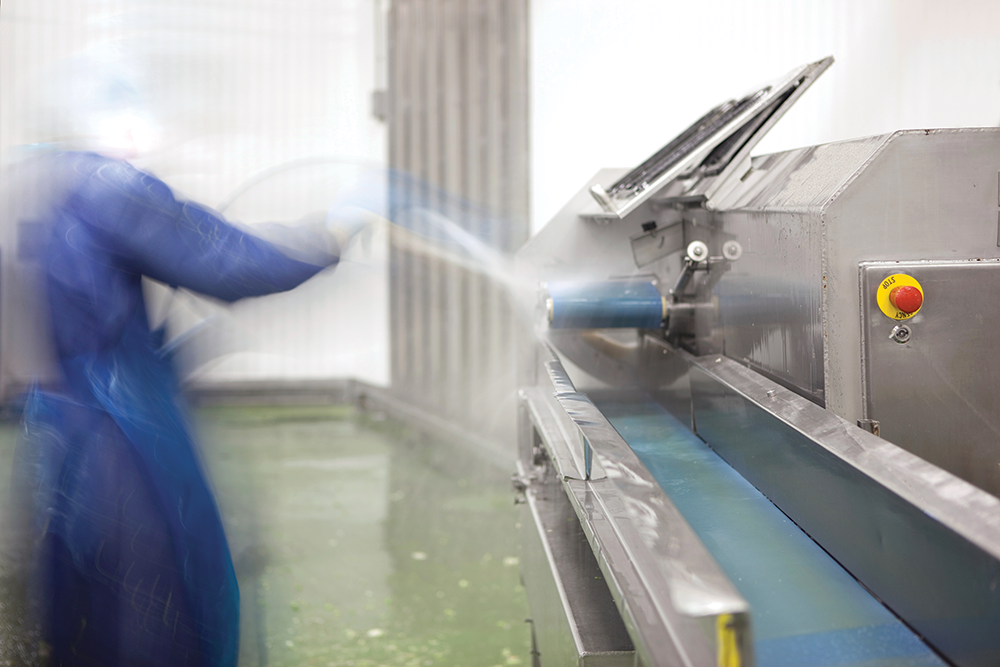
This distinction matters, because different sectors place very different demands on motion hardware. In hygienic applications such as food processing, pharmaceutical production, and some lab automation systems, the challenge is not simply keeping water out. Equipment must often be cleaned regularly with pressurised water and chemicals, sometimes at high temperature, and the motor has to survive that process without becoming a hygiene risk itself. In these environments, ingress protection is closely tied to cleanability. A motor housing with sharp edges, hidden crevices, or poorly protected interfaces may be difficult to sanitise, even if its sealing performance looks strong on paper.
Protection is about more than sealing
This is why hygienic motor design extends beyond the IP code. Older machine designs often placed a standard motor inside a protective enclosure that could be cleaned externally. While workable in principle, this approach created an enclosed internal space that could not be washed down directly, making thorough cleaning of the motor itself difficult. More recent hygienic designs avoid this compromise by allowing Cleaning In Place (CIP), reducing both contamination risk and downtime.
Material selection also plays a major role here. In washdown applications, it is not enough to seal a conventional motor and assume the problem is solved. If the housing cannot withstand repeated exposure to cleaning chemicals, corrosion and surface degradation will soon undermine both hygiene and reliability.
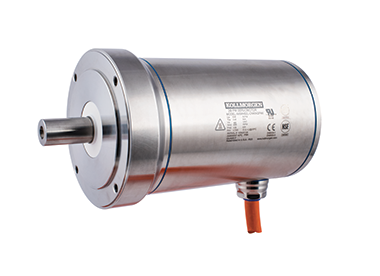
This is where product choice becomes more nuanced. A fully stainless-steel motor may offer the highest level of robustness for the most demanding hygienic environments, but not every application requires this level of protection.
Kollmorgen’s portfolio reflects this layered approach. The AKMH stainless-steel motor is aimed at the most demanding hygienic duties, while the anodised aluminium AKMA provides a lighter, more cost-effective alternative for washdown applications that still require good chemical resistance against typical washdown chemicals and IP69K performance. This gives machine builders a way to match the level of protection to the actual cleaning regime, rather than always defaulting to the most extreme, and most expensive, option.
Matching protection to the machine
The same logic applies in more conventional factory automation environments. In CNC machining, for example, motors may be installed directly in areas exposed to coolant or lubricant spray from all directions. Here, the key issue is persistent liquid exposure during operation, rather than washdown cleaning. In plasma cutting and similar processes, conductive dust can also create problems if it enters the motor or drive.
In such cases, IP67 can be the more relevant target, because the priority is robust sealing against splash, fluid ingress and contamination, rather than hygienic washdown. Kollmorgen has seen examples where customers reported leakage problems with competing motors in these environments, and where customised IP67 versions of standard industrial motors provided a practical solution.
As machine builders look to reduce cabinet size, cut cabling and create more modular equipment, there is growing interest in moving drives and electronics closer to the machine. This only works if these devices can tolerate splash, contamination and harsher installation environments. Here again, ingress protection supports broader changes in machine design, including modular construction and the move toward cabinet-free or reduced-cabinet systems like Kollmorgen’s own
A smarter approach to protection
What emerges from all of this is a more measured way of thinking about protection. The goal is to choose the level of protection that fits the application. In some cases, IP54 or IP65 is entirely adequate. In others, IP67 is needed to cope with coolant, dust or outdoor exposure. In hygienic environments, IP69K may be essential, but even then the material, geometry and chemical resistance of the product matter just as much as the rating itself.
A good protection strategy depends on matching the motor or drive not only to the environment, but also to the cleaning method, installation concept and cost target of the machine.
As automation expands into more specialised environments, this kind of proportional thinking will become more important. Engineers are being asked to design systems that are cleaner, more compact and more modular while still delivering the reliability expected of industrial motion platforms. In this context, ingress protection should be seen as a design decision, not a marketing badge.
Choosing the right level of protection is about understanding the application well enough to protect the machine without overengineering it. This is what allows reliability, hygiene, maintainability and cost to stay in balance.
For more information contact Kollmorgen,






© Technews Publishing (Pty) Ltd | All Rights Reserved
 printer friendly version