



Africa’s energy transition has reached a decisive point. What was once a long-term ambition is now an immediate delivery challenge. How to provide reliable, affordable power at scale while building a system that can support future growth.
Africa has some of the world’s strongest renewable resources: abundant solar, significant wind corridors, and untapped hydro and geothermal potential. Yet more than 600 million people still lack reliable access to electricity. Even when power is available, outages, constraints and rising costs remain a daily reality. In several markets, grid losses exceed 15%, reflecting systems under real strain.
The path forward requires execution.
Turning plans into delivery
Progress is visible across the continent. Countries such as South Africa, Egypt and Morocco are scaling renewable energy programmes, while regulatory reforms are opening space for private investment. Regional power pools are also beginning to show what closer cooperation could deliver.
However, generation alone will not close the gap. The constraint is increasingly the grid. Without stronger transmission and distribution networks, new capacity cannot be delivered efficiently and renewable energy cannot be fully utilised.
The focus now must shift from building power to moving it reliably, efficiently and at scale.
Why grid modernisation comes first
Grid modernisation needs to move to the forefront of Africa’s energy strategy. A modern power system is no longer just physical infrastructure, it is a network that can see, respond, and adapt in real time.
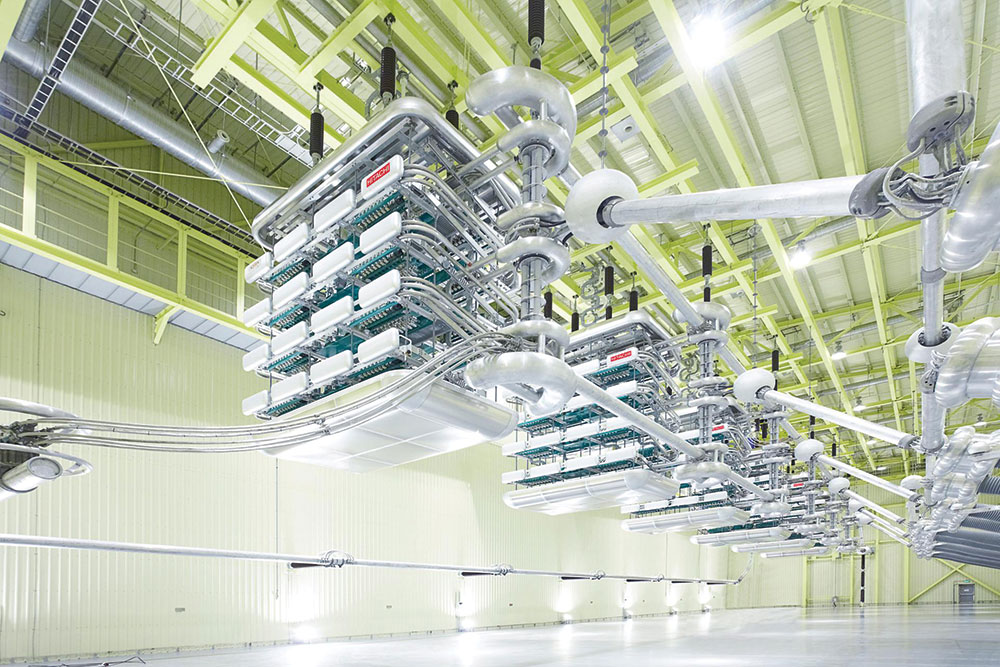
As renewable energy becomes a larger part of the mix, variability becomes unavoidable. Managing it requires better system visibility, faster control and infrastructure that can handle changing flows of power. Technologies such as high-voltage direct current, or HVDC transmission make it possible to move large volumes of electricity over long distances with lower losses, which is critical in regions where generation is often far from demand centres.
At the same time, digital substations and automated grid management improve reliability and reduce downtime. They allow operators to respond more quickly to faults and optimise performance across the system.
Stronger regional interconnections are just as important. Connecting national grids allows countries to share resources, balance supply and demand, and reduce the need for costly reserve capacity. Africa’s power pools provide a solid foundation, but deeper integration will be essential to unlock their full value.
Policy must keep pace
Technology will not move at scale without the right policy environment.
There has been clear progress in many African markets. Competitive procurement frameworks, renewable energy targets and market reforms are helping to attract investment; but challenges remain, particularly around regulatory consistency, permitting delays and the financial sustainability of utilities.
The priorities are:
• Provide long-term policy certainty
• Shorten approval timelines
• Strengthen utility balance sheets
• Create incentives that support both clean energy and grid investment
Public-private partnerships will continue to play a central role, especially in transmission infrastructure, where the scale of investment required is significant.
Five priorities for a secure energy future
Five areas stand out if Africa is to build a more secure and sustainable power system:
Invest in the grid: Transmission and distribution networks must expand and modernise to keep pace with demand and unlock generation capacity.
Build flexibility into the system: Energy storage, improved forecasting and advanced control systems will be critical to managing variability.
Scale decentralised energy: Mini-grids and off-grid solutions are already delivering results and remain essential for reaching remote communities.
Strengthen regional integration: Greater interconnectivity can reduce costs, improve reliability and enhance overall energy security.
Develop local capability: Long-term success depends on skills, engineering, operations and digital expertise that can sustain and grow the system.
Technology that works in practice
Technology will play a defining role, but the focus needs to be practical. What matters is not deploying the newest solution, but deploying what works reliably in local conditions.
This includes strengthening transmission corridors, digitising substations, and embedding intelligence into grid operations. It also means taking a long-term view and ensuring systems can be maintained, upgraded and optimised over decades. Reliability, adaptability and lifecycle performance are just as important as initial deployment.
A leadership imperative
At its core, Africa’s energy transition is a leadership challenge. It requires clear priorities, consistent policy direction and strong collaboration between governments, utilities, investors and technology partners.
As Mohamed Hosseiny, managing director for Schneider Electric Africa, notes: “Africa has the resources, the innovation and the ambition to lead in building a sustainable energy future. The priority now is to translate this potential into reliable, interconnected systems that deliver real impact by powering industries, enabling communities, and supporting long-term economic growth. Achieving this will require strong partnerships, forward-looking policies and sustained investment in modern grid infrastructure.”
From momentum to scale
The building blocks are there. What matters now is execution, faster delivery, closer collaboration and sustained investment. Africa has a real opportunity to do more than close its energy access gap. It can build a power system that is more resilient, more flexible and better suited to future demand. With the right focus, the continent can move beyond constraint, and lead in delivering energy systems that are practical, scalable and built to last.
| Tel: | +27 11 254 6400 |
| Email: | [email protected] |
| www: | www.se.com/za/en/ |
| Articles: | More information and articles about Schneider Electric South Africa |






© Technews Publishing (Pty) Ltd | All Rights Reserved
 printer friendly version