



For many African businesses, energy has moved from being a background utility to a central operational concern. With grid constraints, rising tariffs and unreliable infrastructure, these constraints increasingly affect how companies operate, manage costs and plan for growth. At the same time, better solar and battery solutions are opening up new possibilities. The question is no longer simply whether to use alternative energy, but how to use it most effectively.
From cost-saving to risk management
Early solar adoption was largely about reducing electricity bills. While cost savings remain important, the role of energy has shifted. It is now closely tied to operational risk and business continuity.
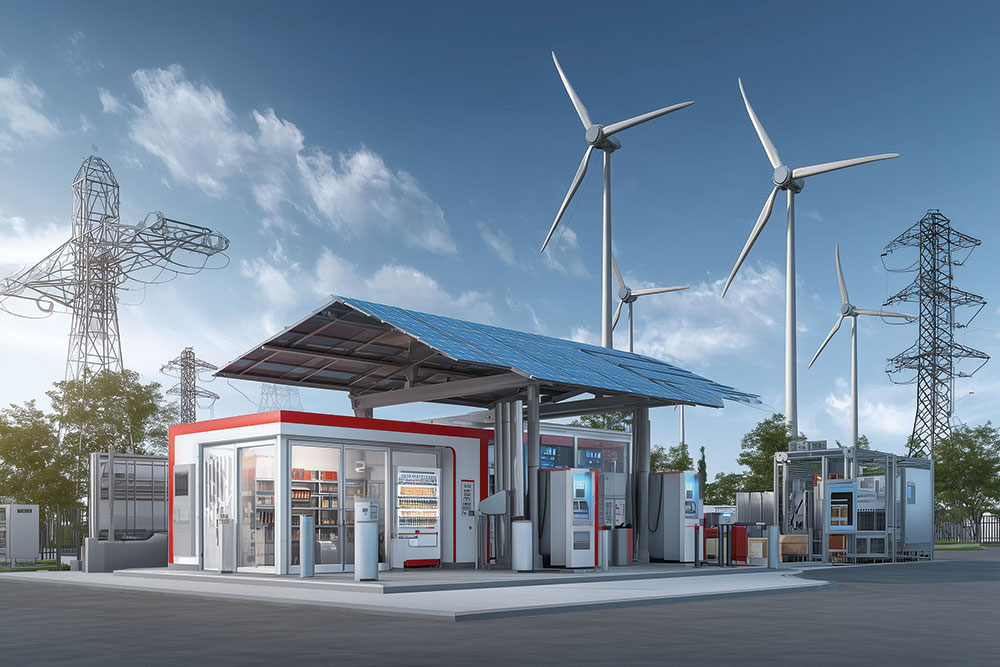
As a result, organisations are shifting towards hybrid energy systems that reduce dependence on external supply while improving resilience. Rather than relying on a single source of supply, hybrid energy systems typically combine solar, battery storage and grid power. This approach gives businesses greater control over how energy is used and helps ensure operations can continue, even when supply is disrupted. It also allows businesses to plan more confidently and operate with greater consistency in unpredictable environments.
Unlocking a broader value stack
The financial case for solar and energy storage has broadened. Rather than relying on a single source of savings, businesses now have the opportunity to capture value across multiple areas. These include energy arbitrage between peak and off-peak tariffs, reduction in maximum demand charges, displacement of diesel generation, and improved production continuity. In addition, incentives linked to carbon reduction are increasingly relevant, particularly for export-oriented businesses facing regulatory pressure.
This combination of benefits creates a more robust and diversified return profile. Depending on factors such as the site’s load profile, tariff structure and reliance on backup generation, effective energy cost reductions of between 20 and 60% can be achieved.

The importance of long-term modelling
Despite potentially strong returns, the success of these projects depends heavily on how they are evaluated at the outset. Given that solar and battery systems are long-term infrastructure assets with lifespans of up to 20 years or more, simple payback calculations are no longer sufficient.
Accurate financial modelling must consider system degradation, maintenance requirements, tariff escalation and operational variability, all of which can significantly affect long-term returns. Approaches such as levelised cost of energy modelling, sensitivity analysis and long-term dispatch optimisation are becoming essential to fully understand value and risk.
Reliability as a core outcome
In many African markets reliability has become as important as cost. The ability to maintain stable operations during grid disruptions provides a significant competitive advantage. Modern solar and battery systems can deliver backup power, reduce peak load stress and support operations in constrained network environments. In some cases, they enable businesses to expand production where additional grid capacity is not available. This shift from cost optimisation to operational enablement is a key part of the evolving energy mix.
Another important development is the modular nature of modern energy systems. Battery capacity can be expanded over time, allowing businesses to scale their infrastructure in line with demand. However, this flexibility requires careful planning. Decisions made to minimise upfront capital costs can limit future expansion or reduce system performance. Designing with a long-term horizon in mind ensures that systems remain adaptable as business needs evolve.
Integration is the real challenge
While the technology itself is well established, successful implementation often depends on integration. Many sites must contend with ageing electrical infrastructure, space constraints and complex operational requirements.
In such circumstances, internal alignment can be a challenge. Energy projects often sit at the intersection of financial and operational decision making which can affect how they are prioritised and executed. Strong engineering capability and upfront modelling are critical to addressing these challenges and ensuring consistent performance over time.
As systems become more complex, the role of the implementation partner becomes increasingly important. Businesses need expertise not only in individual technologies, but in integrating multiple energy sources into a cohesive system. Across Africa, projects increasingly combine solar, battery storage, grid supply and conventional generation into coordinated energy platforms. Some projects also integrate additional renewable sources, such as wind or hydro, to further diversify supply. This level of integration requires a deep understanding of both technical design and operational realities.
A clear advantage for early movers
Rising energy costs, ongoing grid instability and increasing decarbonisation requirements mean that energy strategy is now closely linked to business performance. Organisations that act early are better positioned to manage costs, maintain operational continuity and meet evolving regulatory expectations. They are also less constrained by external supply limitations when planning for growth.
Energy is no longer simply something that businesses consume. When managed effectively, it becomes a controllable asset that supports resilience and efficiency and sets the foundation for long-term competitiveness.
For more information contact Sustainable Power Solutions, [email protected], www.sps.africa






© Technews Publishing (Pty) Ltd | All Rights Reserved
 printer friendly version