



Engineers are faced with the challenge of unifying legacy SCADA systems with modern, IoT-based data platforms. The trouble is, when hardware from multiple manufacturers and generations are all used in the same system, compatibility becomes an issue. Gary Bradshaw, director of remote monitoring specialist Omniflex, explores how to make industrial network management as straightforward as possible.
SCADA systems are crucial for monitoring critical assets, providing real-time reporting and data collection for a variety of processes. Deployed for decades across nuclear sites, these systems are well proven, despite relying on hardwired, on-site instrumentation.
As industrial facilities are looking to further integrate IoT into their operations, cloud connectivity improves visibility, flexibility and data-driven decision making, particularly in sectors where assets are remotely managed or lightly staffed. Nuclear facilities, particularly those undergoing decommissioning, are one example where cloud connectivity would be beneficial, offering cost-effectiveness and reliability for the organisations in charge.
SCADA for nuclear decommissioning
A traditional SCADA system in a nuclear plant has four levels. These involve sensors and actuators that are needed for data gathering, remote terminal units (RTUs) for interfacing with the sensors and actuators, human machine interfaces (HMIs) for operators and engineers to visualise data, and historical data storage for management reporting, auditing and real-time sequence-of-events analysis.
When these levels consist of equipment of different ages and manufacturers, compatibility and integration can be very challenging. Generally engineers are hesitant to switch over to cloud-based data systems, because they feel it would be too expensive to overhaul their existing hardware as well as paying for additional new SCADA licencing agreements.
Traditionally, existing SCADA HMIs and data storage have been local, PC-based and server-bound, which limits access, visibility and scalability for engineers, and increases maintenance costs through the need for regular site inspections. For organisations going through site decommissioning where the continuous monitoring of critical alarms and radiation data for multiple sites is required, this traditional method can become a logistical nightmare.
The monitoring of these remote sites via web browser access simplifies troubleshooting and reduces maintenance costs by removing location restraints and allowing authorised users via secure passwords to view and analyse data from anywhere 24/7. This overcomes the challenges of a changing site footprint and shrinking workforce. It also has the advantage that engineers can add users or access points without the traditional extra need for the on-site PC hardware and expensive SCADA licences.
Simplified monitoring and meaningful data
When you’re monitoring critical assets during nuclear decommissioning, you shouldn’t be forced into costly hardware replacements or disruptive system upgrades.
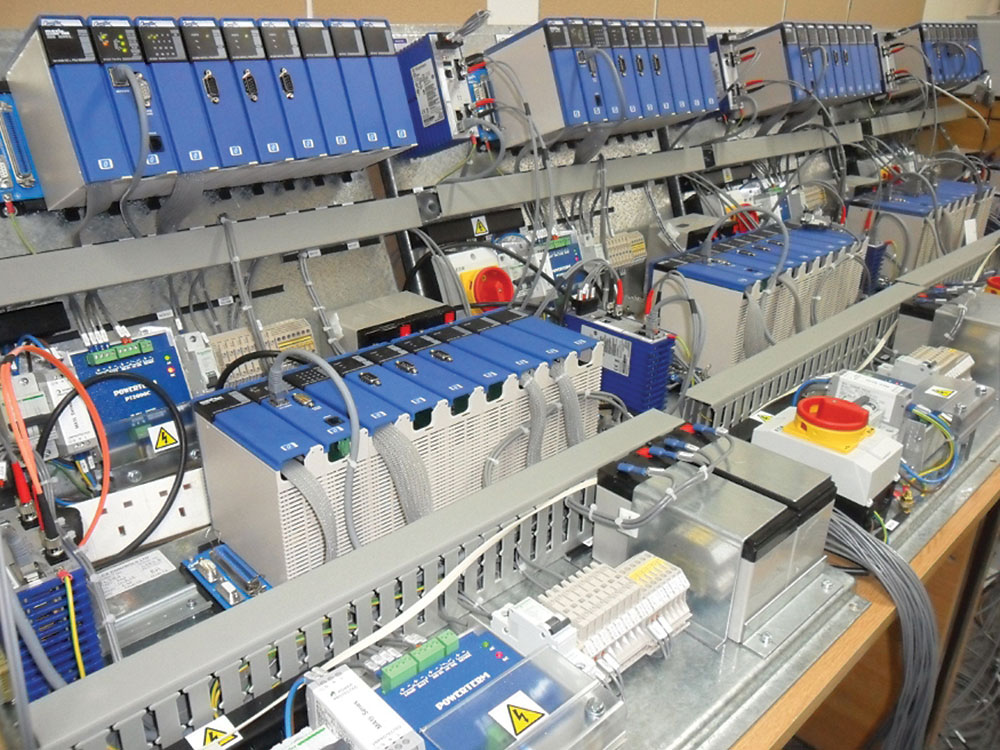
For sites like these, Omniflex’s Maxiflex RTU product range is ideal as it has been specifically designed to interface with a vast range of instrumentation, regardless of manufacturer or age. Acting as a universal translator, it conditions signals into meaningful data through its many different input modules, isolation options and communication interfaces.
Maxiflex RTUs can feed data into traditional PC-based SCADA systems while also offering cloud-based remote monitoring when paired with the Omniflex Data2Desktop (D2D) portal. This extends the data path, enabling secure, web-based visualisation, storage, reporting and event analysis. Engineers can control access through shared credentials ensuring the right data reaches the right people without unnecessary overhead.
The real strategic value lies in what organisations can do with this data once it is accessible. Cloud-based sequence-of-events analysis allows specialists who are not on site to investigate incidents thoroughly, reviewing pre- and post-alarm conditions. Long-term pattern recognition supports predictive maintenance strategies, helping teams move from reactive fixes to proactive optimisation.
| Tel: | +27 31 207 7466 |
| Email: | [email protected] |
| www: | www.omniflex.com |
| Articles: | More information and articles about Omniflex Remote Monitoring Specialists |






© Technews Publishing (Pty) Ltd | All Rights Reserved
 printer friendly version