



The application of sensor technology to reduce the operational and standby power losses of traditional current and voltage transformers can lead to energy savings of 181 MWh over a 30-year period, the lifetime of a typical switchboard in the African environment. This is according to Egon Worthmann, business manager for commercial and operations in the distribution solutions business of ABB. Sensor and digital technologies used in conjunction with ABB’s switchgear assist its customers’ operations to run more efficiently, thereby reducing their carbon footprint. This enables African customers, in particular, to be less reliant on coal-fired power stations.
“ABB has long championed energy efficiency and sustainable operations. We have invested a huge portion of our revenue into research and development,” says Worthmann. Local substation operators benefit by having the flexibility to meet the growing and changing demands on the modern distributed power network. The system also enables condition monitoring of assets, ultimately reducing lifecycle costs.
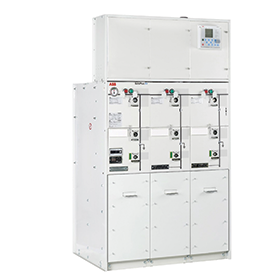
ABB’s SafePlus Air 24 kV is an innovative, eco-efficient medium voltage gas-insulated switchgear (GIS) that eliminates the use of sulphur hexafluoride (SF6), a potent greenhouse gas. Instead, it utilises dry air as the insulation medium, offering a sustainable alternative for secondary distribution networks. By replacing SF6 with dry air, SafePlus Air significantly reduces environmental impact. Dry air has a Global Warming Potential (GWP) of zero, compared to a GWP of 25 200 for SF6. The switchgear complies with IEC standards and the EU F-gas regulation (EU) 2024/573, aligning with global efforts to phase out SF6 in electrical equipment.
ABB’s SafePlus Air switchgear has been successfully implemented in pilot programmes aimed at reducing carbon emissions. For instance, Northern Powergrid in the UK adopted SafePlus Air for substations in County Durham, contributing to its goal of decarbonising its network by 2040. The switchgear’s compatibility with existing systems allowed for seamless integration and significant reductions in SF6 emissions.
Building on the sustainable innovations demonstrated in its medium voltage (MV) portfolio, ABB is also advancing low voltage (LV) solutions with the same focus on energy efficiency and environmental responsibility. This highlights ABB’s holistic approach to reducing emissions and improving operational efficiency across the power distribution value chain.
ABB’s Tmax XT moulded case circuit breaker (MCCB) is designed to complement MV innovations like SafePlus Air in achieving customers’ broader sustainability goals. The Tmax XT MCCBs feature a range of integrated technologies that contribute meaningfully to energy efficiency and environmental responsibility. Among these features is the Ekip Power Controller which facilitates dynamic load management and peak shaving. This capability can reduce energy consumption by up to 20%, helping users avoid penalties for surpassing contracted limits and managing peak demand more cost-effectively. The Tmax XT also delivers high-precision metering with 1% energy measurement accuracy, enabling detailed monitoring and optimisation of energy use.
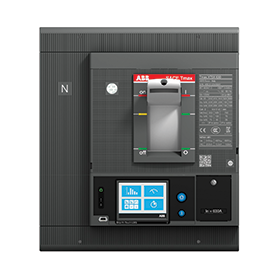
Through ABB Ability connectivity, the MCCBs allow for real-time data analysis and remote energy management via the cloud. Their Ekip Touch trip units support comprehensive power quality assessments, including voltage, energy, power and harmonics, allowing for more proactive maintenance and system optimisation.
In line with global green building initiatives, the Tmax XT supports compliance with environmental certification standards such as Green Mark Platinum, thanks to its precise energy monitoring and reporting capabilities. Its modular and upgradeable design ensures that customers can easily enhance system functionality without complete hardware replacement, reducing electronic waste and lowering lifecycle environmental impact.
In addition, safety and reliability have been enhanced with features such as arc fault protection and adaptive protections which reduce the risk of system failures and maintenance interventions, further contributing to operational sustainability.
“ABB has been driving sustainability across the entire value chain of its circuit breaker product line. Our goal is not only limited to the sustainable production of circuit breakers, but also to ensure that the end users of our products in Africa get access to technologies that help reduce energy consumption,” explains Veron Maharaj, product marketing specialist in the smart buildings division at ABB.
He adds that circuit breakers, once used purely as protective devices, have now evolved into multifunctional tools thanks to ABB’s innovation. The Tmax XT MCCBs have been engineered to reduce power losses over their operational lifespan, lowering the total cost of ownership. With integrated digital communication across eight industrial network protocols, the devices offer seamless data sharing and control within complex electrical systems.






© Technews Publishing (Pty) Ltd | All Rights Reserved
 printer friendly version