



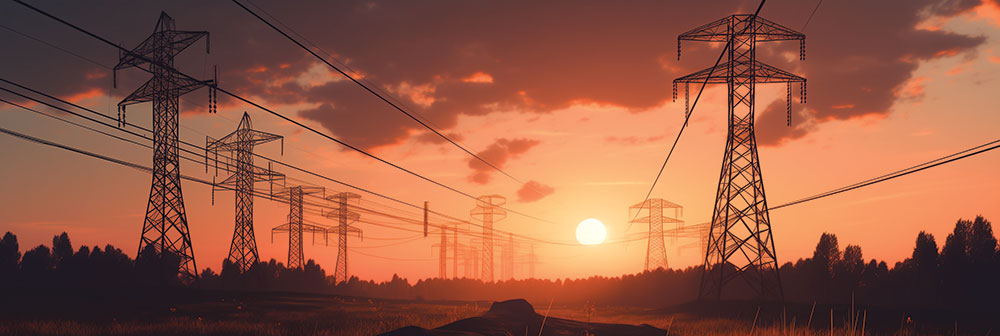
Many grids across the globe have a persistent problem in common, ageing infrastructure. In the US alone, the average installed base is 40 years old with a quarter of the country’s grid being 50 years or older. In South Africa, the scenario is similar, with the average plant estimated to be 40 years or older.
This makes a good case for the modernisation of grid infrastructure, a subject that could take an entire section in a bookstore or library. Fortunately there are some almost-immediate steps that can provide a quick win without having to undertake forklift-scale projects.
One such intervention is AI, which has the ability to enhance predictive maintenance by analysing data from a myriad systems and equipment, identifying potential failures before they occur. By predicting equipment failures, AI enables energy providers to schedule timely maintenance, reducing the risk of unexpected outages and costly downtime.
Furthermore, AI offers continuous, real-time monitoring, thereby detecting anomalies and establishing early warning systems. By predicting these potential failures, AI-driven systems provide optimised and intuitive maintenance schedules, leading to improved reliability and more reliable energy supply.

The role of scada and historian systems
Scada systems collect and store real-time data from energy systems. When this data feeds into AI algorithms, it can provide predictive maintenance and subsequent recommendations. Historian systems store historical data, and capture long-term trends and performance metrics. Again, AI algorithms use this historical data to make predictions and recommend maintenance actions.
The combination of real-time scada and historical data provides AI algorithms with invaluable information, allowing for analysis and subsequent predictive maintenance. This optimises maintenance schedules and prevents equipment failures, enhancing overall energy network performance.
AI in energy management offers the following important benefits:
• Reduced downtime: AI-driven predictive maintenance identifies potential equipment failures before they occur, minimising unplanned downtime and ensuring continuous energy supply.
• Cost savings: By optimising maintenance schedules and preventing unexpected breakdowns, AI reduces operational costs for energy providers.
• Optimised resource usage: AI analyses data to optimise energy distribution, ensuring efficient utilisation of resources.
• Generation, distribution and transmission: AI optimises power plant operations, grid efficiency and energy transmission by improving performance and minimising downtime.
• Overall impact: AI-driven energy management benefits the entire spectrum, from generation to distribution and transmission, ensuring a steady and efficient energy supply.
Modernised networks
In more modern electrical networks, AI technologies are transforming fault location, isolation and restoration (FLISR) processes. Through advanced data analytics and machine learning, AI algorithms can analyse extensive datasets to detect anomalies indicative of faults and classify it accurately.
These insights enable decision support systems to provide real-time recommendations to operators, facilitating optimal fault isolation and restoration strategies. Moreover, AI-driven optimisation algorithms enable the reconfiguration of the network to minimise outage duration and restore power efficiently. Integration with scada and distribution management systems further enhances FLISR capabilities, allowing utilities to improve reliability and operational efficiency while reducing downtime.
While the role of AI in energy lies mainly in utilities, there is also a bigger picture. Energy networks are essential for productivity, be it manufacturing plants or energy-intensive segments such as mining, minerals and metals. AI-driven maintenance ensures uninterrupted operations, supporting both business and economic growth.
| Tel: | +27 11 254 6400 |
| Email: | [email protected] |
| www: | www.se.com/za/en/ |
| Articles: | More information and articles about Schneider Electric South Africa |






© Technews Publishing (Pty) Ltd | All Rights Reserved
 printer friendly version