



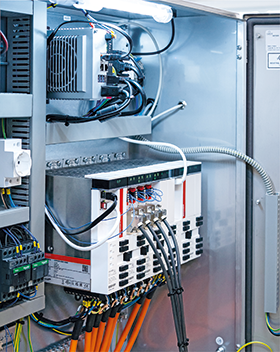
Control systems are subject to very specific demands from every form of production technology, including waterjet cutting. IGEMS from Sweden set itself the goal of taking this process to a new level in terms of precision and speed, and achieved it with the help of PC-based control. Users such as the machine builder Kimtech are now benefiting from the results.
“We love waterjet cutting because of its versatility, precision, cleanliness, eco-friendliness, and cost efficiency,” says Jesper Kimblad, technical manager at IGEMS, which specialises in CAD/CAM software for waterjet cutting systems. TwinCAT 3, equipped with a range of functions and other Beckhoff components, forms the basis of the IGEMS control platform.
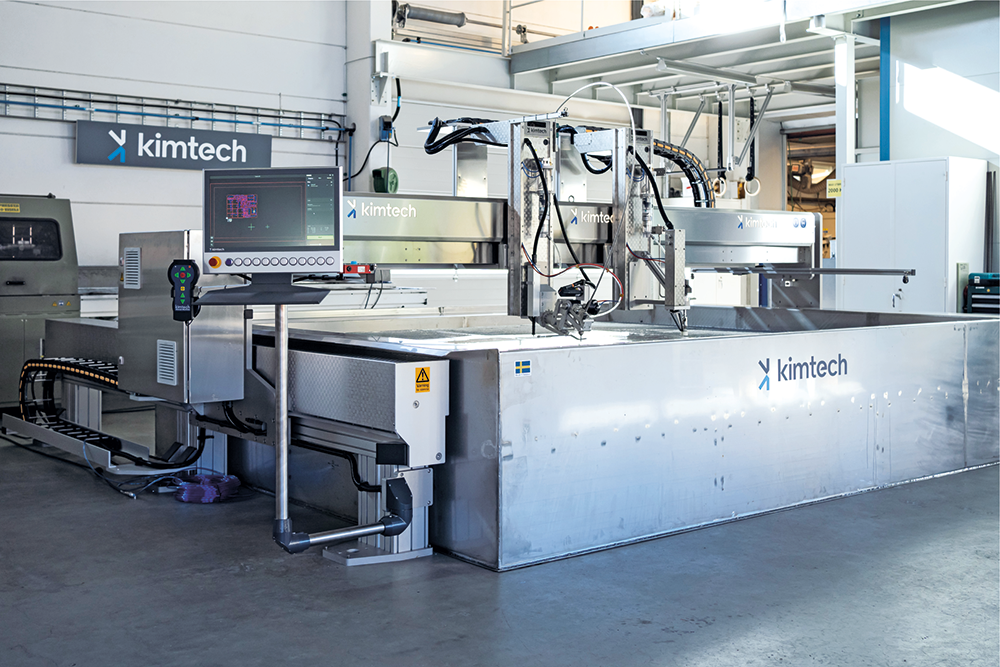 Image copyright: Jamie Steinbichler.
Flexibility and openness deliver benefits
According to Kimblad, no other system offered the necessary flexibility and functionality. One problem with conventional control systems is that the digital outputs cannot be controlled quickly and synchronously enough during the path movements of the nozzle. It is exactly this level of control that waterjet cutting requires, however. The water and abrasive materials must be precisely metered, because even the briefest of stops or delays will leave marks on the cutting edges. He adds that no other controller would be able to switch the feed rate from mm/minute to inverse time during operation.
Kimblad finally found the right platform with the open approach of PC-based control and TwinCAT 3.
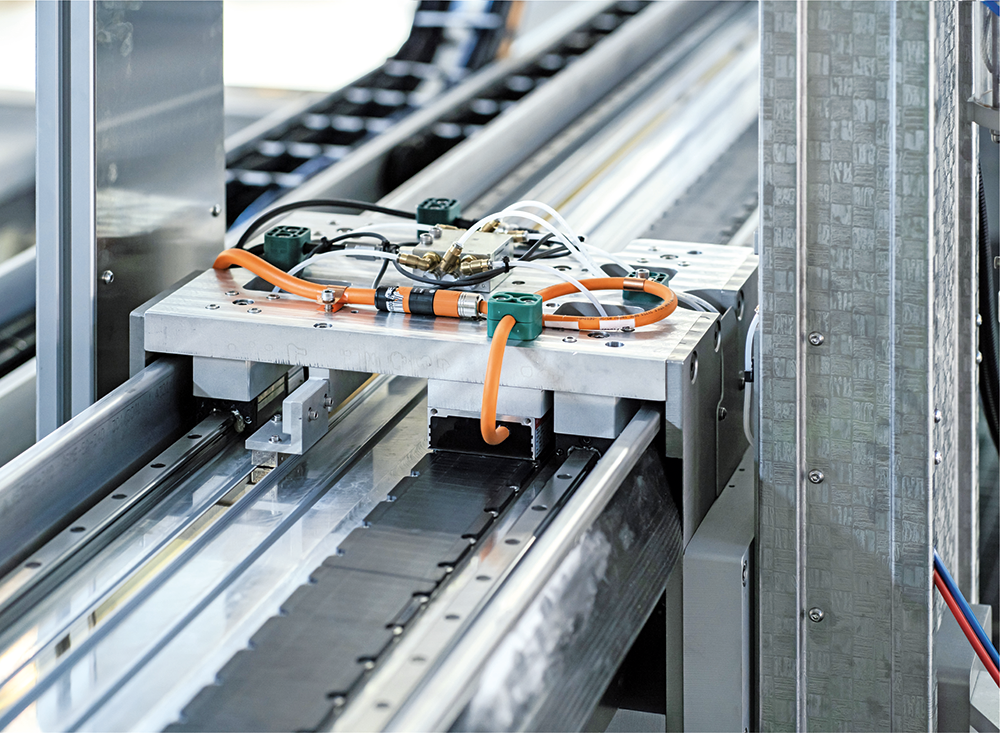 Image copyright: Jamie Steinbichler.
Single sourcing in hardware and software
He explains that Beckhoff’s wide range of technologies allows it to provide all the electrical components required for waterjet cutting machines, anywhere in the world. This is vital for IGEMS’ customers, who sell their water cutting systems worldwide. “Most importantly, however, TwinCAT 3 ensures that a machine does not have to stop while the program is running, which means it can perform multiple cutting tasks in one operation and ensure a straight cut,” says Kimblad.
IGEMS uses Beckhoff TwinCAT software to calculate the trajectories of the motors, control the drives and movements, perform axis interpolation, track I/O changes, and transfer all this data to the FIFO buffer integrated in TwinCAT. All data is communicated in real-time via the EtherCAT network protocol from Beckhoff.
Kimblad comments: “I really appreciate the open nature of TwinCAT. The software handles difficult tasks involving flowing positions very quickly, and ensures a precise and perfect cut. It’s ideal for monitoring values and runs on an industrial PC, which means we can carry out the entire development process on laptops. Setting up and programming the water cutting system is also very quick. And machine builders can easily integrate additional functions into the control system and automate them with Beckhoff hardware.”
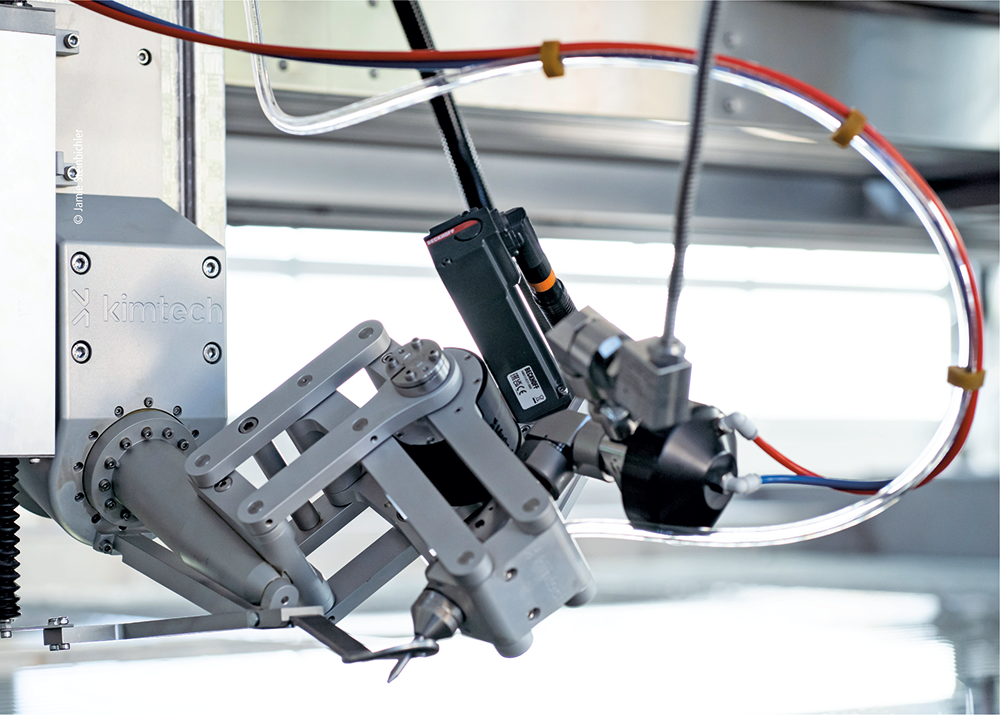 Image copyright: Jamie Steinbichler.
IGEMS itself uses this flexibility for optional functions – when preparing work and performing calibration, for example. In most cases, leftover pieces of sheet metal are stored for subsequent orders and clamped several times on the cutting systems. An optional camera above the cutting systems scans these pieces and transmits the images to the control system. The contour is scaled there, and displayed in the cutting pattern of the upcoming processing program. The machine operator can then set the zero point of the NC program directly on the image and adjust the position of the parts if necessary. IGEMS has also integrated a system calibration function into the control system; together with the optional IGEMS Rounder, this measures and compensates for deviations in the X, Y, and Z directions. “Machine builders used to need half to a whole day for this calibration; with our software and the measuring head, it takes only nine minutes,” says Kimblad, highlighting the benefits of an open control architecture.
Machine builders benefit from sector segmentation
The company Kimtech in Stockholm has now installed 15 machines with control systems from IGEMS, and ordered a further 30 complete systems from Beckhoff. CEO Gustaf Kimblad comments: “We are delighted with the control system, which is specially tailored to waterjet cutting. The control system optimises operation, monitoring, and remote maintenance. It also enables precise calibration, and reduces the amount of work involved in programming. The HMI is user-friendly, and the integrated tools are intuitive. Overall, the control system simplifies the structure of the waterjet cutting machines and reduces their complexity.” Kimblad cites Beckhoff One Cable Technology (OCT) as an example: “OCT allows us to connect the drives with just one cable, and requires fewer components, which makes us much more competitive. As a machine builder, we can now concentrate more on what we do best.”
| Tel: | +27 11 795 2898 |
| Email: | info@beckhoff.co.za |
| www: | www.beckhoff.com |
| Articles: | More information and articles about Beckhoff Automation |






© Technews Publishing (Pty) Ltd | All Rights Reserved
 printer friendly version