



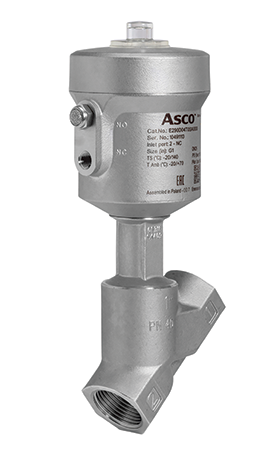
Clean-in-place (CIP) and steam-in-place (SIP) systems are used to cleanse food and beverage process equipment without disassembly. These automated systems channel detergents and rinse water or steam through the interior of process pipes and vessels, reducing human error, contamination and cleaning time between batches. By using CIP and SIP systems, food and beverage manufacturers can improve product quality, minimise recalls and protect personnel.
To provide effective sterilisation and keep production moving, CIP and SIP systems should be fast, efficient and reliable. It’s important that they use high-performance components that can withstand the caustic, high-temperature environments inherent to CIP and SIP processes, while providing precise and repeatable measurement and control. Fluid control solutions, including valves, valve manifolds, actuators, sensors and electronics, should be incredibly robust yet easy to install and integrate. They should also be sophisticated, providing diagnostic and status-monitoring data that can improve decision-making and maintenance, as well as sustainability features that reduce energy use and operating costs.
Improving reliability with robust fluid control
CIP and SIP processes use multiple cycles that may combine high heat with harsh chemicals. Typical cycles can include an initial and final drain, a pre-rinse, a sodium hydroxide wash and a post-rinse. Rinse and wash cycles can vary from five minutes to one hour. Processes may also include a sanitising cycle to reduce the levels of bacterial contamination using strong oxidants such as hydrogen peroxide, ozone, chlorine dioxide or other chlorine-containing compounds.
Selecting appropriate fluid control technology, including valves, is essential for CIP and SIP system reliability and performance. The fluid control valves used, along with their designs and materials of construction, must tolerate extreme heat and chemical exposure to help ensure reliable pneumatic actuation and sealing over long service lives. They must be compact, to minimise footprint and energy consumption, yet comply with strict hygiene regulations.
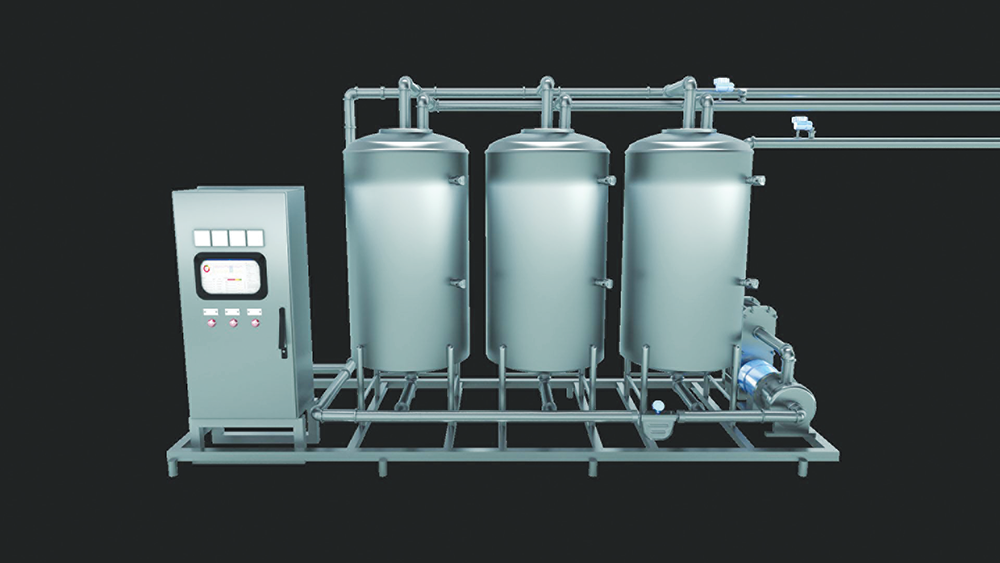
The latest valves, such as the ASCO Series 290 from Emerson, comply with Good Manufacturing Practice (GMP) regulations while providing high performance, reliability and accuracy in demanding environments. These valves, which are rated for high-temperature fluids and steam up to 180°C, are built with heavy-duty polytetrafluoroethylene (PTFE) seals for durable and positive shut-off performance, with valve bodies and actuators made of stainless steel and other high-grade, corrosion-resistant materials for long life, despite exposure to aggressive cleaning fluids.
A wide range of valve designs, end connections, interchangeable actuators and switch boxes makes it possible for OEMs to utilise a single valve for different media. All offer a no-maintenance design with integral, anti-water-hammer features to help protect instrumentation and reduce the potential for leakage. Angle-body valves provide higher flow rates relative to valve size, making them preferable to quarter-turn valves when CIP system space is limited. Optional 360° rotatable ultra-compact pneumatic actuators further simplify valve and connection alignment in tight spaces, while also reducing compressed-air consumption.
Reducing downtime with electronic fieldbus platforms
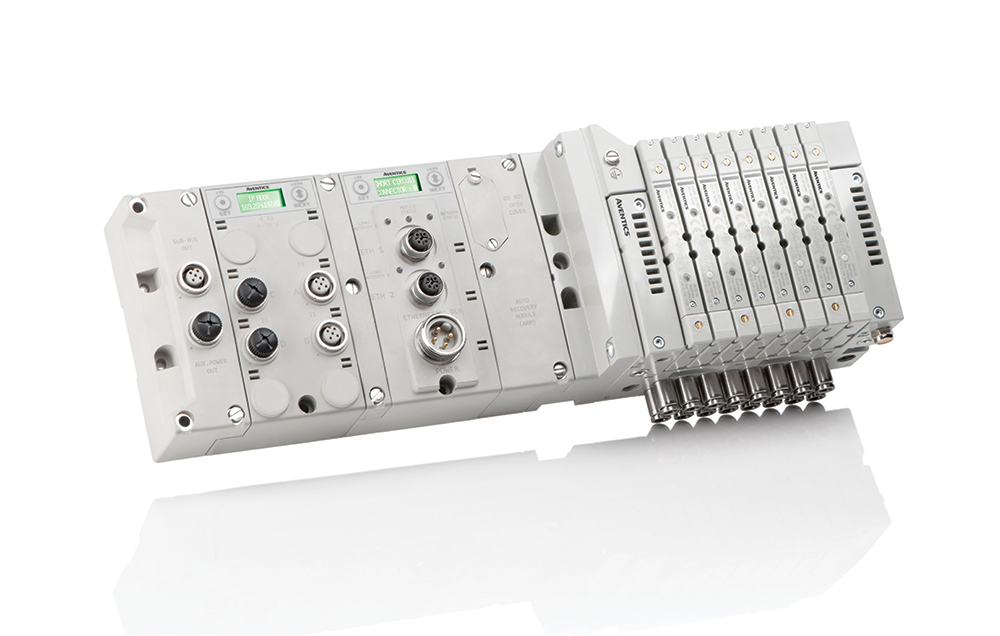
Pneumatic systems with integrated digital communications enable programmable logic controllers or distributed control systems to actuate valves while channelling I/O data from sensors, lights, relays, individual valves or other I/O devices through various industrial networks. Electronic fieldbus platforms offer a plug-and-play solution for integrated communications with pneumatic valve systems, replacing ‘hardwiring’ with flexible, distributed I/O that makes the same components available for centralised (main manifold) or distributed (sub-bus manifold) uses.
To minimise downtime and aid CIP and SIP system troubleshooting, the latest designs offer integrated graphical displays and plain-language messaging to deliver point-of-use status and diagnostic information, plus setup and version tracking data, at both the I/O-module and communication-node levels. These require no programming, training or extra costs to use.
Error messages, which blink to draw the viewer’s eye immediately to the problem module, are generated and cleared automatically.
Messages indicate short-circuit conditions on sub-bus power lines or valve coils, absence of an installed sub-bus module or loss of valve/output power. Display push-buttons help users to troubleshoot and resolve these or other faults quickly by navigating through menu options. Some systems even log errors for future or remote analysis.
Unlike older fieldbus valve manifolds that offer limited modularity – and therefore require substantial disassembly for repairs, upgrades or replacements – the latest modular fieldbus platforms connect/disconnect quickly with screws and clips. This makes system assembly, last-minute equipment changes and field repairs far easier to accomplish.
Optimising CIP and SIP systems
High-performance CIP and SIP systems in optimal food and beverage manufacturing maximise speed, efficiency and reliability, which reduces downtime and increases productivity. Integrating advanced fluid control technology can help manufacturers achieve these goals while ensuring process cleanliness, regulatory compliance and long-term product quality.
| Tel: | +27 11 451 3700 |
| Fax: | +27 451 3800 |
| Email: | emrsouthafrica@emerson.com |
| www: | www.emerson.com |
| Articles: | More information and articles about Emerson Automation Solutions |






© Technews Publishing (Pty) Ltd | All Rights Reserved
 printer friendly version