Schneider Electric participated at the World Economic Forum (WEF) Regional Roundtable with President Cyril Ramaphosa and members of the South African government held in Johannesburg.
Highlighting the need to develop and strengthen partnerships between the private and public sector, the Roundtable provided a forum for business and government to engage on critical topics for South Africa’s future development, including health, security, workforce, higher education, youth skills and governance.
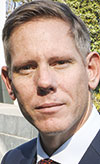
Caspar Herzberg.
Caspar Herzberg, president Schneider Electric Middle East & Africa region, co-chaired Taskforce 8: ‘How to create jobs for youth’. “We believe in investing in people, as the backbone of the economy, and we place significant focus on vocational training and on the job training,” he said. “The conversation is on how best to develop young people in South Africa, providing them with the skills they need to contribute to and participate in the 4th Industrial Revolution (4IR). South Africa is an integrated economy with significant growth potential; we see the country as the perfect platform of innovation to launch into the rest of the continent. It is important that government and industry engage in win-win partnerships, particularly around key verticals of the smart city, such as energy, water and transport. Through these partnerships, industry is able to invest and experiment, which is a very attractive proposition.”
For Schneider Electric, access to energy, education and basic connectivity is a basic human right.
“Our foundations are built on that very principle, that the digital economy and real economy are intertwined,” concluded Herzberg. “Without energy, there can be no digitisation; everything we do is powered by energy.” As leaders in the digital transformation of energy management and automation we support South Africa in its quest to provide safe, reliable and sustainable energy. We also have ambitions of training an additional 30 000 people in the next four years, enhancing digital skills for the benefit of preparing South Africa for the future.
“Schneider Electric’s commitment to South Africa and its development remains firm, and it has been an honour and privilege to sit down with the country’s top leaders to work through the challenges and opportunities ahead of us.”
Africa’s net-zero ambition must become operational Schneider Electric South Africa
Electrical Power & Protection
Schneider Electric’s Rohit Chashta argues that the biggest gap in Africa’s green transition is not ambition but execution, and outlines how advisory services, bankable project roadmaps, digital visibility and SF6-free switchgear can turn sustainability commitments into measurable progress.
Read more...Helping mines get results from water improvements
News
South African mines operate under constrained, water-scarce conditions where every investment must be justified. Xylem’s Chetan Mistry explains how the right water technology partner helps mines prioritise high-value water systems across the mining lifecycle.
Read more...Even in autonomous systems, human insight is important Schneider Electric South Africa
IT in Manufacturing
As AI, IIoT and digital twins reshape industrial operations, Schneider Electric’s Kobus Vermeulen and Bafana Msibi argue that the operator’s role is shifting from controlling equipment to interpreting intelligence, validating AI recommendations and making decisions that improve
Read more...Designing the modern AI cooling stack Schneider Electric South Africa
Industrial Computer Hardware
As average rack densities in data centres climb from 16 to 27 kW in a single year, Schneider Electric’s Canninah Dladla outlines the six liquid cooling architectures available to operators, seven design factors, and three operational practices that determine energy and water efficiency.
Read more...Software-defined automation is overcoming hardware interoperability limits Schneider Electric South Africa
SCADA/HMI
Schneider Electric’s Kobus Vermeulen and Sydney Higgo explain how open communication standards and software-defined architectures are enabling industrial operators to integrate legacy equipment, new control systems, and cloud platforms without disrupting operations.
Read more...Calcamite partners with Schneider Electric and 4Sight for smart water management Schneider Electric South Africa
Editor's Choice
Schneider Electric, AVEVA and 4Sight OT Automation are helping South African wastewater specialist, Calcamite, digitalise its modular treatment plants through a scalable edge-to-cloud automation platform, with the award-winning Gourikwa pilot now scaling to hundreds of remote sites.
Read more...AI in industry is an early warning system, not a guarantee Schneider Electric South Africa
IT in Manufacturing
Schneider Electric’s Paul Steyn argues that AI in industrial maintenance is only as good as the infrastructure and people behind it, and explains the three layers a facility needs before predictive maintenance can deliver on its promise.
Read more...From the editor's desk: Pushing engineering to the limit Technews Publishing
News
Among the many things robots can do, it’s a lot of fun to follow how fast they are. They go from the Boston Dynamics cheetah, which first reached a record-breaking speed of 45,5 km/h, to the robot Charlie ...
Read more...Schneider Electric concludes Innovation Summit Middle East and Africa Schneider Electric South Africa
News
Schneider Electric's Innovation Summit Middle East and Africa, held in Abu Dhabi with more than 2500 attendees, explored the convergence of energy, AI and industrial software, launched an Industrial AI study and announced the NEST Accelerator Programme for energy and industrial tech startups.
While every effort has been made to ensure the accuracy of the information contained herein, the publisher and its agents cannot be held responsible for any errors contained, or any loss incurred as a result. Articles published do not necessarily reflect the views of the publishers. The editor reserves the right to alter or cut copy. Articles submitted are deemed to have been cleared for publication. Advertisements and company contact details are published as provided by the advertiser. Technews Publishing (Pty) Ltd cannot be held responsible for the accuracy or veracity of supplied material.










 printer friendly version