BitDefender spotlights piracy as the weak link of on-line safety
1 April 2011
IT in Manufacturing
The malware charts for the first quarter of the year sees malware related to software piracy ranking high, as outlined by the BitDefender antimalware intelligence data. The Autorun function of removable devices still remains the number one vulnerability exploited by cybercriminals; and illegal advertising holds on to an ‘honourable’ and steady fourth place in the Q1 2011 e-threat top.
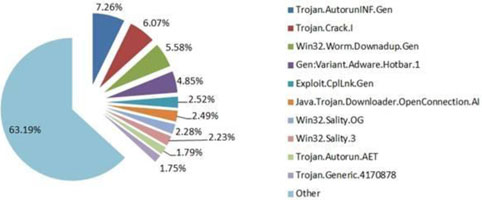
Malware distribution for January - March 2011:
On the highest position in the e-threat distribution chart at the end of Q1, 2011 BitDefender spots Trojan.AutorunINF.Gen that accounts for a percentage of 7,26 from the total amount of detections worldwide. This makes the autorun function of the removable devices vulnerable to malware attacks of all kinds. The constant presence of the worm in BitDefender’s top 5 malware reveals that users are still reluctant to installing security updates from the operating system vendor.
Trojan.Crack.I accounting for a percentage of 6,07 points ranks second after only a few months of existence. It should be mentioned that this application generates unauthorised registration keys in order to defeat the commercial protection of shareware software products. It may also try to collect details about further applications that run on the compromised computer (name, version, registration keys etc,) and send them to a remote attacker who would subsequently sell these licenses as OEM Software.
Win32.Worm.Downadup.Gen ranks third with 5,58% from the total number of infections registered worldwide this first quarter of 2011. There are countries like the United Kingdom where this malware saw a significant drop in detection, but there are other regions where it still dominates the malware charts (like Romania and Spain). This worm’s agenda is well-known by now: amongst others, it prevents users from accessing both Windows Update and security vendors’ web pages, while also downloading rogue AVs on the compromised computers.
Gen:Variant.Adware.Hotbar.1 accounts for 4,85% of the total amount of malware which places it fourth in this year’s quarterly malware distribution chart. Gen:Variant.Adware.Hotbar.1 forces pop-up messages on users’ PC screens, while also initiating new browser windows usually located on the right side of the desktop. This family of malware is also capable of browser hijacking, which means that most of the search queries will be routed to various ad campaigns which boost the attacker’s advertising revenue. This adware tool can be used to gather data on the surfers’ habits in order to serve targeted ads or shopping suggestions.
The fifth place in this quarterly malware top goes to Exploit.CplLnk.Gen - a detection specific to lnk files (shortcut files) that makes use of a vulnerability in the Windows OSes to execute arbitrary code. This exploit has seen a significant boost these past few weeks and it is expected to spread even further. It is also one of the four zero-day exploits that have been intensively used by the Stuxnet worm to compromise local security.
Further reading:
ESG as a growth lever
RS South Africa
IT in Manufacturing
Leading organisations are treating ESG not as a compliance obligation but as a practical tool for operational efficiency, supply chain resilience and business performance, with data and collaboration central to unlocking its value.
Read more...
Preparing Africa’s data centres for the demands of autonomous AI
Schneider Electric South Africa
IT in Manufacturing
Africa’s data centre infrastructure must evolve significantly to support agentic AI workloads, with GPU-intensive computing, advanced cooling and reliable power demanding a fundamentally different approach to facility design and investment.
Read more...
Virtualising the control room to reshape building management systems
Schneider Electric South Africa
IT in Manufacturing
Schneider Electric explains how virtualising building management systems frees facilities teams from ageing hardware, delivers stronger cybersecurity and enables portfolio-wide control from a single interface.
Read more...
AI infrastructure solutions for data campus
Schneider Electric South Africa
IT in Manufacturing
Schneider Electric and Motivair deliver more than $290 million in power and cooling infrastructure for TeraWulf’s AI-ready Lake Mariner data campus.
Read more...
Africa’s data centre evolution: AI, edge computing and new energy demands
IT in Manufacturing
With less than half a gigawatt of active white space capacity serving over a billion people, Africa’s data centre sector faces a stark gap that AI’s surging power and cooling demands are set to widen. Vertiv and Open Africa Data Centres unpack how modularity, edge computing and smarter energy strategies could change the equation.
Read more...
How data and AI are unlocking South Africa’s next mineral frontier
IT in Manufacturing
Data, AI and blockchain are reshaping how mining companies explore, extract and prove the provenance of resources, opening a new frontier for South Africa’s mining sector.
Read more...
Luna Rossa partners with Siemens for 38th America’s Cup
Siemens South Africa
IT in Manufacturing
Siemens details how Luna Rossa is using digital engineering and simulation tools, from CAD to structural optimisation, to design a faster yacht for the 38th America’s Cup.
Read more...
AI is raising South Africa’s cybersecurity stakes
IT in Manufacturing
As AI accelerates both the sophistication and scale of cyber threats, South African organisations face significant gaps in cloud security, data governance and identity management that need to be addressed before AI capabilities are further embedded into business operations.
Read more...
How modern EAM is becoming the driver of productivity, resilience and sustainability in mines
Schneider Electric South Africa
IT in Manufacturing
Modern enterprise asset management is turning maintenance from a routine function into a strategic priority, helping mines extend the life of ageing infrastructure while improving productivity and safety.
Read more...
Physical AI solution with potential to transform South African manufacturing
IT in Manufacturing
NTT DATA and Hyster-Yale Materials Handling have deployed physical AI in an industrial assembly environment, embedding intelligence into production workflows to improve quality assurance and cut deployment timelines significantly.
Read more...










 printer friendly version