Churning out new technology is part and parcel of any modern manufacturing organisation. The drive to stay at the forefront of innovation has, however, been taken one step further by Endress+Hauser, when it designed a new system to significantly speed up the rate at which the company can design and create new products and solutions.
Rapid Prototyping (RP) has reduced the time-to-market of Endress+Hauser concepts from three years down to a remarkable 18 months, primarily by allowing the integration of model and prototype construction into the actual construction phase. "Simultaneous engineering has allowed us to rationalise our overall development process," explains Tony Jacobsen, managing director of Endress+Hauser South Africa. "From the day that we identify a need in the market to the day that we bring out a working solution, we are now able to act much more rapidly."
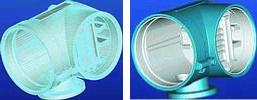
A typical Rapid Prototyping process
The term 'Rapid Prototyping' comprises several different processes to quickly manufacture prototypes. It all starts with a concept created using a 3D CAD construction program. The CAD data (concept) is then transferred to the RP facility by way of a standard interface. Following this transfer, a fully automated RP plant manufactures an actual prototype, often only needing some finishing. Models generated in this manner are often operative and offer an enormous advantage - timewise - compared to traditional processes, where the manufacture and modification of a tangible model may take several months. This is proof that model construction has caught up with disciplines such as construction and production, which have long been computer assisted.
Various different RP processes have seen the light recently, including stereo lithography, selective laser sintering, laminated object manufacturing, multijet modelling, 3D printing and fused deposing modelling. Contrary to traditional design processes, all RP methods add material and do not remove it.
Often, these new processes could very well have come from a James Bond movie. For instance, during selective laser sintering, layers of powder are melted with a laser and then applied with a levelling roller in an inert atmosphere (with nitrogen as the inert gas). The powder to be applied is pre-heated in a chamber with the help of an infrared lamp to a temperature just below its melting point. A laser beam is used to scan the component structure and melt the powder accordingly, leaving non-solidified material to support the component, which eliminates the need for additional support construction. The model, now one layer thick, is layered onto a process chamber, where a second layer is applied. Finally, if necessary, a sintering process is used for full curing, readying the model for operational testing. "This technology will elevate the art of innovation itself, ultimately benefiting our customers in the form of ever-improving solutions," Jacobsen concludes.
What you need is a nerve centre for your building Schneider Electric South Africa
SCADA/HMI
Schneider Electric’s Anoop Hariparsad explains how a building management system acts as a single nerve centre, cutting energy use and improving safety and guest experience.
Read more...Inspiration for times of change Endress+Hauser South Africa
News
More than 2000 customers, partners and experts gathered in Basel, Switzerland, for the Endress+Hauser Global Forum in April 2026. Under the theme of driving sustainable transformation together, the event combined keynote sessions on strategy, technology and the future of work with practical case studies from across the process industry.
Read more...How a digital foundation can overcome the LNG trilemma Schneider Electric South Africa
IT in Manufacturing SCADA/HMI
The LNG sector is racing to add capacity, but without a digital backbone, growth creates complexity rather than capability. Christophe Begat of Schneider Electric explains how connecting data, systems and analytics across the LNG value chain can resolve the trilemma of secure supply, lower emissions and tighter costs.
Read more...Optimise sludge treatment and reduce operational costs Endress+Hauser South Africa
Sensors & Transducers
Endress+Hauser’s inline measuring devices, the Proline Teqwave MW 300 and the Proline Teqwave MW 500, determine the total solids content of wastewater directly through microwave transmission.
Read more...Full HD industrial AI panel PC Vepac Electronics
SCADA/HMI
Powered by the NVIDIA Jetson Orin NX, the NIKY-2215-NX industrial AI panel PC provides up to 100 TOPS of AI performance through the module’s 1024-core NVIDIA Ampere architecture GPU.
Read more...Level measurement for hygienic applications Endress+Hauser South Africa
Level Measurement & Control
Endress+Hauser’s Liquiphant is considered to be the most reliable and safe point level detector in industrial plants. The latest generation of devices is ready for Industry 4.0 and, with the Liquiphant FTL63, is ideally suited for applications with hygienic requirements.
Read more...When SCADA meets the cloud Omniflex Remote Monitoring Specialists
SCADA/HMI
Engineers are faced with the challenge of unifying legacy SCADA systems with modern, IoT-based data platforms. The trouble is, when hardware from multiple manufacturers and generations are all used in the same system, compatibility becomes an issue
Read more...Transforming the process industry through digitalisation Endress+Hauser South Africa
IT in Manufacturing
By connecting field devices, systems and people, digitalisation creates new opportunities to optimise operations, enhance maintenance strategies and support continuous improvement. As a leading instrumentation provider and major source of process data, Endress+Hauser plays a key role in enabling this transformation.
While every effort has been made to ensure the accuracy of the information contained herein, the publisher and its agents cannot be held responsible for any errors contained, or any loss incurred as a result. Articles published do not necessarily reflect the views of the publishers. The editor reserves the right to alter or cut copy. Articles submitted are deemed to have been cleared for publication. Advertisements and company contact details are published as provided by the advertiser. Technews Publishing (Pty) Ltd cannot be held responsible for the accuracy or veracity of supplied material.










 printer friendly version