



We need to take full responsibility for the future to ensure that our children will be able to enjoy life on this planet.
Headquartered in Munich, Germany, PULS was founded in 1980 by switch-mode power supply pioneer, Bernhard Erdl. In 1981 the company introduced its first switch-mode power supply for 19-inch racks to the market; the product featured a particularly shallow depth of 25 mm and a switching frequency of 120 kHz.
In 1985 the company achieved a breakthrough in efficiency, over 85% for a 5 V/50 A power supply, and introduced automatic 115/230 V selection. 1986 saw a quantum leap in automation through the introduction of in-circuit tests, fully automated function testing and computer-aided design and in 1989 the first products based on surface mount technology saw a further reduction in power supply size.
In 1995 PULS became a founding member of the European Power Supply Manufacturers Association (EPSMA).
DIN-rails emerge
1997 saw a shift in strategic focus to the design of switch-mode power supplies for DIN-rail mount with the introduction of the SilverLine family, which was considerably smaller and offered better performance than competitive products. This success strengthened the company’s resolve and today it is Europe’s leading manufacturer of power solutions for the DIN-rail.
The portfolio of market offerings currently consists of three product families: MiniLine (25-100 W), SilverLine (40-960 W) and DIMENSION (80-480 W) that fall into one of the following categories:
* Single phase AC/DC power supplies.
* Three-phase AC/DC power supplies.
* DC/DC converter.
* Redundant power supplies and modules.
* AS-interface power supplies.
* Buffer modules.
As the products have been certified to meet a wide range of codes and standards, they can be readily installed throughout the world. Typical applications are found in machine construction, control and automation, plant and systems construction, robotics, drive technology, building automation, lighting technology, cleaning technology and construction machinery.
Environmental awareness
PULS became one of the first in the industry to incorporate environmental conservation and sustainability efforts into its business model. The company has focused on developing energy-efficient products to enhance the performance and operating life of power units by eliminating heat from the control systems of the power supply.
Unsurpassed energy efficiency ranging from 92% to 96,5% has been achieved through innovations such as the introduction of microprocessors to control power supply operation.
The company has further demonstrated its obligatory responsibility towards the environment by constructing one of the greenest manufacturing plants in the world in 2007. The innovative design of its production facility in the Czech Republic ensures that there is no waste of heat energy generated from the power supply units. The excess heat is effectively utilised to heat water in the production plant during winters. The use of burn-in-cabinets with integrated energy-recovering systems reduces energy usage by 84 percent, another significant feature among the energy conserving methods.
Efficiency is measurable
Bernhard Erdl and his team believe the best contribution they can make to actively protect the environment and climate is to avoid unnecessary energy consumption and to use resources responsibly. Advanced technologies in the design of power supply units allow the construction of highly efficient devices with reduced levels of loss and wasted heat.
This approach has three primary benefits for the company’s clients:
1. The overall improved efficiency decreases power consumption and reduces energy costs. This means that over time users make significant savings, which could even exceed the purchasing costs.
2. The high level of efficiency results in lower operating temperatures, which puts less stress on components and extends the service life of all the devices in the cabinet or machine.
3. The compact design of the power supplies means that a lot of space is saved on the DIN-rail and handling is easier; users benefit from the fact that cabinets can become even smaller.
Compact DC-UPS for DIN-rail
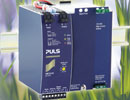
The latest compact DC-UPS from PULS offers unmatched output power and requires only 123 mm width on the DIN-Rail. Up to 6 minutes hold-up time at 24 V 10 A can be supported and for short-term 15 A is available.
All PULS DC-UPSs utilise a 1-battery-concept, offering more benefits and eliminating the disadvantages of the traditional two 12 V batteries connected in series. Due to this unique design, the onboard microprocessor offers superior battery management with a stabilised and current limited output voltage. The single integrated 12 V battery is easy to replace and purchase because the need for matched batteries is no longer necessary.
Automatic temperature compensated charging with sophisticated signals and comprehensive safety functions make the PULS UBC10.241 the simplest and easiest DC-UPS to install and use.
For more information contact Ettienne van der Westhuyzen, Current Automation, +27 (0)11 462 4253, [email protected], www.rectifier.co.za
| Tel: | +27 11 462 4253 |
| Email: | [email protected] |
| www: | www.rectifier.co.za |
| Articles: | More information and articles about Current Automation |






© Technews Publishing (Pty) Ltd | All Rights Reserved
 printer friendly version