



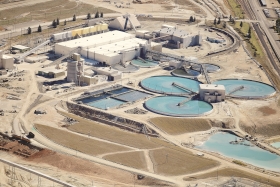
Water in South Africa is a very important, albeit a very scarce, resource. In addition to human consumption, all industries are somehow dependent on the use of water in various forms and quality. This makes it very important for all consumers, and especially industries, to manage and monitor the water they consume and release back into the environment. Industries across the globe are encouraged to reuse water as much as possible, and therefore a 'zero liquid discharge' policy has already been implemented by various companies in different sectors.
The Department of Human Settlements, Water and Sanitation (DHWS) has updated and refined legislative frameworks with the focus on integrated water resource management (IWRM) to ensure environmental sustainability, socioeconomic equity and efficiency in water use. The department developed policies and regulations that gave effect to water conservation and water demand management (WC/WDM). Sectoral WC/WDM guidelines were developed for the agricultural, industrial, power, mining and the water services sectors.
Water is a critical resource for the mining industry, either in the mining processes, as a feed to the beneficiation of minerals process, or for potable use. With the growing demand and increased scarcity of usable water, it is important for mines to prove that they utilise water optimally, by suitable reuse and reclamation of contaminated water.
Demand management and conservation forms an important part of mining operations, irrespective of whether it uses surface or ground water, and whether it impacts downstream water resources. By implementing state-of-the-art water management systems, mining companies will start to realise the importance of the water they use and will therefore recognise the scarce resource as an invaluable asset in their operations.
The key steps in the implementation of WC/WDM are based on resource protection and waste management and entail the following:
• Prevent pollution and avoid water use by implementing waterless processes.
• Reduce water use by using optimised technology.
• Reuse and recycle water as far as possible in accordance with applicable regulations.
• Disposal of water, or treated wastewater that is not reused, in a responsible manner so as not to pollute the receiving environment.
• Always strive for greater efficiency in the use of water through the process of continual improvement using feedback and adaptive management.
Endress+Hauser has been a valuable partner in the water and wastewater industry globally for more than 65 years, and in Africa for 35 years. Based on this industry expertise, here are some examples of where its products, solutions and services can be utilised in the implementation of the DHWS best practice guidelines (BPG) for water management in the mining industry.
BPG H3: Water reuse and reclamation
The reuse and reclamation of contaminated water is important for any mining operation as it indicates that they optimise their water utilisation. All new and existing mines are required to prove this optimisation of water reuse and reclamation by having water reuse and reclamation plans. These must consider the water and salt balance over the lifetime of the mine. Accurate measurement and storage of water abstraction, use and release data will assist in maintaining an historical record of long-term water balance. The Endress+Hauser Proline Promag family of electromagnetic flow meters can be utilised for accurate measurement of all water sources on the mine, whether potable, raw or water contaminated with chemicals. The embedded Heartbeat Technology ensures users are at all times aware of the health of their flow meters and the reliability of their measurements.
BPG H4: Water treatment
There are various water treatment processes (from basic to advanced) to treat any form of mine water. The BPG H4 describes the technical methodology that a mine must apply to identify the constituents of concern that may require mine water to be treated for sustainable reuse, or discharge, as a last resort.
Various mine water treatment plants in the Mpumalanga area utilise Endress+Hauser Proline range of flowmeters as well as the Liquiline liquid analysis platform with Memosens digital sensors, often in quite harsh environments. Using Memobase Pro and Heartbeat Technology, the lifespan of sensors can be optimised by continuously monitoring the condition and status of sensors.
BPG G2: Water and salt balance
The most fundamental building blocks of a mine water management system are often considered to be the water and salt balance. Without accurate and effective water and salt balance, it is impossible to plan, implement, assess and manage the WC/WDM at a mine.
The water and salt balance can be used as a tool to:
• Audit the water usage from various sources.
• Identify where water is wasted, or usage is too high.
• Quantify balances by measurement.
• Locate and quantify sources of seepage and leakage.
• Identify and quantify pollution sources.
• Assist in decision-making.
Although the Endress+Hauser Proline range of flowmeters are calibrated using a certified calibration rig, the mine will be required to prove the accuracy of their water balance by doing traceable flow verifications every 6-12 months. With the Heartbeat Technology embedded in each Proline flowmeter, the verification certificates can be obtained using a laptop (no additional tools or modems) or even remotely over an industrial fieldbus network, where available.
BPG G3: Water monitoring systems
An effective and well-designed water quality monitoring programme is an essential component of the WC/WDM measures at any mine. The following are some of the important aspects for the success of a monitoring strategy:
• It should allow for discrete as well as reliable continuous monitoring.
• The programme should be implemented according to the detail design and specified sampling procedures.
• An operating and maintenance programme must be implemented.
• Data should be populated in a data management system.
• There should be regular audit and quality assurance of the monitoring programme.
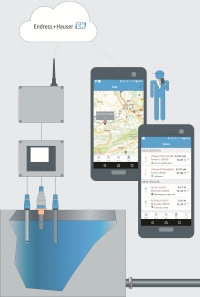
One of the ways Endress+Hauser can support a mine in their monitoring programme is by implementing standard or customised smart water monitoring systems. This includes an easy-to-implement solution consisting of the Liquiline water quality measurement system, an edge device connecting to the Endress+Hauser Netilion services and customised app or dashboard, to monitor measurement points remotely. With an API, the data can be made available in the relevant data management system of the mine.
By utilising Heartbeat Technology in the Liquiline liquid analysis systems, the mine can receive early warning of faulty devices or parameters so these can be addressed timeously, ensuring data is always accurate and reliable.
To ensure reliable water usage and quality monitoring, including leakages and pollution events, accurate and reliable measurements are required. Heartbeat Technology in measurement devices organises clear, standardised diagnostic messages of what needs to be done to maintain the plant economically, based on necessities. Along with this, it enables predictive maintenance and delivers evidence for operational reliability and process safety. As the devices run their own diagnostics, proof tests are only necessary in extended cycles.
By connecting all the process measurement instrumentation to the Endress+Hauser Netilion hub, using any of the available industrial communication protocols, the user has access to all the process variables and health information, as well as any maintenance, events and product documentation.
| Tel: | +27 11 262 8000 |
| Email: | info.za.sc@endress.com |
| www: | www.endress.com |
| Articles: | More information and articles about Endress+Hauser South Africa |






© Technews Publishing (Pty) Ltd | All Rights Reserved
 printer friendly version