



The world is in the middle of the second decade of the new century. In the midst of accelerating technology changes, fragile financial failures and precarious political problems almost everywhere in the world, new societies are emerging – new demographics, institutions, ideologies and problems.
I’ll outline the things that are expected to happen in the near-term. Over the next decade, much will change; what we can do is extrapolate the technology trends
Automation industry trends
Automation growth is occurring primarily in international markets where new factories and plants are being built. Several growth opportunities are emerging. The new automation leaders will be those who can demonstrate that their products and services can yield significant productivity improvements, and navigate the complexities of global markets. New inflection points will change the leadership line-up.
• Internet of Things (IoT): The industrial Internet will transform the next decade. Intelligent sensors and networks will take measurement and control to the next level, dramatically improving productivity and efficiencies in production. Growth in 2015 will be bottom-up, not top-down.
• Smaller, cheaper sensors: Everyone is looking for or working on smaller, cheaper sensors for widespread use in IoT. Expect fast growth for sensors this year.
• Cloud computing: Cloud computing technology reduces capital expenditures and IT labour costs by transferring responsibility to cloud computing providers, allowing secure and fast access for data-driven decisions. The significant gains in efficiency, cost and capability will generate continuing rapid growth in 2015.
• 3D Printing in manufacturing: Today, do-it-yourself manufacturing is possible without tooling, large assembly lines or multiple supply chains. 3D printing is reshaping product development and manufacturing.
• Mobile devices in automation: The use of WiFi-connected tablets, smartphones and mobile devices is spreading quickly. Handheld devices reduce costs, improve operating efficiency, boost productivity and increases throughput. More and more employers are allowing BYOD (bring your own device).
• Robotics: Millions of small and medium-sized businesses that will benefit from cheaper robots that can economically produce a wide variety of products in small numbers. The next generation of robots will be cheaper and easier to set up, and will work with people rather than replace them.
• Control system security: In spite of apprehensions over consumer security breach events, industrial cyber security has mostly been ignored due to lack of understanding of solution costs. Many companies struggle to justify what is seen as added cost to secure their operation. Major security breaches will change this attitude.
Future prognostications 2015-2025
In addition, here are 10 prognostications for the next decade, picked from the World Future Society forecasts, plus other readings and discussions with futurists. These are intended to illustrate how different the world will be for my grandkids (who will still be teenagers). They will grow up used to the world being this way and will shape the future.
• Education: A major shift to on-line education and certification is already happening, and will continue steadily.
• Jobs: Advances in artificial intelligence will eliminate human workers. Two billion jobs will be jettisoned by 2030, replaced by jobs that are still developing. There will be big opportunities for technical specialisation, as well as more varied cultural opportunities – music, art and novels, for instance.
• Robot work force: Machines can automate production economically so marginal labourers will be laid off. The technological boom in robots and intelligent computer systems will proliferate to the detriment of human labour.
• Middle class impasse: The middle class is accumulating debt and delaying retirement. Young people cannot find work, so live with their parents. With income stagnating, consumption must fall, which will cause empty shopping malls.
• Driverless cars: As automated vehicles increasingly replace human-driven ones, the numbers of deaths and catastrophic injuries will drastically decline, along with lawsuits and the need to insure humans and vehicles against drunk or sleeping drivers, road rage and other problems.
• Speak to computers: Word-meaning models, logic algorithms, and grammar and syntax analysis will accurately predict the meanings of sentences 85% of the time. Tomorrow’s computers will know what people are saying and will be able to tell when someone is lying.
• Robotic augmentation: Robotic exoskeletons will allow wearers to move their arms, legs, and torsos, with mechanical amplification in every motion. Some designers envision senior citizens in civilian life using exo-skeletons, to stay mobile even as their bodies lose strength and vitality.
• Health: Future medicine will rely on an array of sensors collecting and reporting on body status. Digestible sensors will store and transmit body data. Sensors embedded in teeth will recognise when people eat, drink, cough, or smoke. Sensors under the skin will constantly measure vital signs and produce alerts when something is wrong.
• Brain scanning will replace jurors: Increasingly sophisticated neuro-technologies will enable the legal system to spot when suspects, witnesses and police are telling the truth or lying. As functional MRIs become more widespread, courtrooms will allow brain-wave detection.
• Energy: Futurist Ray Kurzweil notes that solar power has been doubling every two years for the past 30 years while costs have been dropping. He says solar energy is only six doublings (less than 14 years) away from meeting 100% percent of energy needs.
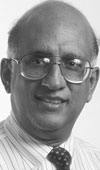
Jim Pinto is a technology futurist, international speaker and automation industry commentator. You can e-mail him at [email protected]. Or review his prognostications and predictions on his website www.jimpinto.com






© Technews Publishing (Pty) Ltd | All Rights Reserved
 printer friendly version