


SCADA/HMI


Why dedicated alarm management still has a role

October 2026 SCADA/HMI

SCADA systems are sophisticated at managing alarms, providing operators with greater visibility of plant conditions and helping them respond to abnormal situations. As industrial environments have evolved, so too has the role of dedicated alarm management. Ian Loudon, international sales and marketing manager at remote monitoring specialist Omniflex, explores why Sequence of Events (SOE) and dedicated alarm management are valuable alongside modern SCADA systems.
Understanding the sequence behind the alarm

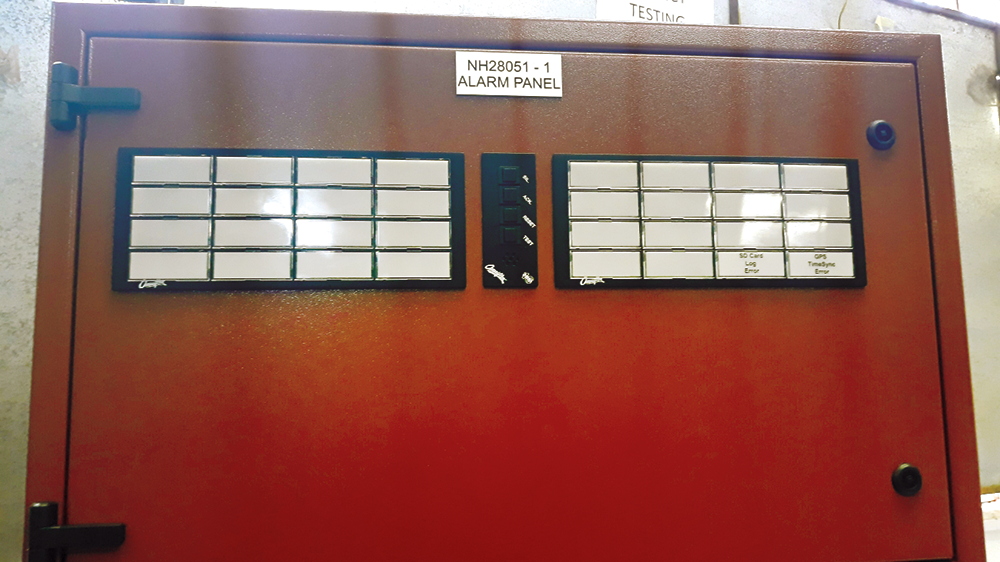
When a critical event occurs in an industrial plant, one alarm can quickly become dozens or even thousands. A fault can trigger a cascade of alarms across different parts of a process, leaving operators with a rapidly changing picture of what is happening. For the operator dealing with an incident, this can make it difficult to distinguish the initiating event from everything that follows. Once the immediate situation has passed, it can also make it challenging to reconstruct what happened and in what order. This is the challenge that SOE technology is designed to address.

By time-stamping events at source and synchronising equipment to a common time base, SOE can establish the order in which events occurred, providing engineers with a clearer picture of an incident and its potential root cause. The importance of this becomes clear during an alarm avalanche. If a generating unit trips, for example, up to 2000 alarms can be generated in a matter of moments. If a system relies on polling, determining which event happened first can be difficult. With source-level time-stamping, however, the original chronology is retained, even if the data takes several minutes to reach the control system.

The challenge of managing large volumes of alarms is well established. EEMUA 191, the industry guide to alarm system design and management, provides guidance on issues including alarm prioritisation, filtering and avoiding alarm floods. IEC 62682:2022 sets out general principles for managing alarm systems based on control systems and human-machine interfaces, including alarm and event logs and alarm historians.

Where dedicated alarm management fits

OMNI4000 was developed when SCADA systems did not provide the same dedicated environment for managing alarms that they do today. Since then, SCADA has evolved significantly, incorporating increasingly sophisticated alarm-management capabilities. This has changed the role of OMNI4000 rather than removed it. The system can operate alongside modern SCADA and distributed control environments, providing a dedicated platform for alarm management while SCADA continues to perform its wider operational monitoring and control functions. OPC has also made it easier for these different systems to interface with one another. For some plants, maintaining a distinction between operational controls and alarm management can provide a practical way of ensuring critical information receives the attention it requires.

Making alarms actionable

Capturing events accurately is only useful if operators can understand and act on the resulting information. This is where OMNI4000 provides an important management layer. The system can filter alarms according to changes of state and classify them according to priorities such as urgent, non-urgent or critical. This helps to distinguish information that requires an operator response from routine operational data.

The distinction between SOE and alarm management is important. SOE provides the diagnostic picture: what happened, which event came first and where the problem originated. OMNI4000 provides the visibility and management oversight needed to turn that information into action. As industrial control environments continue to evolve, the role of dedicated alarm management will continue to depend on the requirements of individual sites.

Modern SCADA can provide powerful alarm capabilities, while mature systems such as OMNI4000 can continue to offer value where a dedicated approach supports the way a plant operates. The objective is to ensure operators have the right information, in the right order, to make the right decision when it counts.


Credit(s)


Share this article:
Share via emailShare via LinkedInPrint this page

Further reading:

Unlocking ICCP remote monitoring
Omniflex Remote Monitoring Specialists Maintenance, Test & Measurement, Calibration
Cathodic protection keeps buried and submerged pipelines safe from corrosion, but verifying it traditionally means costly, hazardous manual site visits. Omniflex explains how a retrofit module brings remote monitoring to ageing transformer rectifiers without replacing functional infrastructure.

Read more...
Software-defined automation is overcoming hardware interoperability limits
Schneider Electric South Africa SCADA/HMI
Schneider Electric’s Kobus Vermeulen and Sydney Higgo explain how open communication standards and software-defined architectures are enabling industrial operators to integrate legacy equipment, new control systems, and cloud platforms without disrupting operations.

Read more...
Mine-wide water monitoring at Nkomati Nickel plant
Omniflex Remote Monitoring Specialists Data Acquisition & Telemetry
Omniflex is supplying a new wireless telemetry system for Nkomati Nickel plant, restoring mine-wide monitoring of water and pumping systems across six outstations as the operation prepares to resume following a R753 million restart investment.

Read more...
Siemens modernises WinCC Unified engineering
SCADA/HMI
Siemens has launched SIMATIC AX WinCC Unified Elements, an IT-style engineering application for the WinCC Unified system that lets automation engineers build and deploy visualisation projects using code-based workflows, Git integration and AI-generated configuration

Read more...
Omniflex delivers ICCP systems in London
Omniflex Remote Monitoring Specialists Maintenance, Test & Measurement, Calibration
Omniflex has supplied impressed current cathodic protection systems for landmark London buildings, protecting reinforced concrete from corrosion and extending the service life of commercial, retail and heritage sites.

Read more...
The control room used to run one plant, now it runs the world
SCADA/HMI
Industrial control rooms are evolving from single-site interfaces into network-wide command centres. Modern SCADA and HMI platforms now deliver real-time visibility, dynamic forecasting and cross-facility coordination, fundamentally reshaping how industrial operations achieve resilience.

Read more...
Modernising acid cooler protection without disrupting production
Omniflex Remote Monitoring Specialists Maintenance, Test & Measurement, Calibration
Omniflex has supplied an advanced anodic protection control system to phosphate producer Foskor, replacing a legacy transformer rectifier system while maintaining uninterrupted production. The distributed PowerView CP solution provides remote monitoring and DCS integration.

Read more...
Effective alarm management for safer, more productive operations
Adroit Technologies SCADA/HMI
Adroit Technologies addresses alarm flooding and nuisance alarms with its Adroit Alarm Management solution.The platform combines performance dashboards, mobile escalation via Adroit AIR, and an integrated digital logbook to turn alarms into actionable operational intelligence.

Read more...
Upgrading alarm systems for critical industries
Omniflex Remote Monitoring Specialists PLCs, DCSs & Controllers
Omniflex’s OMNI16R alarm annunciator platform provides a direct replacement for legacy CSA systems such as MPAS 90 and SA9100, enabling operators in oil and gas, nuclear and power generation to modernise alarm infrastructure without sacrificing the clarity required for safe operations.

Read more...
Rethinking corrosion protection in process plants
Omniflex Remote Monitoring Specialists Maintenance, Test & Measurement, Calibration
Remote monitoring is changing how cathodic and anodic protection systems are managed in process plants, giving operators continuous visibility of corrosion protection performance and enabling more proactive maintenance decisions.

Read more...


While every effort has been made to ensure the accuracy of the information contained herein, the publisher and its agents cannot be held responsible for any errors contained, or any loss incurred as a result. Articles published do not necessarily reflect the views of the publishers. The editor reserves the right to alter or cut copy. Articles submitted are deemed to have been cleared for publication. Advertisements and company contact details are published as provided by the advertiser. Technews Publishing (Pty) Ltd cannot be held responsible for the accuracy or veracity of supplied material.


© Technews Publishing (Pty) Ltd | All Rights Reserved

