


IT in Manufacturing


Even in autonomous systems, human insight is important

October 2026 IT in Manufacturing

With the advent of AI, IIoT technologies and digital twins, today’s industrial operators no longer scramble to silence alarms. They focus on how quickly they can interpret the intelligence behind them. This is in contrast to the constant vigilance that came from manually controlling equipment. Industrial operators are now supervisors of highly autonomous systems, making strategic decisions and validating AI-driven recommendations, all while improving operational performance.
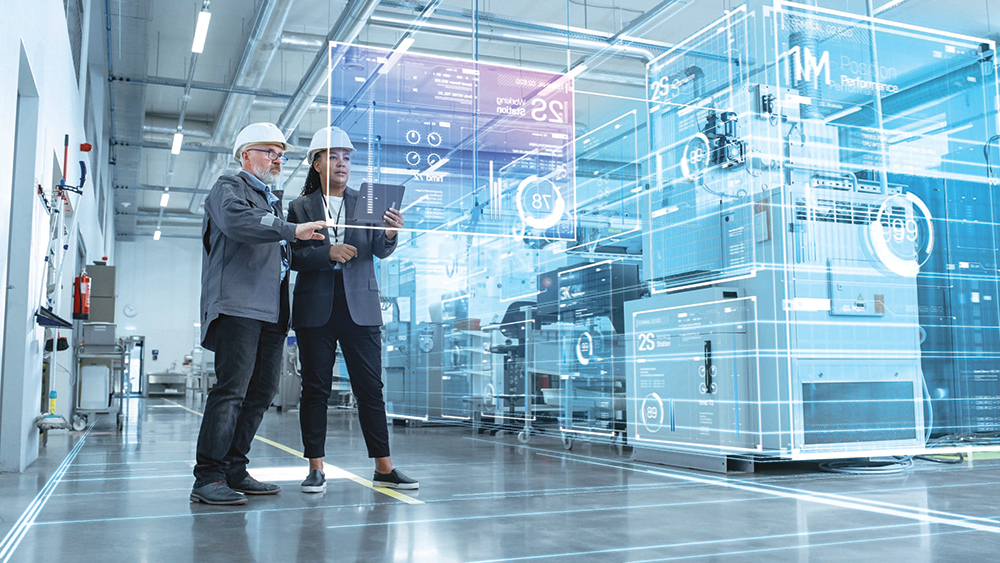
“Instead of monitoring individual process variables, operators are now investigating anomalies, reviewing predictive maintenance alerts and analysing performance trends. They are no longer asking how to keep a machine running, but how to optimise operations,” notes Kobus Vermeulen, direct sales executive, process automation at Schneider Electric.

Bafana Msibi, customer sales executive, process automation at Schneider Electric, concurs. “Successful operators are measuring not only stable production but improvements in energy efficiency, asset utilisation, quality and sustainability. The operator’s role is becoming far more closely aligned with overall business performance.”

People are irreplaceable

AI excels at recognising patterns in complex industrial data, identifying equipment failures, optimising production schedules, and detecting performance deviations faster than any human. However, factories and processing plants rarely operate under perfectly predictable conditions. Unexpected equipment failures, changing operating environments and a myriad of variables require human intervention and judgement.

A seasoned field operator may notice an unusual vibration or sound, or slight signs of corrosion long before these conditions trigger sensor alarms. These real-world observations provide important context that data alone cannot capture.

“An intelligent system may predict heat exchanger fouling or a looming compressor fault, but it is the experienced operator who verifies these predictions against real plant conditions. This continual feedback builds operational confidence and sharpens future AI models,” adds Vermeulen. “Human expertise is the bridge between the digital representation of the plant and its physical reality.”

Asking the right questions

The greatest adjustment for operators is not learning how to use AI, but how to work alongside it effectively and efficiently. “AI should not be treated as the unquestionable authority, but as an intelligent advisor. Operators must ask pertinent questions such as why a recommendation has been made, what variables contributed to it, and what operational context might be missing,” explains Msibi. “This enables operators to uncover root causes rather than simply addressing symptoms, improving decision making.”

The next-generation operator

Traditional technical expertise is still essential, but it is now complemented by analytical thinking, data literacy, systems understanding and cross-functional collaboration. The operator of tomorrow must be comfortable interpreting predictive analytics, understanding interconnected processes, evaluating AI recommendations and communicating insights across multiple operational teams. This is a significant shift, and it heralds a new era of critical and creative thinking, situational awareness and sound judgement.

Human intelligence is the competitive advantage

The industrial sector is entering an era where intelligent systems will monitor millions of data points in real time, optimise production continuously and predict problems long before they occur. The organisations that gain the most from these technologies will not necessarily be those with the most automation.

“The next-generation operator will spend less time controlling equipment and more time interpreting information, validating insights, managing complexity and making decisions that elevate safety, reliability and performance,” says Vermeulen. “In autonomous industrial environments, human insight may prove to be the most valuable capability of all.”


Credit(s)


Share this article:
Share via emailShare via LinkedInPrint this page

Further reading:

AI-based quality inspection scales across P&G operations
Siemens South Africa IT in Manufacturing
Siemens and Procter & Gamble are expanding an AI-based visual inspection system across P&G’s manufacturing operations worldwide, inspecting products in real time at full line speed, and reducing scrap rates by 10 to 20% depending on the product.

Read more...
Designing the modern AI cooling stack
Schneider Electric South Africa Industrial Computer Hardware
As average rack densities in data centres climb from 16 to 27 kW in a single year, Schneider Electric’s Canninah Dladla outlines the six liquid cooling architectures available to operators, seven design factors, and three operational practices that determine energy and water efficiency.

Read more...
Software-defined automation is overcoming hardware interoperability limits
Schneider Electric South Africa SCADA/HMI
Schneider Electric’s Kobus Vermeulen and Sydney Higgo explain how open communication standards and software-defined architectures are enabling industrial operators to integrate legacy equipment, new control systems, and cloud platforms without disrupting operations.

Read more...
How sustainability unlocks real business impact
Rockwell Automation IT in Manufacturing
Sustainability has moved from a compliance obligation to a strategic driver of resilience and value for manufacturers. Rockwell Automation explains how its Triple A framework and connected-data approach help producers cut energy, water and waste while improving productivity.

Read more...
Mining’s AI future will depend on people as well as technology
IT in Manufacturing
South Africa’s mining industry is embracing digitalisation and AI, but AvenirHoldings chief executive officer, Tshidi Mndzebele says the real test is whether the people behind the industry are equipped to move forward with it, and outlines five things mining needs to get right.

Read more...
How BIC overcame operational silos to integrate technology and people
Rockwell Automation IT in Manufacturing
Manufacturing giant BIC deployed Plex MES from Rockwell Automation at its Bizerte plant in Tunisia, replacing fragmented, partly in-house software with a single cloud-based execution system that broke operational silos and improved shop-floor visibility.

Read more...
Calcamite partners with Schneider Electric and 4Sight for smart water management
Schneider Electric South Africa Editor's Choice
Schneider Electric, AVEVA and 4Sight OT Automation are helping South African wastewater specialist, Calcamite, digitalise its modular treatment plants through a scalable edge-to-cloud automation platform, with the award-winning Gourikwa pilot now scaling to hundreds of remote sites.

Read more...
AI in industry is an early warning system, not a guarantee
Schneider Electric South Africa IT in Manufacturing
Schneider Electric’s Paul Steyn argues that AI in industrial maintenance is only as good as the infrastructure and people behind it, and explains the three layers a facility needs before predictive maintenance can deliver on its promise.

Read more...
SA’s mining industry must put people at the heart of its digital future
IT in Manufacturing
South Africa’s mining industry employs around 470 000 people while its digital transition accelerates. Avenir’s chied executive officer, Tshidi Mndzebele argues that technology should enable and upskill the workforce rather than replace it, setting out five ways mining can make technology work for its people.

Read more...
Quality control supports efficient tissue production
Valmet South Africa IT in Manufacturing
Valmet’s advanced quality control technology is helping tissue producers improve product consistency while reducing energy and raw material consumption. Its latest installation at KORO Paper in Vietnam combines real-time measurement, process optimisation and non-contact, nuclear-free quality control.

Read more...


While every effort has been made to ensure the accuracy of the information contained herein, the publisher and its agents cannot be held responsible for any errors contained, or any loss incurred as a result. Articles published do not necessarily reflect the views of the publishers. The editor reserves the right to alter or cut copy. Articles submitted are deemed to have been cleared for publication. Advertisements and company contact details are published as provided by the advertiser. Technews Publishing (Pty) Ltd cannot be held responsible for the accuracy or veracity of supplied material.


© Technews Publishing (Pty) Ltd | All Rights Reserved

