


IT in Manufacturing


Overcoming the bottling industry’s fragmented visibility

July 2026 IT in Manufacturing Electrical Power & Protection

Beverage bottling facilities are among the most energy-intensive environments in manufacturing with consumption spread across production lines, utilities and support systems. According to a study from the Technical University of Munich, filling, cleaning, sterilisation and packaging are major contributors to overall plant energy demand. It is also estimated that a typical polyethylene terephthalate bottling line has an average total consumption of roughly 245 kW, with stretch-blow moulders averaging 157 kW.
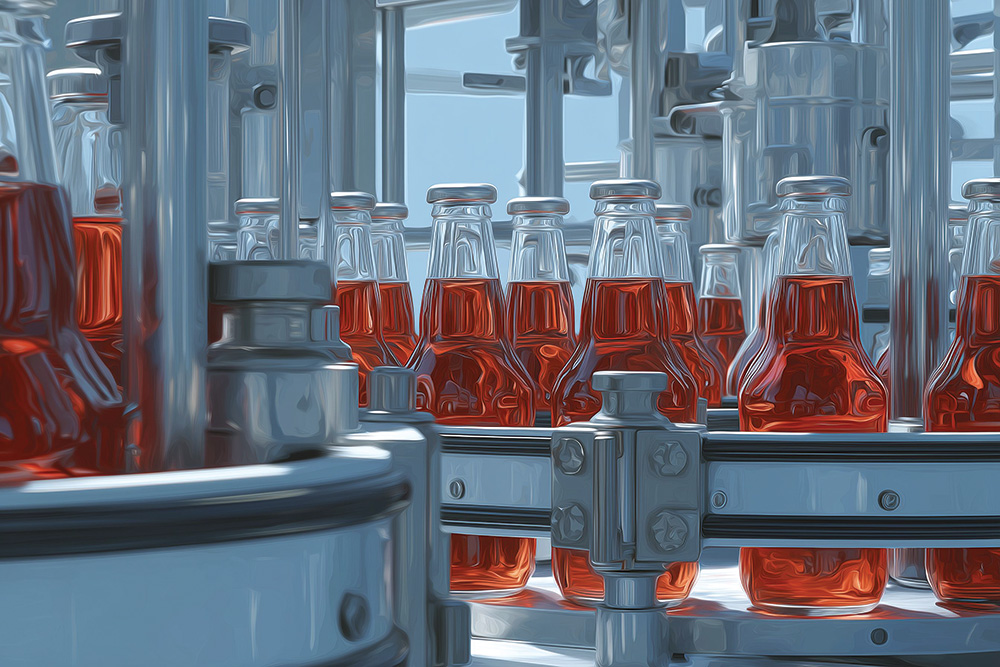
Many bottling plants still lack granular visibility into energy use, relying on aggregate data that obscures efficiency opportunities. Without accurate data, energy cannot be effectively managed.

The cost of fragmented visibility

Many beverage bottling plants today receive a single, aggregated utility bill from the municipality, with little ability to verify its accuracy or correlate costs with actual operational consumption. Without sub-metering or departmental-level insights, facilities are left struggling to:

• Allocate energy costs to specific production lines or processes

• Identify high-consumption areas or inefficiencies

• Validate utility charges against real usage.

Limited visibility also sees maintenance and engineering teams work in a reactive manner which is not conducive to an environment where issues should be addressed before potential failure. This is particularly true in the bottling industry where restarting production lines is both time-consuming and expensive.


Rezolia Muller-Potluri, lead for Microgrid and End User Sales, Digital Energy, sub-Saharan Africa at Schneider Electric.

Addressing these challenges requires more than just installing meters; raw electrical data needs to be transformed to create actionable insight. This is where advanced power monitoring platforms, like Schneider Electric’s Power Monitoring Expert, add tremendous value. These platforms offer a centralised, real-time view of electrical performance across the facility, enabling engineers to monitor, analyse and act on energy data from a single interface.

With connected metering infrastructure in place, facilities can:

• Access real-time visibility of energy usage and equipment behaviour

• Analyse consumption trends across departments and processes

• Track power quality and identify anomalies

• Generate automated reports on energy performance and cost allocation.

It also offers remote visibility, and data is available instantly from any connected workstation. Automated alarms further enhance responsiveness, notifying teams when abnormal conditions arise so that corrective action can be taken before issues escalate into failures. The result is proactive operations where teams can anticipate and prevent potential breakdowns, improving both operational continuity and financial performance.

The role of tiered metering architecture

Effective energy management requires the right data, captured at the right points across the electrical network. A tiered metering architecture aligns measurement capability with the various parts of the system.

At critical nodes such as incoming supplies and key loads, advanced power quality meters like Schneider Electric’s ION9000 and PM8000 provide precise, high-resolution diagnostics. Beyond capturing voltage sags and swells, harmonics, waveform distortion and transients, these meters also deliver millisecond time-stamping, disturbance direction detection and compliance reporting. Together, they enable facilities to pinpoint the source of power quality events, ensure reliability, and align energy performance with both profitability and sustainability goals.

At less critical points, more cost-effective devices, such as the Schneider Electric PM5000, provide essential monitoring of energy consumption, power factor and basic harmonics, enabling broad visibility across the facility without unnecessary complexity or cost.

Driving efficiency, resilience and sustainability

The impact of improved energy visibility extends beyond day-to-day operations. Advanced energy insights provide a foundation for long-term strategic improvement across three key areas: energy efficiency and cost reduction, operational resilience and sustainability performance. Energy management in the bottling sector serves as both a technical necessity and a strategic enabler of profitability and environmental sustainability.

Without accurate metering and real-time insight, beverage bottling plants remain exposed to inefficiencies. In contrast, facilities that invest in comprehensive monitoring gain the clarity needed to make informed decisions.


Credit(s)


Share this article:
Share via emailShare via LinkedInPrint this page

Further reading:

Advancing intelligent apparel manufacturing with industrial AI and humanoid robotics
IT in Manufacturing
Jack Technology, a global maker of industrial sewing equipment, has chosen Siemens software and engineering tools to bring artificial intelligence and humanoid robots into apparel production, aiming to shorten development cycles and lift manufacturing efficiency.

Read more...
New chiller line for high-density AI data centres
Schneider Electric South Africa IT in Manufacturing
Schneider Electric has launched the Uniflair XCA, a new series of air-cooled and free-cooling chillers designed for artificial intelligence-driven, high-density liquid-cooled data centres.

Read more...
Turning system integrators into trusted technology partners
Schneider Electric South Africa IT in Manufacturing System Integration & Control Systems Design
Schneider Electric’s Alliance Partner Programme is repositioning system integrators from hardware suppliers into lifecycle-value partners. Oriel Soupen explains the competency framework, certification model and real-world results that are already helping African system integrators win higher-value, longer-term engagements.

Read more...
Schneider Electric introduces next-generation BlokSeT switchboard
Schneider Electric South Africa Electrical Power & Protection
Schneider Electric has launched its next-generation BlokSeT low-voltage switchboard in West Africa, offering high reliability, predictive maintenance capability and digital integration for critical infrastructure and industrial applications.

Read more...
Why renewable projects need integrated protection and control
IT in Manufacturing
Fragmented secondary plant integration in renewable energy projects causes costly delays during commissioning. ACTOM Protection and Control’s Secondary Plant Integration solution consolidates all secondary systems under a single engineering framework, reducing risk and accelerating grid

Read more...
When digital twins move from concept to critical tool
IT in Manufacturing System Integration & Control Systems Design Maintenance, Test & Measurement, Calibration
Digital twins are moving out of the lab and onto the mine, the factory floor and the transport network where they predict failures before they happen. Amritesh Anand looks at where they earn their keep, the data and integration work behind them, and the security questions every organisation should ask before switching one on.

Read more...
How a digital foundation can overcome the LNG trilemma
Schneider Electric South Africa IT in Manufacturing SCADA/HMI
The LNG sector is racing to add capacity, but without a digital backbone, growth creates complexity rather than capability. Christophe Begat of Schneider Electric explains how connecting data, systems and analytics across the LNG value chain can resolve the trilemma of secure supply, lower emissions and tighter costs.

Read more...
You can’t digitise a blackout
Schneider Electric South Africa Electrical Power & Protection
Across East Africa, smart meters and AI promise cleaner, more reliable power, but digital tools cannot optimise a grid too weak to carry the load. Schneider Electric’s Symphrose Ochieng sets out why operators should strengthen physical infrastructure first, then add digital capability in phases.

Read more...
Decarbonisation is reshaping mining strategy in Africa
Schneider Electric South Africa IT in Manufacturing Electrical Power & Protection
Mining companies across Africa are embedding decarbonisation into operational strategy, driven by investor, regulatory and customer pressure to reduce emissions while improving resilience.

Read more...
Siemens and HighByte partner to scale industrial AI
Siemens South Africa IT in Manufacturing Fieldbus & Industrial Networking
Siemens is expanding its Industrial Edge ecosystem through a partnership with HighByte, enabling customers to connect, contextualise and transform data from operational technology and information technology sources to build AI models and applications at scale.

Read more...


While every effort has been made to ensure the accuracy of the information contained herein, the publisher and its agents cannot be held responsible for any errors contained, or any loss incurred as a result. Articles published do not necessarily reflect the views of the publishers. The editor reserves the right to alter or cut copy. Articles submitted are deemed to have been cleared for publication. Advertisements and company contact details are published as provided by the advertiser. Technews Publishing (Pty) Ltd cannot be held responsible for the accuracy or veracity of supplied material.


© Technews Publishing (Pty) Ltd | All Rights Reserved

