



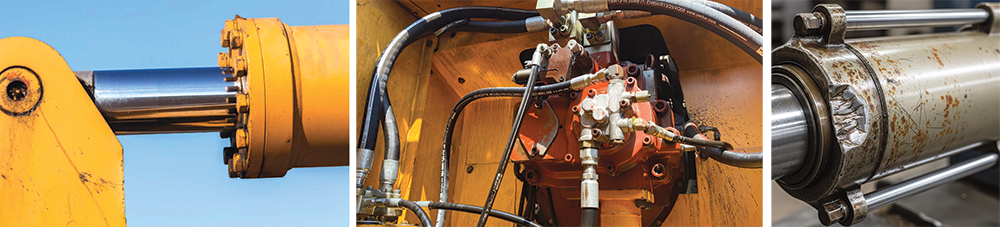
Hydraulic cylinders are the unsung heroes of countless industrial and mobile applications, providing the linear force necessary for everything from construction equipment to manufacturing machinery. While designed for demanding tasks, they are not immune to the inevitable hydraulic cylinder wear and tear that comes with continuous operation. Recognising the early warning signs of cylinder degradation is crucial for preventing costly downtime, ensuring operator safety, and maximising the lifespan of your hydraulic systems.
Hydraulic cylinder wear and tear warning signs
One of the most readily observable signs of a failing hydraulic cylinder is external leakage. This can manifest in various forms, from a slight weeping of oil around seals to significant puddles forming beneath the equipment. Leaks often occur at the rod seals, piston seals or around the cylinder ports and connections. While minor seepage might seem insignificant, it indicates a breach in the sealing system and will invariably worsen over time, leading to fluid loss, reduced system efficiency and potential environmental hazards. It can also allow external contamination to enter the system. Identifying the source and type of leak is the first step towards effective maintenance.
Another sign is drift or creep. This refers to the unintended movement of the cylinder rod when the hydraulic system is supposed to be holding a static load. Drift indicates internal leakage past the piston seals, allowing pressurised fluid to bypass the piston and cause unwanted cylinder extension or retraction. This can compromise the precision of operations and pose safety risks, especially in applications involving lifting or positioning heavy loads.
Unusual noises emanating from the hydraulic cylinder during operation should also raise a red flag. These noises can range from squealing or hissing sounds, often associated with external leaks or air in the system, to knocking or grinding noises which may indicate internal damage such as scoring of the cylinder bore or damage to the piston or rod. Paying close attention to these auditory cues can provide valuable insights into the cylinder’s internal condition.
Visible damage to the cylinder rod is another clear indicator of potential problems. Scratches, dents, corrosion or chrome plating damage can compromise the integrity of the rod seals, leading to external leakage and potentially causing internal damage as debris enters the system. Regular inspection of the rod surface is essential, particularly in harsh operating environments where exposure to abrasive materials or impacts is likely.
Finally, excessive heat generation in or around the hydraulic cylinder can be an indication of internal friction or inefficiency caused by wear. While hydraulic systems naturally generate some heat, a cylinder that feels excessively hot to the touch may be experiencing internal leakage or binding, leading to energy loss and accelerated wear of components and fluid.
Signs of hydraulic cylinder wear and tear
• Description
• Potential causes
• Implications
External leakage
• Visible oil leaks around seals, ports, or the cylinder body
• Worn or damaged seals, loose fittings, or a damaged cylinder body
• Fluid loss, reduced efficiency, environmental contamination, and safety hazards
Drift or ceep
• Unintended movement of the cylinder rod under load
• Internal leakage past piston seals
• Loss of positional accuracy, safety risks
Unusual noises
• Squealing, hissing, knocking or grinding sounds during operation
• External leaks, air in the system, internal damage: scoring, loose components and contaminated oil systems indicates potential mechanical issues requiring investigation
Visible rod damage
• Scratches, dents, corrosion or damaged chrome plating on the rod surface
• Impact, abrasion, environmental exposure, and improper maintenance
• Seal damage, external leakage, internal contamination
Slow or erratic movement
• Cylinder extends or retracts more slowly than usual or exhibits jerky motions
• Worn piston seals, internal friction or internal oil bypass, contaminated hydraulic fluid, and blockages
• Reduced productivity, inconsistent operation
Excessive heat
• The cylinder body or the hydraulic fluid around the cylinder feels excessively hot
• Internal leakage, excessive friction, and inefficient operation
• Accelerated wear, fluid degradation, and potential system damage
Proactive monitoring for these common signs of hydraulic cylinder wear and tear is essential for maintaining the reliability and longevity of your hydraulic systems. Regular visual inspections, coupled with attention to operational performance and any unusual symptoms, can help you identify potential problems early and implement timely maintenance or repairs.
Don’t wait for a minor issue to become a major problem. If you observe any of these signs in your hydraulic cylinders, contact the experts at CT Hydraulics today. Our experienced team can provide comprehensive inspection, repair and remanufacturing services to keep your hydraulic systems operating at peak performance.
For more information contact CT Hydraulics,
| Tel: | +27 11 873 2342 |
| Email: | [email protected] |
| www: | www.cthydraulics.co.za |
| Articles: | More information and articles about CT Hydraulics (Nqoba) |






© Technews Publishing (Pty) Ltd | All Rights Reserved
 printer friendly version