



Industrial automation is undoubtedly one of the most exciting solution frameworks and work methodologies in this day and age. With data volumes growing exponentially, developers are now working equally hard to deliver technology that can keep with the rapid pace of industry requirements.
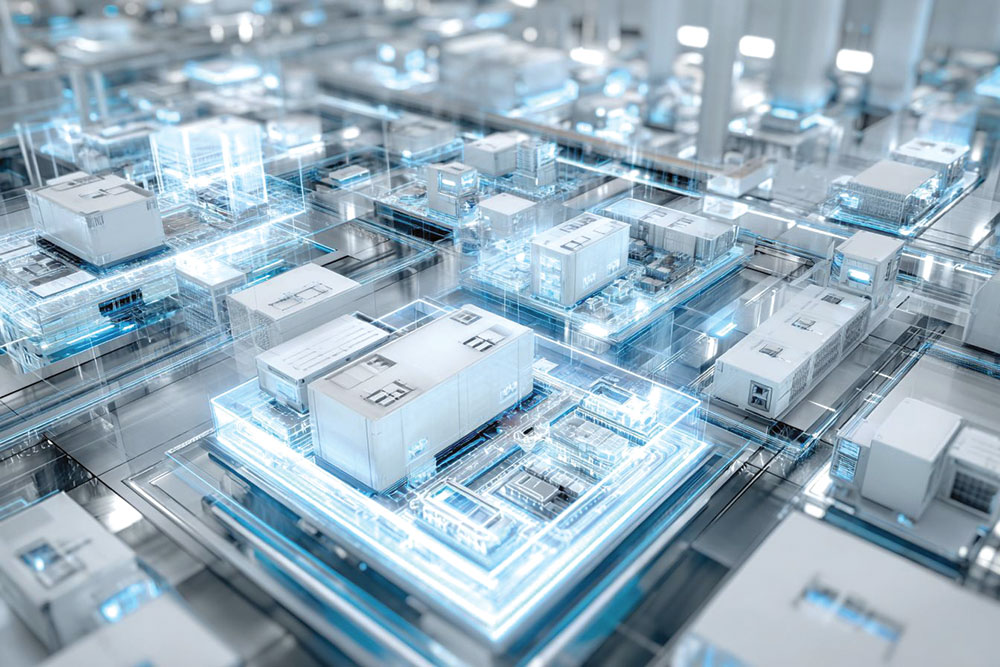
One of the most compelling solutions to emerge from the above, is Edge I/O Network Terminal Slice (NTS), which represents a natural evolution of computing from centralised servers to localised, device-level input/output processing, offering improved speed, efficiency and resilience.
However, Edge I/O NTS is based on years of industry development, with its roots going as back as the 1980s when personal computers and local area networks allowed some distributed processing.
In the 2010s, billions of devices started generating data. Sending all of it to the cloud became impractical, leading to edge computing architectures where processing happens locally.
Today, we have Edge I/O NTS, which manages sensors, machines and IoT, moving intelligence closer to where value is created: on the shop floor, and at the machine level. Rather than sending vast amounts of raw data to distant control rooms or cloud platforms, computation now happens at the source. The benefit is immediate, context-aware decisions without the latency associated with centralised systems.

The move from centralised control to decentralised resilience
The rapid growth of connected devices has exposed the weaknesses of monolithic control systems. Centralised systems unfortunately create single points of failure, while decentralised architectures distribute intelligence and risk.
Edge-enabled systems can continue operating even when connectivity to higher-level platforms is disrupted, ensuring continuity and stability.
Furthermore, Edge I/O NTS allows for improved cybersecurity as distributed intelligence allows threats to be isolated and managed locally rather than compromising entire operations.
Fast, strong operations
With Edge I/O, intelligence is not embedded directly into the I/O modules themselves, but these modules enable faster decision making by ensuring reliable data flow to PLCs and controllers. In practice, local processing allows operators and systems to respond instantly to anomalies. Thus, autonomous fault detection and self-correcting mechanisms improve uptime, while dynamic optimisation of energy use, throughput and quality enhances overall performance.
Importantly, these capabilities are not dependent on constant connectivity to the cloud or central control rooms. Even in remote or challenging environments, edge-enabled devices maintain core functionality, ensuring safe and efficient operations regardless of external conditions.
A benchmark for next-generation edge technologies
While products may differ, industry-leading Edge I/O NTS solutions share a common set of characteristics:
• Interoperability offering seamless integration with both legacy operational technology and modern IT platforms, which ensures continuity while enabling innovation.
• Scalable architecture that allows systems to grow alongside operational needs, avoiding future constraints.
• AI-ready frameworks that support predictive analytics and machine learning.
• Remote management capabilities which reduce the need for onsite interventions and support more agile maintenance strategies.
The IT and OT convergence
An important development in the evolution of Edge I/O NTS is the convergence of IT and OT. For example, unified data models today enable operational insights to flow seamlessly into enterprise systems, improving visibility across the entire value chain.
Standardised protocols also reduce complexity and support plug-and-play integration, while aligned cybersecurity strategies ensure consistent protection across both domains.
Looking ahead, edge-enabled systems will reshape industrial performance. Plants will become more agile, adapting dynamically to operational and market changes while autonomous operations will handle routine decisions.
Lastly, embedded cybersecurity and transparent data governance will set new standards for digital trust, while real-time optimisation of energy and resources will support sustainability and decarbonisation goals.
Ultimately, Edge I/O NTS and its resultant intelligence will be the backbone of Industry 5.0, where human creativity and machine autonomy co-exist to deliver resilient, efficient, and sustainable operations.
| Tel: | +27 11 254 6400 |
| Email: | [email protected] |
| www: | www.se.com/za/en/ |
| Articles: | More information and articles about Schneider Electric South Africa |






© Technews Publishing (Pty) Ltd | All Rights Reserved
 printer friendly version