



Industrial automation has long been shaped by proprietary systems and tightly coupled hardware-software architectures. However, the industry is now entering a new era defined by open, software-driven principles that are breaking decades of hardware-bound limitations.
Vendor neutral, open automation frees organisations from legacy constraints and is rapidly becoming a foundational approach to how factories of today and those of the future are designed and evolved. Its ongoing maturity represents more than a technical shift, it marks a move toward an industry characterised by agility, adaptability and operational excellence.
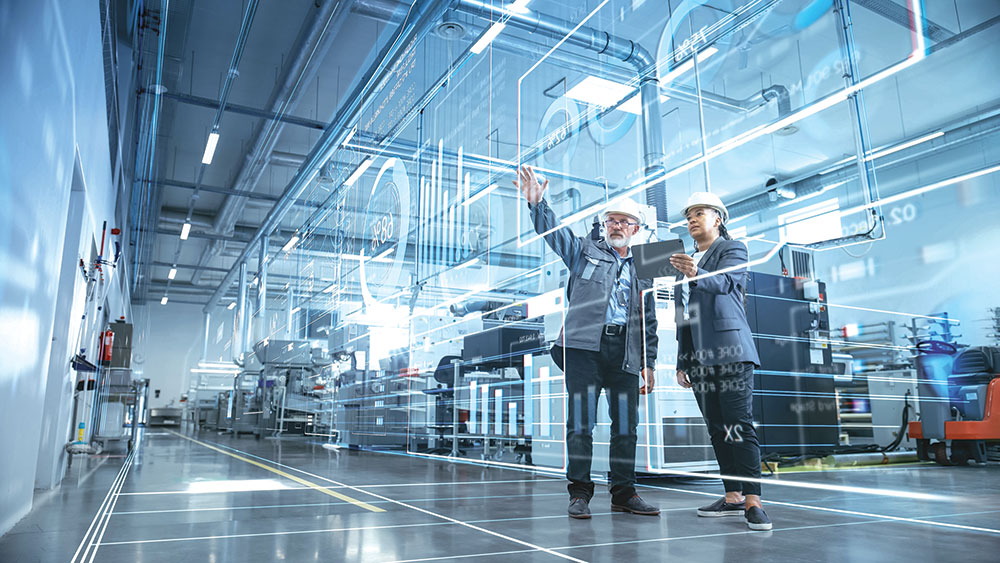
For decades, conventional automation frameworks confined organisations to single vendor ecosystems. While dependable, these architectures severely limited flexibility, often making upgrades or expansions possible only through costly, large scale system replacements. This creates a compounding cycle where operational disruptions, expensive integrations and prolonged downtime become unavoidable.
Breaking free
Open automation decouples software from hardware and leverages open, international standards, such as IEC 61499, to enable event driven, modular and scalable automation architectures. This unlocks new pathways for innovation, allowing organisations to mix and match best-in-class technologies, adopt new tools faster, and modernise incrementally rather than through disruptive overhauls.
One of the greatest advantages of open automation is improved interoperability. When systems and devices can communicate seamlessly, engineering effort is significantly reduced. This interoperability enhances operational adaptability. Production lines can be reconfigured to accommodate new products, volumes or processes without major reinvestment, enabling manufacturers to respond quickly to changing market demands. Over time, organisations experience lower TCO, faster time-to-market and improved asset utilisation.
Collaboration between people, AI and intelligent machines
Open automation is also redefining how humans interact with advanced technologies such as AI, analytics and cobots. As these open systems are not tied to specific hardware or vendors, they allow AI applications to access and analyse data from multiple sources without compatibility barriers.
Cobots can be integrated into existing production lines with minimal redesign. This offers improved collaboration between man and machine, where technology handles repetitive or data-intensive tasks, while people focus on decision making, problem solving and innovation
Sustainability and supply chain resilience
Open automation also plays a crucial role in advancing sustainability objectives. Modular automation and software-driven upgrades extend the lifespan of existing equipment, reducing electronic waste by avoiding unnecessary hardware replacement. At the operational level, AI-driven insights and real-time optimisation help minimise energy consumption, reduce scrap and eliminate overproduction. In supply chains, open automation supports rapid reconfiguration in response to disruptions or demand shifts, improving resilience while lowering environmental impact.
The future industrial workforce
As automation becomes more software-centric, the skills required to design and manage industrial systems will have to keep up. This means tomorrow’s workforce will need to bridge the traditional divide between IT and OT, combining engineering expertise with programming, data analytics, cybersecurity, and cloud knowledge.
In the future, open automation will also give way to ecosystems in which engineers can more freely collaborate, experiment and learn. This will attract a new generation of digital talent, while also enabling existing teams to upskill and remain relevant in a changing, yet exciting, open automation industry.
Open automation represents a fundamental shift toward agile, interoperable software-defined industrial systems. As organisations embrace openness, flexibility and sustainable evolution, the factories of the future will be characterised by intelligence, adaptability and human machine collaboration at unprecedented levels.
| Tel: | +27 11 254 6400 |
| Email: | [email protected] |
| www: | www.se.com/za/en/ |
| Articles: | More information and articles about Schneider Electric South Africa |






© Technews Publishing (Pty) Ltd | All Rights Reserved
 printer friendly version