



The journey from barley to beer begins long before fermentation. It starts in the silo. Barley is stored in bulk silos in malt houses that are often up to 20 metres tall, and the way that barley fills and empties influences not only operational efficiency, but also product quality and safety. Reliable level measurement and point-level detection are critical for brewers in the industrial brewing sector.
The silo challenge
South Africa’s beer market is currently valued at around $3,5 billion. Beer production contributes about R71 billion to the country’s economy and supports nearly 249 000 jobs in agriculture, manufacturing and logistics. Efficient and reliable storage solutions contribute to operational performance in breweries, and hence to the broader economic landscape and employment throughout the value chain.
When malted or raw barley is stored in silos, the filling process generates significant amounts of fine dust, which not only interferes with sensor accuracy, but also creates safety hazards for workers and equipment. In addition, the barley forms a shifting cone shape inside the silo as it loads. This changes during discharge, making it difficult to gauge the exact fill level. This adds to the difficulty of obtaining precise level measurements. Without feedback, breweries run the risk of overfilling, increased dust and over-pressurisation of the silo structure. Underfilling results in inefficient use of storage space and operational interruptions.
Tools brewing better performance
A combination of continuous radar measurement and vibrating point-level detection is highly effective in overcoming these challenges. This approach ensures accurate monitoring and control of silo contents, even in environments complicated by dust and shifting material surfaces.
The VEGAPULS 6X radar sensor is designed for continuous level measurement. It operates using non-contact radar technology, allowing it to monitor the silo’s fill level without being affected by dust. This is because the non-contact design eliminates wear or clogging, contributing to a maintenance-free operation and minimising downtime. Its tightly-focused antenna system delivers precise measurements, even when the silo is tall or narrow, or contains internal structures. This versatility enables the same sensor to be used for barley or other materials without the need for hardware changes.
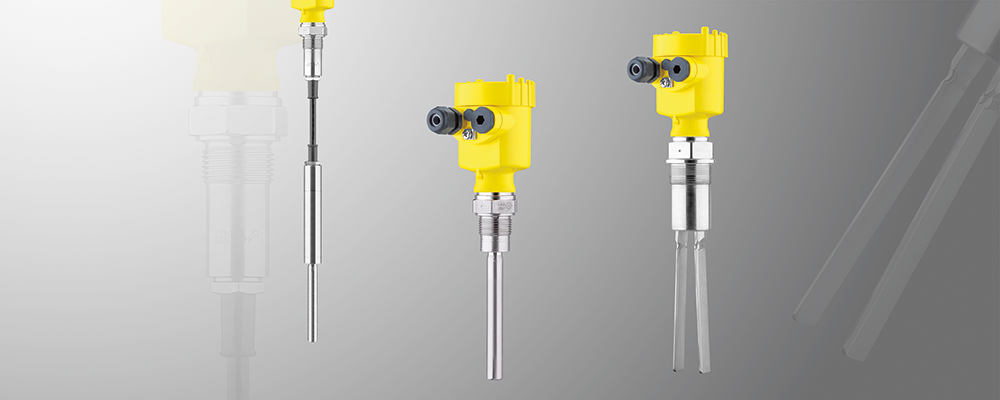
For maximum-level detection, the VEGAVIB 63 vibrating rod switch is ideal. Installed near the top of the silo’s filling region, it reliably detects when the silo is full or nearly full, preventing overfill and spillage. The rod’s smooth construction reduces the risk of barley clogging or accumulating on the sensor, which can interfere with performance. It is robust and dependable, even when the barley has a low bulk density or is aerated during filling.
At the base of the silo, the VEGAVIB 61 vibrating rod switch provides low-level protection by detecting when the silo is almost empty, an essential feature for preventing complete draw-down and ensuring continuous processing. Its compact design helps prevent buildup on the sensor, maintaining accuracy and cleanliness. The switching point remains consistent, regardless of changes in the barley’s bulk density or variations between different barley batches. There is therefore no need for recalibration.

Barley, beer and better data
Implementing advanced level measurement tools in brewery silos has substantial operational and financial benefits. By ensuring accurate filling and emptying processes, breweries can maximise the usable volume of each silo, leading to greater throughput and optimal utilisation of storage capacity. This translates into more streamlined brewing operations and improved productivity.
In addition, these instruments help mitigate operational risks. Preventing overflows and empty-run situations enhances workplace safety and also ensures a smoother, uninterrupted production process. The reduction in such incidents supports both compliance and business continuity. From a maintenance perspective, non-contact radar systems significantly reduce the need for manual checks, frequent cleaning and unplanned downtime. This minimises labour requirements and associated costs while also keeping the equipment in optimal working condition.
Once installed, these level measurement instruments are straightforward to configure and calibrate. Their robust design ensures consistent performance across different types of barley and under varying environmental conditions. This allows breweries to maintain efficiency with minimal ongoing intervention.
Measure what matters most
Modern level instrumentation helps breweries optimise their capital investments by reducing grain losses, enhancing safety and ensuring compliance, ultimately safeguarding profit margins. As production volumes increase, automated level measurement allows operations to scale smoothly, maintaining predictability and efficiency throughout the expansion process.
In both large-scale and boutique craft brewers, the barley silo plays a huge role in performance, safety and profitability. By pairing VEGAPULS 6X radar instrumentation with VEGAVIB 63 and VEGAVIB 61 vibrating level switches, brewers can manage the operational uncertainty of tall, dusty silos. The result is more accurate storage, smoother operations and stronger value-chain performance, all of which contribute to a more competitive and sustainable industry.
| Tel: | +27 11 795 3249 |
| Email: | [email protected] |
| www: | www.vega.com/en/home_za |
| Articles: | More information and articles about VEGA Controls SA |






© Technews Publishing (Pty) Ltd | All Rights Reserved
 printer friendly version