



The emissions landscape is in a state of flux, with local manufacturers facing rising carbon taxes and first-world economies tightening content controls and restrictions. Dennis Williams, commercial director of steam and boiler operations and maintenance service provider, Associated Energy Services (AES) says:
“The South African government aims to push towards global standards in this space, but it might be difficult for our industries to carry the financial burden. This is where AES fits in. We identify opportunities and provide the insights businesses require for short-term benefits and to prepare for the future,”
He adds that there has been tightening of local regulations around combustion and boilers, affecting nitrous oxide (NOx), sulphur oxide (SOx) and particulate emissions. The Small Boilers as Controlled Emitters legislation sets 10 megawatts of thermal input as the threshold for the current limits. Existing boilers have specific timeframes and emission standards for compliance. New boilers have slightly lower emission standards, and all affected boilers must undertake annual isokinetic emission tests.
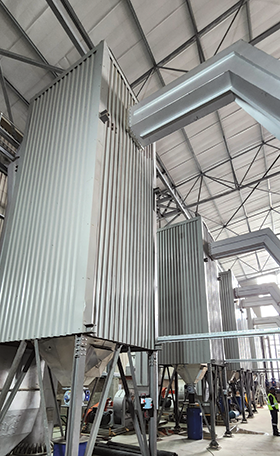
As more stringent particulate emission standards are typically the most difficult to achieve, many AES clients have upgraded the back-ends of their plants by introducing various abatement technologies: “For new boilers, we have seen some uptake of alternate technologies such as bag filters. These come with specific operational and maintenance-related challenges, and can be capital and operating cost-intensive. Alternatively, high-efficiency grit arrestors or high-efficiency multi-cyclones are the preferred route on new plant and equipment,” Williams observes.
Emission interventions
While equipment interventions can deal with particulate emissions such as smoking stacks and soot particles in the air, SOx and NOx emissions are usually related to the combustion process. Very high combustion temperatures can be controlled by adjusting the combustion settings to achieve lower NOx readings in the flue gas.
Furthermore, from a SOx perspective, the fuel source can be changed. With coal, there should be less than 1% sulphur in the fuel composition. Users of heavy furnace oil (HFO) need to clean up their flue gas to address SOx and also particulates. However, grit arresters that control particulates cannot address SOx, NOx or CO2 emissions, and as HFO typically contains 3% sulphur, users have to convert to more expensive fuel oils which have a lower sulphur content.
Williams points out that at present there is no industrial scale commercially viable mechanical or process intervention to mitigate CO2 and the only remedy is to use a ‘greener’ fuel. For example, in natural gas, the hydrogen content is higher than in coal. Alternatively, there are renewable fuels such as biomass where the CO2 emitted is viewed as being part of a circular carbon cycle.
Emission successes
AES has already assisted many companies to reduce their emissions.
A food producer needed to replace an extremely old boiler plant, where fuel usage was high and particulate emissions were very concerning. New boilers with upgraded boiler control systems, including using variable speed drives on fans instead of mechanical dampers improved overall efficiency and reduced the plant’s carbon footprint.
“AES installed improved emission abatement plant and high efficiency, multi-cyclone grit arresters to reduce particulate emissions. Added bonuses included lower CO2 emissions due to fuel savings and an improved relationship with the surrounding community due to reduced visible emissions and fallout from the plant,” Williams explains.
AES also assisted a tank terminal operator within the Durban harbour precinct where stricter than usual emission limits were in place within the polluted South Durban basin. “We assisted with a complete turnkey project, working with the eThekwini Municipality’s Department of Health. We did emission modelling based on the boiler and emission abatement plant selected. Installation of a coal-fired facility rather than a boiler using HFO was approved. This project also included the use of a bag filter, which we continue to operate,” he adds. Operational efficiency improved, as did the company’s carbon footprint and SOx emissions.
Taking control of emissions
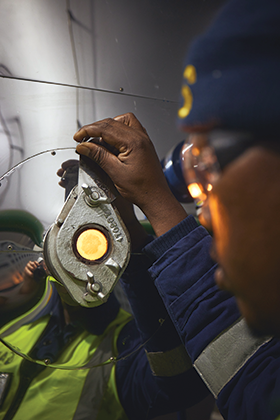
Although Williams estimates that these interventions can meet the required 40 to 50% in legislated mandatory improvements, it is often difficult to measure this as few companies have equipment in place to monitor energy produced, combustion flue gases, CO2, excess air or carbon in ash. “More data, better analysis and control of equipment can have a positive impact. Measuring fuel usage is essential, as in South Africa, the current carbon tax for stationary combustion systems, such as boilers, is based on the quantity of fuel used. Every ton not used, is a ton not applied and a tax not paid. Operations data systems are also very effective at indicating a need for proactive or reactive maintenance, which also impacts efficiency and emissions.”
Striking a balance
Although AES first recommends the ‘low-hanging fruit’ of equipment optimisation and expert operational intervention to deliver targeted improvements, when requirements are beyond an asset’s capabilities, it is time to either change existing equipment or switch fuels.
Williams advises that companies need to balance compliance requirements with ensuring that the capex and opex spend is warranted: “When a company is weighing up legal compliance and production objectives, we put forward the solution that is best aligned with both. However, a degree of foresight is also needed to look at the full picture and consider the future implications. Rather spend the money now than wait until the last minute,” he concludes.
For more information contact AES,






© Technews Publishing (Pty) Ltd | All Rights Reserved
 printer friendly version