



The global robotics industry is entering a period of accelerated expansion, underpinned by AI integration, workforce shortages and reshoring strategies. According to ABI Research, the robotics hardware market will more than double from $50 billion in 2025 to nearly $111 billion by 2030, with about 13 million robots expected to be in operation worldwide. Five key categories − mobile, industrial, collaborative, humanoid and exoskeleton robots − are shaping this new automation landscape, each evolving to meet distinct operational needs.
Mobile robots remain the fastest-growing segment, forecast to surge from $30 billion in 2025 to $75 billion by 2030. Their rise is driven by the logistics and warehousing boom, particularly in material handling and automated storage and retrieval systems.
Mobile robots
Autonomous mobile robots now underpin goods-to-person workflows, pallet transport and truck unloading, while rail-mounted robots are driving down costs, making large-scale deployment viable. Software is increasingly central to this ecosystem, and 84% of all robotics software revenue by 2030 will be linked to mobile robot operations. Beyond logistics, mobile systems are expanding into agriculture, cleaning, and delivery applications, largely as a response to global labour shortages.
Industrial robots
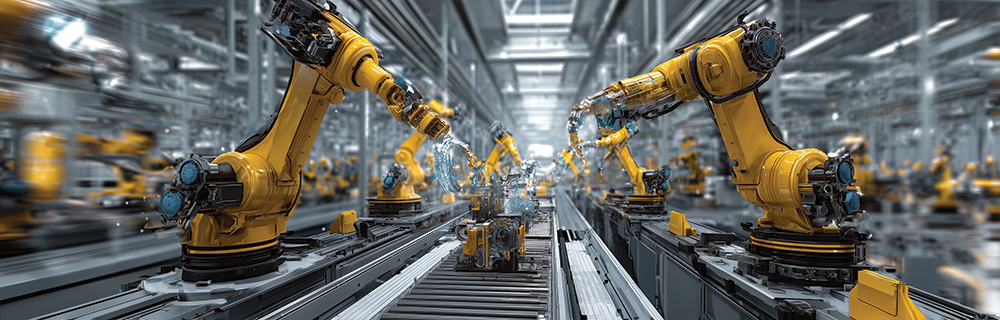
As a cornerstone of manufacturing automation, industrial robots account for $17,4 billion in 2025, rising modestly to $19,6 billion by 2030. Although in market maturity, these systems remain indispensable in high-volume sectors such as automotive, electronics and machinery production.
China leads with 42% of global industrial robot revenue, while reshoring initiatives in the United States of Amercia and Europe are reigniting demand. AI-enhanced vision systems and GPU-based computing are entering traditional assembly lines, enabling smarter inspection and precision tasks. Software standardisation is another emerging theme. Offline programming, low-code interfaces and modular platforms are making integration more seamless. Welding, painting and material handling continue to dominate industrial robot use cases.
Safe, flexible and AI-driven
Cobots are rapidly bridging the gap between automation and human collaboration. Valued at $1,3 billion in 2024, the segment is projected to reach $7 billion by 2030. Their success lies in safety, adaptability and affordability, qualities that make them ideal for SMEs.
Applications are evenly distributed across palletising, machine tending, inspection and welding. Cobots now benefit from closed-loop AI control, allowing real-time adaptation to environmental changes. Vendors are embedding self-learning algorithms into robotic motion systems, enabling cobots to respond dynamically to unstructured environments.
Humanoid robots
Humanoid robotics represents the most dramatic growth curve in the sector, from $70 million in 2025 to $6,5 billion in 2030, reflecting a 137,7% CAGR. While the current market share is small, investment activity is intense. Companies have raised hundreds of millions in venture funding.
Early applications include entertainment, hospitality and marketing roles, with industrial opportunities emerging in hazardous inspection and healthcare support. A notable trend is the rapid decline in average selling prices, from $158 000 in 2024 to $38 000 by 2030, paving the way for broader commercial use.
Exoskeletons
Exoskeletons are finding firm ground in industrial safety applications. Forecast to reach $2,2 billion by 2030, these systems help reduce workplace injuries and support physical recovery. Industrial adoption is led by the automotive and aerospace sectors, where powered suits assist with lifting and repetitive tasks. Active (powered) models dominate revenue, while passive suits priced under $20 000 drive shipment volumes.
The growing role of artificial intelligence
Artificial Intelligence is becoming the ‘central nervous system’ of modern robotics. As the industry transitions from rule-based programming to adaptive autonomy, AI is unlocking new levels of perception, learning and decision making. Physical AI, combining real-time sensor fusion and machine vision, allows robots to adjust to unpredictable environments. Closed-loop systems continuously process sensor feedback, enabling cobots and mobile platforms to operate safely alongside humans.
AI agents are also transforming task execution. These lightweight, domain-specific modules teach robots to perform specialised tasks such as palletising or pick-and-place without extensive retraining. Operating at the edge, they support faster deployments in SME manufacturing, agriculture and construction.
The emergence of robotics foundation models marks a major technological shift. Like language models in AI software, these systems generalise across multiple tasks, allowing robots to adapt to unseen scenarios. Developers are commercialising these capabilities, while research efforts from Google DeepMind and Meta push the boundaries toward world models. These are AI frameworks enabling robots to simulate environments, predict outcomes and plan actions with foresight. Nvidia’s Cosmos and Google’s Gemini are at the forefront of this trend, bridging perception and planning for humanoid and autonomous systems.
By 2030, robotics will form the operational core of Industry 4.0, driving global productivity and digital transformation. From industrial assembly to warehouse logistics, and from rehabilitation to hazardous inspection, AI-powered robots are becoming indispensable to modern economies.
To view the full report go to www.motioncontrol.co.za/ex/robotics.pdf
For more information contact ABI Research,






© Technews Publishing (Pty) Ltd | All Rights Reserved
 printer friendly version