



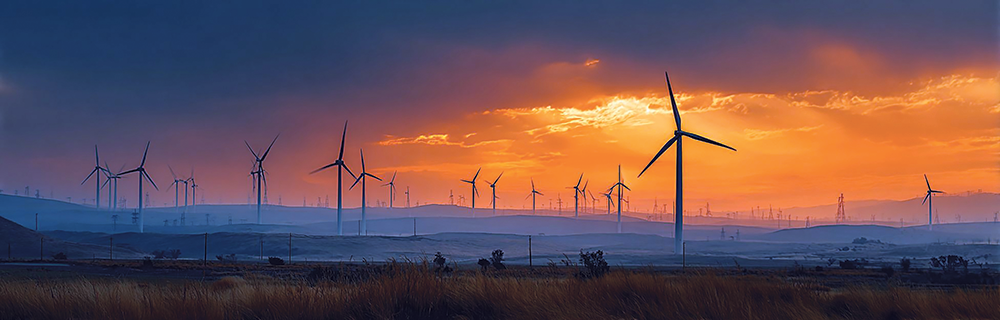
Many crucial parts of the economy of the future will be hugely energy intensive, foremost amongst which will be electrified transport and the large data processing required by automation and AI. The transition towards sustainable energy has also gathered pace and renewable energy targets are now firmly entrenched in the key performance indicators (KPIs) of most multinational businesses.
Successful economies will be those that can ensure businesses and investors of a stable supply of low-cost renewable energy. South Africa has the opportunity to become a global leader in this regard, given the excellent solar and wind resources that the country has been blessed with.
Steering the IPP landscape – challenges and solutions
Since its inception in 2011, the Renewable Energy Independent Power Producer Procurement Programme (REIPPPP) has played a pivotal role in driving South Africa’s shift towards renewable energy. Competition between independent power producers (IPPs) has caused prices on each renewable energy bid window to come down significantly, which in time should lead to lower energy costs for consumers. There have been other successes following on initiatives by Eskom and the South African government to open up the grid, for example the effective scrapping of licensing requirements.
However, the greatest obstacle to unlocking South Africa’s potential to become a leader in the renewable field is available grid capacity and grid access.
There are two parts to this. The first is the fact that South Africa’s aging grid requires significant upgrades and expansion in order to move the country from its current coal dependence to a largely renewable energy driven energy economy.
These upgrades will take time and significant investment. There is, however, a vast amount of private capital and technical expertise ready to move into this sector. Eskom, with the government’s support, needs to welcome this and remove regulatory barriers in order to speed up grid upgrades.
The second part is regulatory certainty and the efficiency of processes to obtain grid access where this is technically available. This process is lengthy, costly and poses significant risks for developers. Eskom has to advise where grid capacity exists based on rigorous scientific analysis and needs to establish clear processes for obtaining grid access whilst adhering to deadlines in order to remove the uncertainty for developers.
In the meantime, IPP developers will need to become more innovative in how to structure and develop large scale projects, as both the regulatory landscape and the energy needs facing developers will be very different a decade from now. There will be fewer and fewer opportunities for developers to enter into 20-year offtake agreements with single clients.
We believe that a flexible approach is required in order to futureproof projects as far as possible. Some examples that we are working on are shorter term wheeling deals with multiple offtakers, structures where the offtaker and/or landlord also has a stake in the generation project and ensuring that plants are permitted to allow for the later addition of a battery component.
Battery energy storage systems (BESS) will play a key role to enable a larger portion of South Africa’s energy needs to be met by renewable energy and to help stabilise the country’s energy supply. There are many roles BESS will play. Batteries can be used to shift daytime energy generated by solar plants into the evening hours. This means that one could increase the size of a solar plant with a specific grid connection (let’s assume 50 MW) by almost threefold without having to obtain a larger grid connection from Eskom as the excess daytime energy can be stored in the batteries and fed into the grid at the 50 MW capacity.
Smaller battery systems could also be used to target peak consumption periods, thereby avoiding the need for the grid operator to run heavy fuel oil or diesel generators during these times.
South Africans all hope that loadshedding is a thing of the past, but we are still seeing many businesses opting for battery solutions to provide backup power in order to get operational and cost certainty.
South Africa is currently at a point where it has the opportunity to reshape its energy industry and take the lead in energy initiatives by working together with both public and private entities to tackle regulatory and infrastructure obstacles effectively. By encouraging project models and making investments in grid enhancements, along with incorporating battery energy storage solutions into the mix, South Africa can establish a sustainable energy landscape for the future.






© Technews Publishing (Pty) Ltd | All Rights Reserved
 printer friendly version