



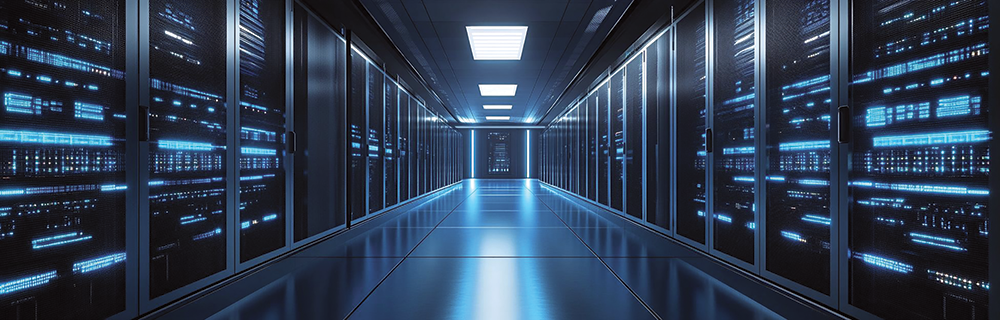
AI technologies are pushing the boundaries of what is possible which, in turn, is presenting data centres with a whole new set of challenges. Enterprises, colocation providers and tech giants are now scrambling to rethink their data centre strategies. How can an industry undergoing such transformation also shift gears at full speed? Fortunately, as data centres research, plan and implement change, several options are emerging which include optimising design and infrastructure for efficiency, cooling and management systems.
Rising energy demand
AI is increasingly vital in streamlining tech-driven tasks, but its well-known that the energy trade-off is immense. The Electric Power Research Institute reports that a typical AI query consumes ten times the electricity of a traditional internet search, with AI-generated music, photos and videos demanding even more power. With 5,45 billion internet users, AI adoption is driving power consumption to unprecedented levels. AI’s computing capacity is expected to double every 100 days, increasing global energy consumption linked to AI by 26% to 36% annually. This extreme demand necessitates innovation which has seen data centre executives working hard to adjust and modify strategies and identify solutions to improve efficiency while maintaining reliability.

Data centres for the future
The rise of AI compels data centres to upgrade rack configurations, cooling systems, software management and power optimisation technologies as follows:
Rack configuration: AI workloads require thoughtful space planning to accommodate advanced cooling systems and increased infrastructure footprints.
Here, large AI training models are driving a shift towards higher rack power densities. High-density racks house more servers in a smaller area, enhancing computing power without increasing space. Modular rack systems enable scalability, allowing rapid adaptation to evolving AI power requirements without costly overhauls. However, as computing demands rise, traditional cooling methods struggle to maintain optimal temperatures.
Integration of liquid cooling: AI-driven hardware generates significant heat, necessitating more efficient cooling systems. Traditional air cooling often fails to manage these thermal demands effectively. Liquid cooling offers a viable alternative, improving thermal management and extending equipment lifespan. Hybrid cooling solutions that combine air and liquid cooling are also gaining traction, ensuring flexibility and performance optimisation.
Flexible power distribution: Higher-density workloads require more robust power distribution. Data centres are adopting advanced uninterruptible power supplies (UPS) and scalable power solutions for reliable energy delivery. Racks are being equipped with power distribution units (PDUs) that handle higher wattages and allow dynamic power allocation. Collaboration with utility companies is also increasing, helping data centres implement demand response programmes and leverage renewable energy options.
Leveraging waste heat: As data centres expand to support AI, they are also repurposing waste heat to improve efficiency. Waste heat can be used to warm nearby buildings. Examples include:
• Google’s data centre in Hamina, Finland supplies excess heat to a nearby paper mill, improving efficiency.
• Equinix’s Paris data centre directs waste heat to warm the Olympic swimming pools at the Paris Olympic Aquatic Centre.
• Multiple data centres are implementing initiatives to make use of excess heat for indoor agriculture or greenhouses that require warm air to grow crops.
Rising above the AI surge
As AI adoption accelerates, data centres must remain agile. Strategic changes in facility design, power efficiency, cooling systems and management practices are essential to maintaining peak performance.
Every data centre operator should ask, “Is our infrastructure ready for the future?” Before making any major changes, it is crucial to conduct a thorough evaluation of existing infrastructure, tools, and processes to identify key areas for improvement. Prioritising high-impact areas will help maximise efficiency gains. Investing in scalable and future-proof solutions ensures long-term adaptability. Additionally, engaging stakeholders and industry experts early in the process helps to align strategies with business objectives.
| Tel: | +27 11 254 6400 |
| Email: | [email protected] |
| www: | www.se.com/za/en/ |
| Articles: | More information and articles about Schneider Electric South Africa |






© Technews Publishing (Pty) Ltd | All Rights Reserved
 printer friendly version