




[Sponsored] Inline measurement technology is critical for maintaining consistent product quality and improving production efficiency in the competitive soft drink industry. The Cobrix 7501/7601, developed by Anton Paar, enhances accuracy and reliability, reducing manual testing and enabling faster production startups.
Soft drinks, whether sugared or sugar-free, contain key ingredients such as water, sugar, carbon dioxide, acids, flavourings, sweeteners and colourants. These components are essential for ensuring high quality and taste.
Traditional quality control involves laboratory testing every 2 to 4 hours for parameters like sugar content, carbon dioxide, acidity, caffeine or phosphoric acid. Production pauses for these checks, typically lasting 10 minutes every three hours, can result in significant losses. They can amount to 60 m3 of beverage output per day, or over 1500 m3 per month for a line filling at 40 m3/h. Eliminating these interruptions is key to increasing efficiency.
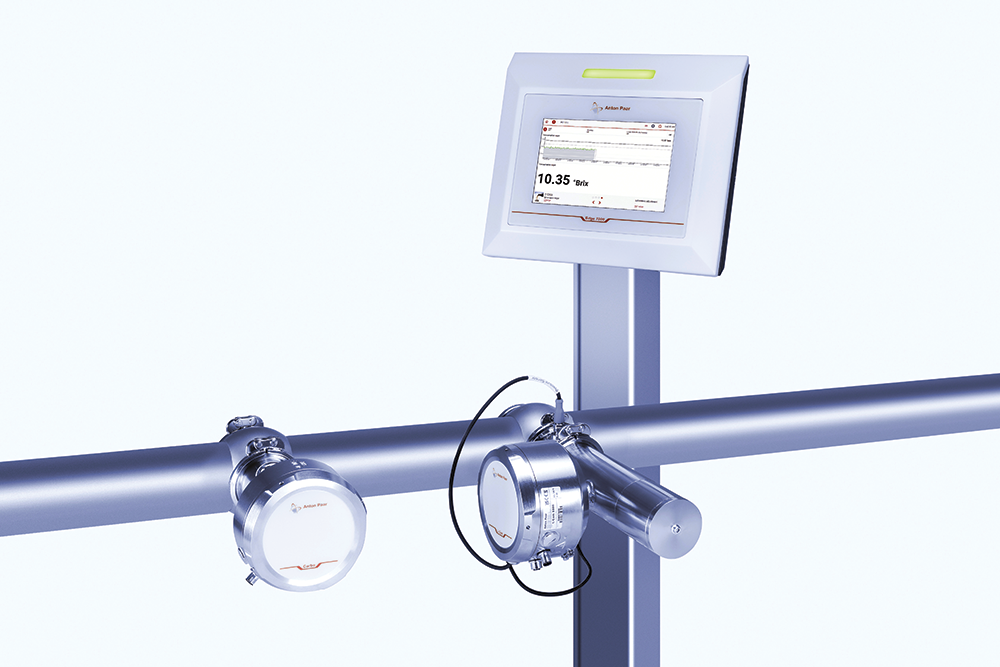
Density and CO2 measurement
Diet measurement, akin to Brix measurement but within a 0 to 2° Brix range, benefits from enhanced density measurement in the Cobrix 7501/7601. Advanced digital technology combined with optimised temperature and CO2compensation ensures accurate concentration readings, even during rapid fluctuations. This provides greater stability, particularly in stop-and-go operations.
Density measurement provides a combined value of all ingredients, verified through an independent inline measurement based on conductivity. This dual approach, using distinct physical principles, eliminates systematic errors and improves accuracy compared to lab results. The resulting Concentration Diet Advanced value offers precise diet concentration measurement by integrating density and conductivity data.
Conductivity measurement
The Cobrix 7501/7601 uses a pre-configured, maintenance-free inductive conductivity sensor for high accuracy. Conductivity in beverages is primarily influenced by acids because sugar, most sweeteners and CO2 do not contain ions. Only Acesulfame K, benzoate and cyclamate slightly affect conductivity, but their low concentrations make this negligible. Conductivity increases by approximately 2% per °C, so Anton Paar’s specialised temperature compensation ensures precise readings, critical for diet beverages with conductivity ranging from 0,4 to 2 mS/cm. The Concentration Diet Advanced value leverages both density and conductivity, accommodating products with varying density and conductivity profiles.
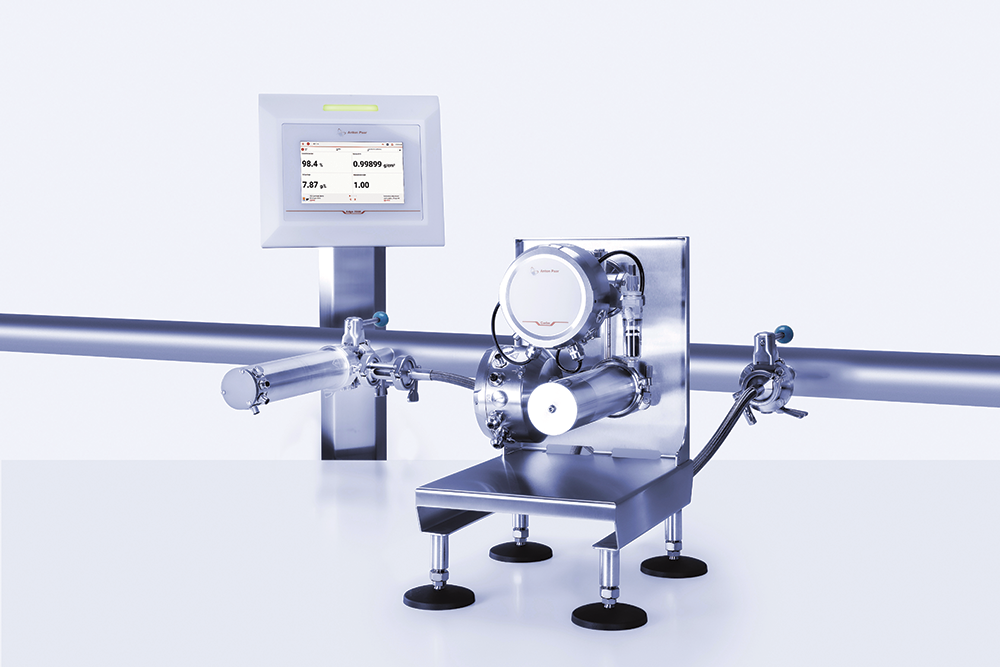
Influence of water
Water quality can affect density and conductivity measurements. While most facilities use reverse osmosis water, significant variations may require process-specific parameters such as an additional conductivity sensor in the water supply line or manual input of lab-determined water conductivity.
The modular Cobrix 7501/7601 system includes:
• L-Com 5500: Combined density and sound velocity sensor for °Brix, %Diet, alcohol and sugar inversion analysis.
• Carbo 5100/6300: Dissolved CO2 sensor.
• Modified conductivity sensor: Measures acidity, reducing lab testing frequency.
• Edge 7000: Process controller.
• Sample pump: For inline or bypass installations (Inline Pump 520).
• Flow and dry-run monitor.
• Davis 5 software: For optional data acquisition and control.
The system measures:
• Concentration sugar.
• Concentration Diet Advanced.
• Dissolved CO2.
• Sugar inversion.
• Concentration alcohol.
• Total acidity.
After commissioning, the Concentration Diet Advanced value is calibrated using traditional reference methods. Unlike lab methods, which focus on specific components, the Cobrix 7501/7601 provides a comprehensive analysis of all components simultaneously.
Measurement check
The Measurement Check parameter ensures accuracy by validating the ratio (fingerprint) between total components and ionic components (mainly acids). Calibrated to a value of 1, it remains stable across blending ratios, as it is independent of water content. Deviations may indicate:
• Too low: High solids content (e.g., sugar carry-over) or low acidity.
• Too high: Missing aroma components or high acidity (e.g., CIP carry-over).
This self-monitoring feature reduces the need for routine lab checks, freeing up resources unless discrepancies arise. It also applies to sugared beverages as conductivity is unaffected by sugar.
Maximum efficiency
The Cobrix 7501/7601 reduces startup times for diet measurement by up to 10 times compared to traditional methods. Within seconds, the ‘Measurement Check’ and diet concentration stabilise, signalling readiness for filling. As long as the Measurement Check value stays within customer-defined limits (for example 0,95 to 1,05 for warnings, 0,9 to 1,1 for alarms), the product composition and system are deemed accurate. Limits can be adjusted for variations in syrup batches or natural ingredients.
Summary
The Cobrix 7501/7601 optimises quality control for carbonated soft drinks, particularly diet beverages, through integrated density and conductivity measurements. The Concentration Diet Advanced value enhances accuracy while the Measurement Check validates product composition and sensor performance, minimising lab testing and production interruptions. The system detects issues like sugar carry-over, missing ingredients, CIP carry-over and sensor faults, ensuring consistent flavour across sugared and sugar-free beverages.
For more information contact Raymond Calitz, Anton Paar,






© Technews Publishing (Pty) Ltd | All Rights Reserved
 printer friendly version