



“The Connected Industries Conference has evolved into something much bigger than just an expression of the digital technologies behind the Fourth Industrial Revolution,” says European Chamber of Commerce board member, Marc Van Pelt.
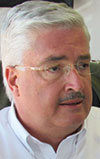
Van Pelt is the managing director of Pepperl+Fuchs in South Africa and sales director Africa. He is also the regional manager Africa of the FieldComm Group and his most recent appointment is to the board of the EU Chamber of Commerce and Industry in Southern Africa (EU Chamber) as the representative for the electrical, electronic and automation industries. Together with his family, he settled in South Africa in 2014.
According to Van Pelt, the idea for the Connected Industries Conference – scheduled to run in parallel with Africa Automation Fair 2017 – was born out of discussions with Reed Exhibition’s Hanli Goncalves, the Society for Automation Instrumentation Measurement and Control (SAIMC) president Oratile Sematle, members of the Industrial Instrumentation Group (IIG), and other industry experts.
“We were all asking the same fundamental questions,” he explains. “What will be the nature of automation in the future? And, how well is the South African government, education and manufacturing sector prepared to meet these new challenges?”
It quickly dawned on the group that Africa Automation Fair, the South African industries’ premiere biannual automation and control exhibition, provided the perfect foil for the region’s first Industrie 4.0 related conference, given that all the major technology suppliers concerned would already have a presence there. What they needed now was someone with the influence and connections to attract the level of attention they had in mind as the draw card. Van Pelt agreed to put the idea to his colleagues at the EU Chamber and German Chamber.
Why the EU Chamber?
The EU Chamber was established at the beginning of 2015 to represent twelve member countries from the European Union with business interests in South Africa. Its mission is to support EU-based companies in advocating towards an attractive investment and business climate in South Africa through policies which duly acknowledge the essential role of responsible foreign direct investment (FDI) to the sustainable and inclusive growth of southern Africa.
“Around eighty percent of the FDI flowing into South Africa originates from the EU,” explains Van Pelt, “Also, the 2000 member companies involved are responsible for employing some 500 000 workers locally, both directly and indirectly. It made perfect sense for us to join together and speak with one united voice.”
Even though a Business Climate Survey conducted by the EU Chamber in 2016 shows that investor satisfaction has decreased over the last two years, mainly due to uncertainty in the business and political climates, Van Pelt remains an optimist. Despite the negative findings in the survey, by and large, EU investors have increased their turnover and jobs have been created. But the primary reason for his enthusiasm is a project called Horizon 2020.
What is Horizon 2020?
It is the largest EU Research and Innovation programme ever with nearly €80 billion of capital available over the seven years from 2014 to 2020. Its pledge is to lead the way in breakthroughs, discoveries and world-firsts by providing the funds needed to take great ideas from the laboratory to the market.
“The best news is that a portion of these funds is within reach for investment in projects in Africa,” outlines Van Pelt, in tones that convey both his belief and commitment. “In other words, they are accessible to help South Africa position its economy in the context of the new technologies designed to power the innovation and efficiency that will typify manufacturing in the era of Industrie 4.0.”
Van Pelt, along with many other leading industry commentators, believes that the South African economy is unbalanced through the scarcity of companies in the SME sector. “Big business on its own cannot solve the country’s unemployment problem,” he says. “If you use the developed world as an example, you find that in those economies the SME sector is responsible for a much higher percentage of GDP. This is a healthy situation.”
Van Pelt believes that this is where the Black Management Forum (BMF) has a crucial role to play. “The BMF is already working together with the European Mission to identify investment opportunities in SMEs since it supports the idea that the SMEs of tomorrow need to capitalise on new technologies,” he explains.
The EU wants to identify the best possible ways to invest the money available through Horizon 2020. An area it has identified is how the smart technologies of Industrie 4.0 can be applied in ways that provide new-age business opportunities for southern Africa’s SME sector, while at the same time, providing solutions to some of the continent’s socio-economic problems.
Van Pelt gives a practical example. In Kenya much of the cooking in rural communities is done on open coal fires. Due to environmental and safety concerns, there is a strong desire by the authorities to change this to gas in the foreseeable future. However, the average village dweller is unable to afford the cost of the gas bottle, or a complete refill when it runs empty. A local entrepreneur spotted a business opportunity. The solution that is being tested is a gas bottle with a solar powered solenoid valve that acts as a dispenser initiated by a signal received over the cellular network. “Strangely enough even the poorest village dwellers in Kenya all have access to a cell phone,” says Van Pelt. “Now, whenever they wish to prepare a meal, they simply send a text to the service provider. If their account is in credit, a signal is sent back to the sim card in the dispenser and the gas bottle can then be used for a predetermined amount of time. They can now buy gas every day on a meal by meal basis, much the same as prepaid electricity. The beauty is how the use of smart technologies like solar panels and cellphones can be used to support basic human needs in areas where there is no other infrastructure.”
The EU chamber has a focus on the creation of sustainable technology start-ups that bring the benefits of new technology to Africa’s economies. “Skills, plus technology, plus entrepreneurship, equals Uber,” asserts Van Pelt.
The hard fact is that the SA manufacturing sector is losing jobs and the textile industry is a prime example. But, as is obvious from Van Pelt’s analogy, new technology on its own is only part of the solution to the problem. What is required is a regulatory framework that encourages and supports entrepreneurship. Simultaneously, the education system must be creating a talent pool not simply of ‘graduates’, but of people equipped with the appropriate skills to capitalise on the benefits of Industrie 4.0 – even though the exact nature of the business opportunity may as yet be undiscovered.
“Government has a role to play, education has a role to play and business has a role to play,” outlines Van Pelt. “As the EU Chamber we represent the business interests of our member companies, which would all bene-fit from a South African economy that was growing as strongly as it could be. This is why we have such keen interest and support for the Connected Industries Conference, since it opens new perspectives for South and sub-Saharan Africa.
There is interest from government through the DST, the CSIR and the DTI; there is interest from the educators through the ECSA/SAIMC initiative to address the shortage of skilled automation engineers; and there is interest from business through the BMF and the technology suppliers and end users.
In fact, this interest has reached such a level that EU ambassador Dr Marcus Cornaro has confirmed as one of the keynote speakers at the Gala Dinner to be held on the first evening of the conference. Van Pelt says that Garth Strachan (Deputy Director General: Industrial Development Division of Trade and Industry) and Germany’s Matthias Machnig (State Secretary, Federal Ministry for Economic Affairs and Energy) have also been invited to participate.
“The Connected Industries Conference is the first step, but it’s what comes afterwards that will really make the difference,” says Van Pelt emphatically. “All the stakeholders in the country’s economic machine are key and with the right strategic cooperation South Africa could revitalise its manufacturing industry and SME sector through digitalisation and the ideas of Industrie 4.0 which should also lead to new and more job opportunities”
The Connected Industries Conference takes place at the Ticketpro Dome in Randburg from 6-8 June. Globally, there is now enough conclusive evidence to prove that the technologies of Industrie 4.0 can add significant advantages to industry, and in some cases, even transform the entire operation. Uber, for example, runs the biggest taxi company in the world without owning a single vehicle. With the enthusiasm and commitment of people like the EU Chamber’s Marc Van Pelt acting as a link to the benefits available through the EU’s Horizon 2020 project, 2017 may just go down in the history books as the year Industrie 4.0 came to Africa.
For further information on the EU Chamber of Commerce contact Marc van Pelt +27 (0)87 985 0779, [email protected], www.pepperl-fuchs.co.za
For further information on Connected Industries contact Hanli Goncalves, +27 (0)11 549 8300, +27 (0)82 601 4339, [email protected], www.reedexpoafrica.co.za
| Tel: | +27 10 430 0250 |
| Email: | [email protected] |
| www: | www.pepperl-fuchs.com/en-za |
| Articles: | More information and articles about Pepperl+Fuchs |
| Tel: | +27 10 496 3502 |
| Email: | [email protected] |
| www: | www.africaautomationtechnologyfair.com |
| Articles: | More information and articles about RX Africa |






© Technews Publishing (Pty) Ltd | All Rights Reserved
 printer friendly version