Corrosion in data centre cooling systems
November 2025
IT in Manufacturing
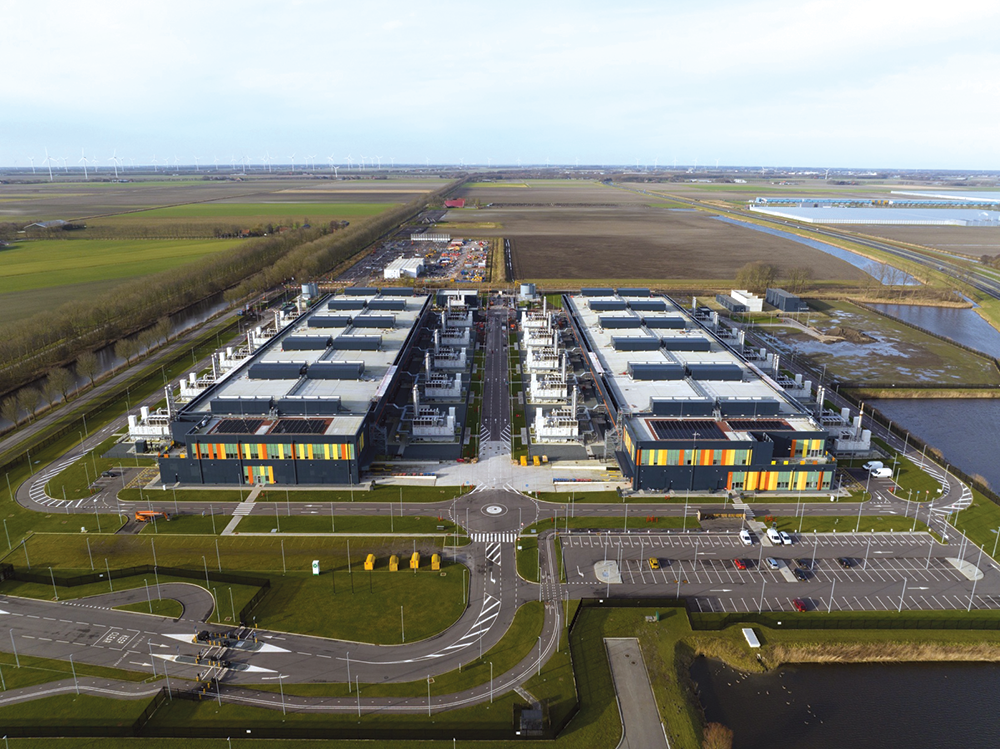
With the unprecedented rise in cloud computing and AI, the need for data centres and supercomputers is booming. The astronomical output of artificial brain activity demands enormous amounts of power, which quickly convert to heat as these mega-computers process billions of ‘thoughts’ per second. The natural consequence is the proliferation of giant chillers kicking in for hot summer months and going idle during cold weather. Whatever the season, Cortec Corporation shares insights into why and how to win the battle.
The problem with corrosion in cooling water systems
Preventing corrosion in data centre cooling water systems isn’t just for looks. Corrosion weakens the metal walls of piping and equipment, creating holes over time, shortening the service life of the cooling system and increasing downtime for repairs, not to mention the potential for water damage from leaks. In addition, corrosion debris threatens to clog the system or poison the water by raising the levels of iron or other metals in the chemistry profile. By avoiding these problems, corrosion prevention can ultimately save significant time and expense, and the headaches that go with them.
Corrosion protection during operation
Although corrosion inhibitors are a standard part of water treatment programmes for active chillers or cooling towers, they are sometimes overlooked due to a lack of communication or awareness. If facilities find that a corrosion inhibitor is missing, they can add M-640 L or a similar additive. This building block for water treatment formulations offers comprehensive protection thanks to the presence of both contact and vapour phase corrosion inhibitors, which protect metals below and above the water level. It is also an excellent replacement for silicates, phosphates and nitrite-based compounds where disposal restrictions apply.
Corrosion protection during seasonal layup
Whereas the use of a corrosion inhibitor during operation is the normal practice, preservation of chillers or cooling tower systems that sit idle during cool weather is less widespread than it should be. With their normal water treatment programme inactive, these components are also at higher risk of corrosion from residual moisture or condensation as temperatures and humidity fluctuate.
Where temperatures stay above freezing, data centres may prefer to keep chillers on standby via wet layup with Cortec’s VpCI-649, a robust corrosion inhibitor package for wet or dry layup. If freezing is a concern, water treatment professionals can drain the water after applying VpCI-649, or they can apply the Cooling Tower Frog to an empty chiller. Both treatments include vapour phase corrosion inhibitors that diffuse throughout the void space and form a protective molecular layer on metal surfaces as long as the system remains closed. When temperatures climb high enough to warrant a return to service, the cooling water systems can easily be restarted without having to remove the product first, all while avoiding complications from corrosion during layup.
Stay cool and fight corrosion
With cloud-computing and AI only promising to get bigger and place more and more cooling towers and chillers on the horizon, now is the time to equip data centre managers and water treatment service providers with the tools and knowledge they need to minimise corrosion headaches and help data centres ‘keep their cool’ when it comes to corrosion.
For more information contact Cortec Corporation, +1 800 426 7832, [email protected]., www.cortecvci.com
Further reading:
Even in autonomous systems, human insight is important
Schneider Electric South Africa
IT in Manufacturing
As AI, IIoT and digital twins reshape industrial operations, Schneider Electric’s Kobus Vermeulen and Bafana Msibi argue that the operator’s role is shifting from controlling equipment to interpreting intelligence, validating AI recommendations and making decisions that improve
Read more...
AI-based quality inspection scales across P&G operations
Siemens South Africa
IT in Manufacturing
Siemens and Procter & Gamble are expanding an AI-based visual inspection system across P&G’s manufacturing operations worldwide, inspecting products in real time at full line speed, and reducing scrap rates by 10 to 20% depending on the product.
Read more...
How sustainability unlocks real business impact
Rockwell Automation
IT in Manufacturing
Sustainability has moved from a compliance obligation to a strategic driver of resilience and value for manufacturers. Rockwell Automation explains how its Triple A framework and connected-data approach help producers cut energy, water and waste while improving productivity.
Read more...
Mining’s AI future will depend on people as well as technology
IT in Manufacturing
South Africa’s mining industry is embracing digitalisation and AI, but AvenirHoldings chief executive officer, Tshidi Mndzebele says the real test is whether the people behind the industry are equipped to move forward with it, and outlines five things mining needs to get right.
Read more...
How BIC overcame operational silos to integrate technology and people
Rockwell Automation
IT in Manufacturing
Manufacturing giant BIC deployed Plex MES from Rockwell Automation at its Bizerte plant in Tunisia, replacing fragmented, partly in-house software with a single cloud-based execution system that broke operational silos and improved shop-floor visibility.
Read more...
AI in industry is an early warning system, not a guarantee
Schneider Electric South Africa
IT in Manufacturing
Schneider Electric’s Paul Steyn argues that AI in industrial maintenance is only as good as the infrastructure and people behind it, and explains the three layers a facility needs before predictive maintenance can deliver on its promise.
Read more...
SA’s mining industry must put people at the heart of its digital future
IT in Manufacturing
South Africa’s mining industry employs around 470 000 people while its digital transition accelerates. Avenir’s chief executive officer, Tshidi Mndzebele argues that technology should enable and upskill the workforce rather than replace it, setting out five ways mining can make technology work for its people.
Read more...
Quality control supports efficient tissue production
Valmet South Africa
IT in Manufacturing
Valmet’s advanced quality control technology is helping tissue producers improve product consistency while reducing energy and raw material consumption. Its latest installation at KORO Paper in Vietnam combines real-time measurement, process optimisation and non-contact, nuclear-free quality control.
Read more...
Patented algorithm maximises operator efficiency
Rockwell Automation
IT in Manufacturing
Rockwell Automation piloted a patented anomaly detection algorithm and FactoryTalk DataMosaix at its Twinsburg electronics plant, giving operators 30 to 60 days’ advance warning of stencil failure, improving fail rates by 22% and achieving a 200% return on investment.
Read more...
Cybersecurity must become part of the next era of industrial automation
Adroit Technologies
IT in Manufacturing
The EU’s Cyber Resilience Act is setting a global benchmark for connected products, making cybersecurity a core engineering requirement in industrial automation. Adroit Technologies and Mitsubishi Electric explain how building security into controllers, PLCs and drives from the outset helps South African manufacturers protect production and meet international expectations.
Read more...










 printer friendly version