



For years, the energy conversation around buildings has been shaped by well-known priorities such as reducing consumption, improving efficiency, integrating renewables and stabilising supply. However, a new player has entered the game, changing the way people think of transport and making a tangible difference to the way buildings consume energy.
The adoption of the electric vehicle continues to proliferate, and buildings are becoming a vital part of the e-mobility movement, which requires a whole new approach to energy management.
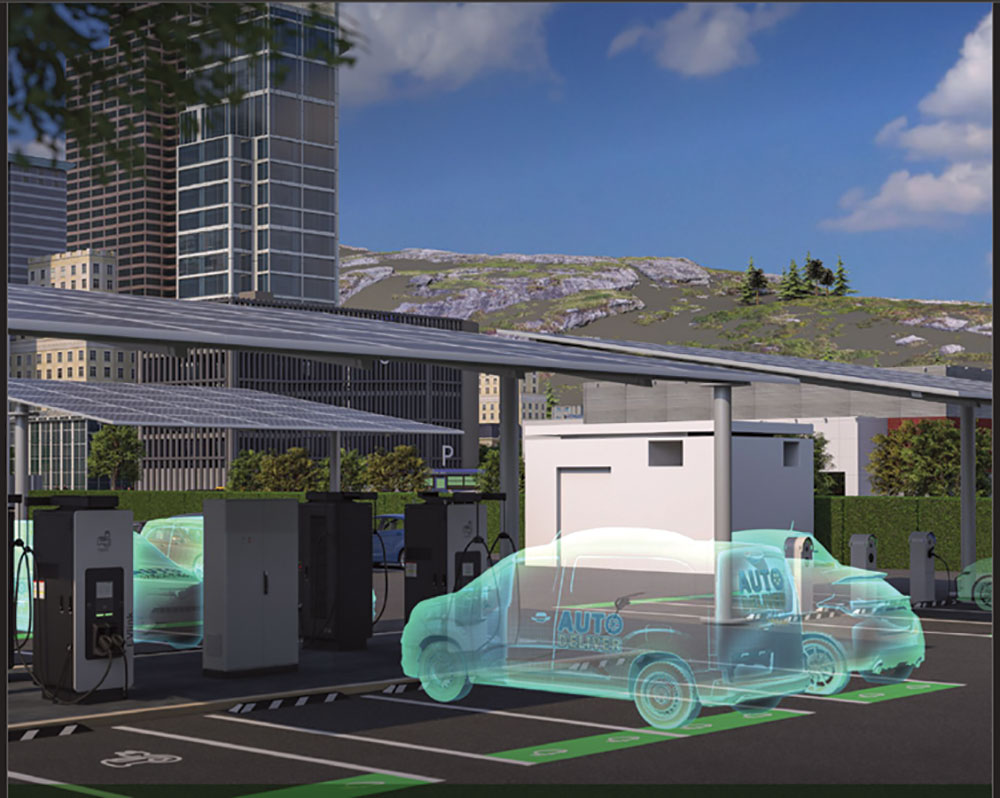
Why buildings are becoming the new charging hubs
Unlike conventional vehicles, EVs require time to recharge. Depending on the battery size, charging infrastructure and charging speed, an EV can take anywhere from four hours to as much as ten hours to charge fully using AC charging. Even with DC fast chargers available, which can reduce charging time to 15 to 30 minutes, the reality is that most EV drivers prefer to charge when they are already parked for extended periods. This is why EV charging is naturally shifting into the built environment in homes, office parks, shopping centres, hotels and mixed-use developments.
EV charging changes the energy equation for buildings
However, this trend, introduces a major challenge for building owners and facility managers. EV charging is not a small load. A single AC charger can demand up to 22 kW. Multiply that by ten chargers in a commercial building, and the building’s electricity demand can jump dramatically. Plus, if you add DC charging, buildings have to provide anywhere from 120 kW to 720 kW per charger, creating a level of demand that most existing building infrastructure is simply not designed to support without significant upgrades.
If EV chargers operate without intelligence, they will simply draw power whenever vehicles are plugged in. As more drivers arrive and plug in, the load climbs higher and higher, and eventually, the building may exceed its subscribed maximum power.
This can trigger financial penalties, increased electricity costs, or in the worst-case scenarios, result in overloads that trip supply and cause blackouts, not only impacting the chargers, but also shutting down the entire building.
Smart charging
This is where the ‘new energy landscape’ for buildings begins to take shape. EV chargers must become part of an integrated energy ecosystem, where the charger sits at the centre of multiple stakeholders:
• The building and its internal load profile
• The electricity grid and its constraints
• Distributed energy resources (DERs) such as solar PV and microgrids
• The EV drivers
The future therefore depends on smart EV chargers that can communicate and coordinate across this system, ensuring charging remains smooth for drivers, while protecting the building from overload.
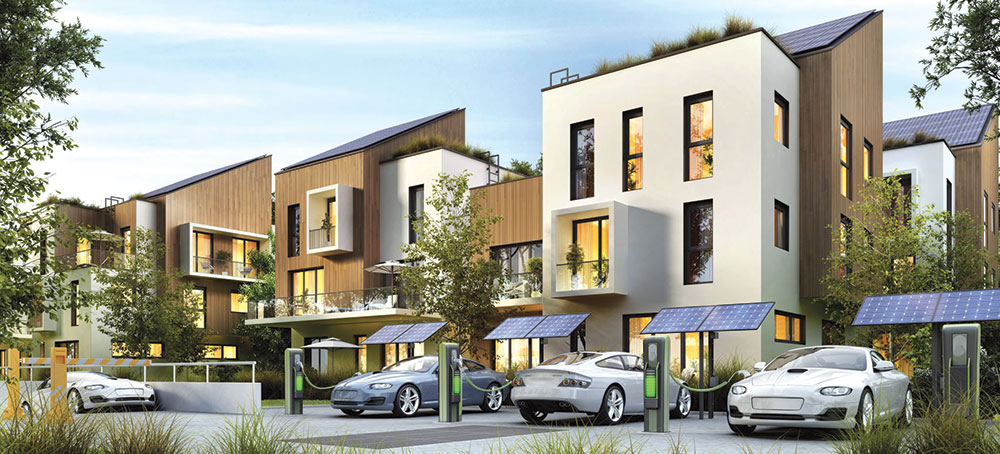
Load management is the key to EV-ready buildings
One of the most important capabilities enabling this future is dynamic load management. In a building, there is always a maximum subscribed power limit. Smart load management ensures EV charging never pushes the building beyond this threshold. Instead of charging every vehicle at full power at the same time, a smart system monitors:
• The building’s real-time consumption
• The available capacity remaining
• The number of EVs currently charging
When building consumption rises, the system automatically reduces charging power across vehicles, sharing the available energy intelligently. When consumption drops, the system increases charging power again, ensuring vehicles still charge efficiently, but without compromising the building.
EV charging and the rise of microgrids
As EV chargers become embedded into buildings, the role of DERs becomes even more important. Microgrids, solar installations and battery storage systems can support charging demand while improving resilience and reducing reliance on unstable grid supply, especially during peak periods or in regions where grid reliability remains a challenge.
The combination of EV charging, energy management systems and distributed energy is what defines the emerging energy landscape for buildings, which is decentralised, flexible, digitally managed and increasingly driver-centric.
| Tel: | +27 11 254 6400 |
| Email: | za-ccc@se.com |
| www: | www.se.com/za/en/ |
| Articles: | More information and articles about Schneider Electric South Africa |






© Technews Publishing (Pty) Ltd | All Rights Reserved
 printer friendly version