



For decades, welding across South Africa’s manufacturing sector has relied heavily on manual processes that are skilled, adaptable, and deeply embedded in fabrication environments from manufacturing businesses to large industrial plants. But a quiet shift is underway. Welding automation, once largely confined to high-volume automotive production, is becoming increasingly accessible to a broader range of manufacturers.
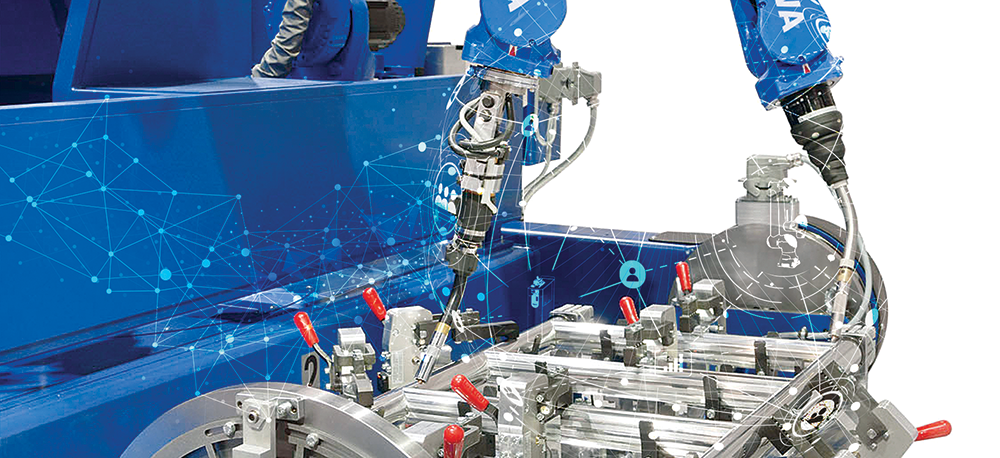
This shift is not simply about technology adoption. It reflects deeper structural pressures facing local industry that include persistent skills shortages, rising input costs, global competition and growing expectations around quality and traceability. As a result, robotic and laser welding solutions are moving from a nice-to-have efficiency upgrade to a strategic competitiveness tool.
Many organisations are seeing this transition first hand as manufacturers explore automation pathways that are scalable, flexible and financially viable, even for mid-sized operations.
Automation moves beyond automotive
Historically, robotic welding in South Africa has been strongly associated with automotive manufacturing, where high volumes and repeatability justified significant capital investment. Outside of this environment, adoption was slower, often constrained by cost, complexity, and perceptions that robotics were only suitable for large production runs. This dynamic is changing.
Advances in integrated welding cells, particularly those combining robotics with modern power sources and laser technology, are lowering the barrier to entry. These systems allow manufacturers to program, monitor and control welding parameters directly through the robot platform, improving consistency while reducing setup variability.
Critically, newer solutions are designed with flexibility in mind. Instead of rigid, single-application installations, manufacturers can deploy modular cells that support multiple product types, shorter runs, and evolving production needs. These realities define much of South Africa’s manufacturing sector.
Andrew Crackett, managing director at Yaskawa Southern Africa, says that the conversation with customers has shifted noticeably in recent years. “We are seeing growing interest from manufacturers who previously felt robotics were out of reach. The question is no longer whether automation is relevant, it is how to implement it in a way that supports real production challenges.”
From cost centre to competitiveness driver
A key factor behind this shift is affordability, not necessarily because robotic welding is inexpensive, but because its value equation has become clearer.
Manufacturers are increasingly evaluating automation through a total-cost lens involving reduced rework, improved throughput, lower scrap rates, better quality consistency, and the ability to meet demanding customer specifications. In sectors where margins are tight and export opportunities depend on quality assurance, these factors are significant.
Accessible robotic and laser welding also helps manufacturers stabilise production in the face of skills constraints. South Africa’s shortage of experienced welders remains a well-documented challenge, particularly for precision and repeatable work.
Automation does not eliminate the need for welding expertise, but it changes where that expertise is applied, shifting skilled workers toward programming, oversight, quality control and process optimisation. “Automation should be seen as an enabler for skilled people, not a replacement,” explains Crackett. “It allows manufacturers to use scarce skills more effectively while achieving levels of consistency that are difficult to maintain manually.”
Enabling SMEs to enter automation
One of the most significant implications of accessible welding automation is the expanding participation of small and medium-sized manufacturers.
SMEs often operate in high-mix, lower-volume environments. These conditions were traditionally viewed as unsuitable for robotics. However, flexible robotic welding cells, simplified programming tools, and faster deployment models are changing that perception.
For these businesses, automation is increasingly linked to growth rather than scale alone. The ability to deliver repeatable quality, shorten lead times and secure more complex work can open doors to new customers, including large OEM supply chains. This is particularly relevant in South Africa’s localisation push, where local fabricators are expected to meet global quality benchmarks while remaining cost competitive.
“Many mid-sized manufacturers are looking at automation as a way to unlock new opportunities rather than simply reduce labour costs,” says Crackett. “It can change the type of work they are able to take on.”
The role of laser welding in the next phase
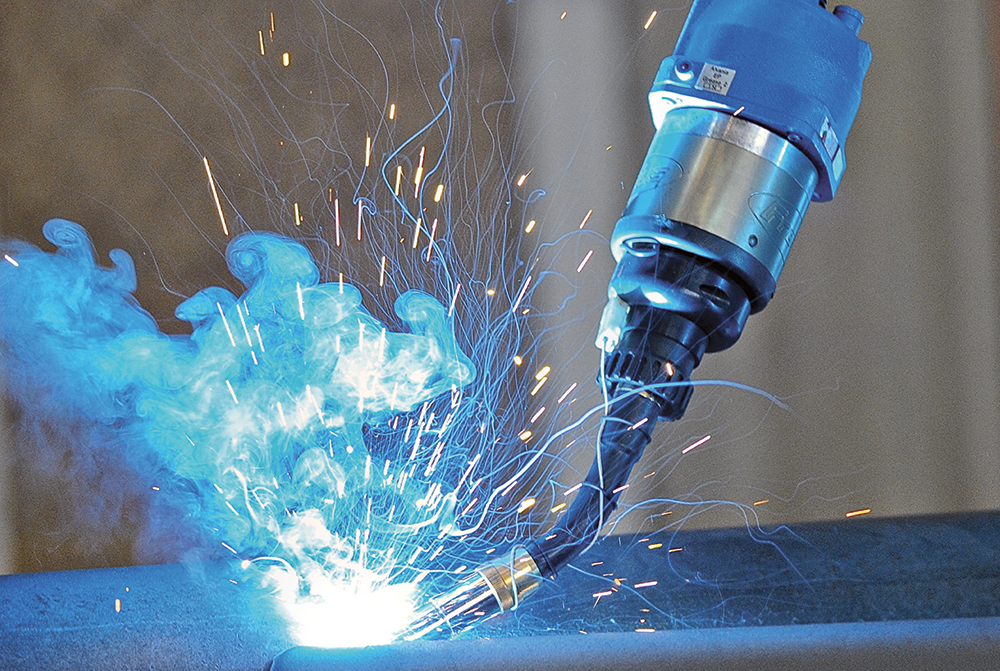
Laser welding is emerging as an important part of this evolution. When integrated with robotics, it offers advantages in speed, precision and reduced heat input, particularly for thin materials and applications requiring high-quality finishes.
While laser welding was previously viewed as highly specialised, integrated robotic laser cells are making the technology more practical for general manufacturing environments. This is especially relevant for sectors such as electrical enclosures, appliances, rail components, and sheet-metal fabrication. The combination of robotic control and advanced welding processes enables manufacturers to standardise output while maintaining flexibility, a critical balance in a market defined by variability.
A strategic shift for South African manufacturing
The move from manual to smart welding reflects a broader digital transition within manufacturing. Welding, often considered a traditional process, is becoming increasingly data-driven, programmable, and measurable.
For South African manufacturers navigating cost pressures and global competition, this evolution carries strategic importance. Consistent welding quality affects product reliability, compliance, reputation and export readiness, all central to industrial growth.
Accessible automation, therefore, sits at the intersection of productivity, skills development and industrial modernisation. “Welding is a foundational process in manufacturing,” adds Crackett. “When manufacturers improve welding consistency and efficiency, the impact is felt across the entire production environment.”
Looking ahead
As technology continues to mature, the distinction between manual and automated welding will become less binary. Hybrid environments, where skilled welders work alongside robotic systems, are likely to define the next phase of adoption.
What is clear is that automation is no longer limited to large, high-volume plants. The tools are becoming more adaptable, more scalable and more aligned with the realities of South Africa’s manufacturing landscape. For many manufacturers, the question is shifting from whether they can afford to automate to whether they can afford not to.
Accessible robotic and laser welding represents more than a technology trend. It signals a structural change in how local manufacturers approach quality, skills and competitiveness, along with how South Africa positions itself within global fabrication value chains.
For more information contact Yaskawa Southern Africa,
| Tel: | +27 11 608 3182 |
| Email: | |
| www: | www.yaskawa.za.com |
| Articles: | More information and articles about Yaskawa Southern Africa |






© Technews Publishing (Pty) Ltd | All Rights Reserved
 printer friendly version